Worlds improbable
I’m glad that Warner Archive continues to release so many of the classic Hollywood films I love, especially those from the 1930s, on Blu-ray. But their cover art is disappointingly generic, often featuring little more than reproductions of the original theatrical posters, with hardly any effort to showcase the extraordinary artistry of the films themselves. It’s a shame, really, because many of these movies contain the most magnificent sets, costumes, and cinematography ever seen on screen, yet you’d never know it from looking at their rather uninspired packaging . . .



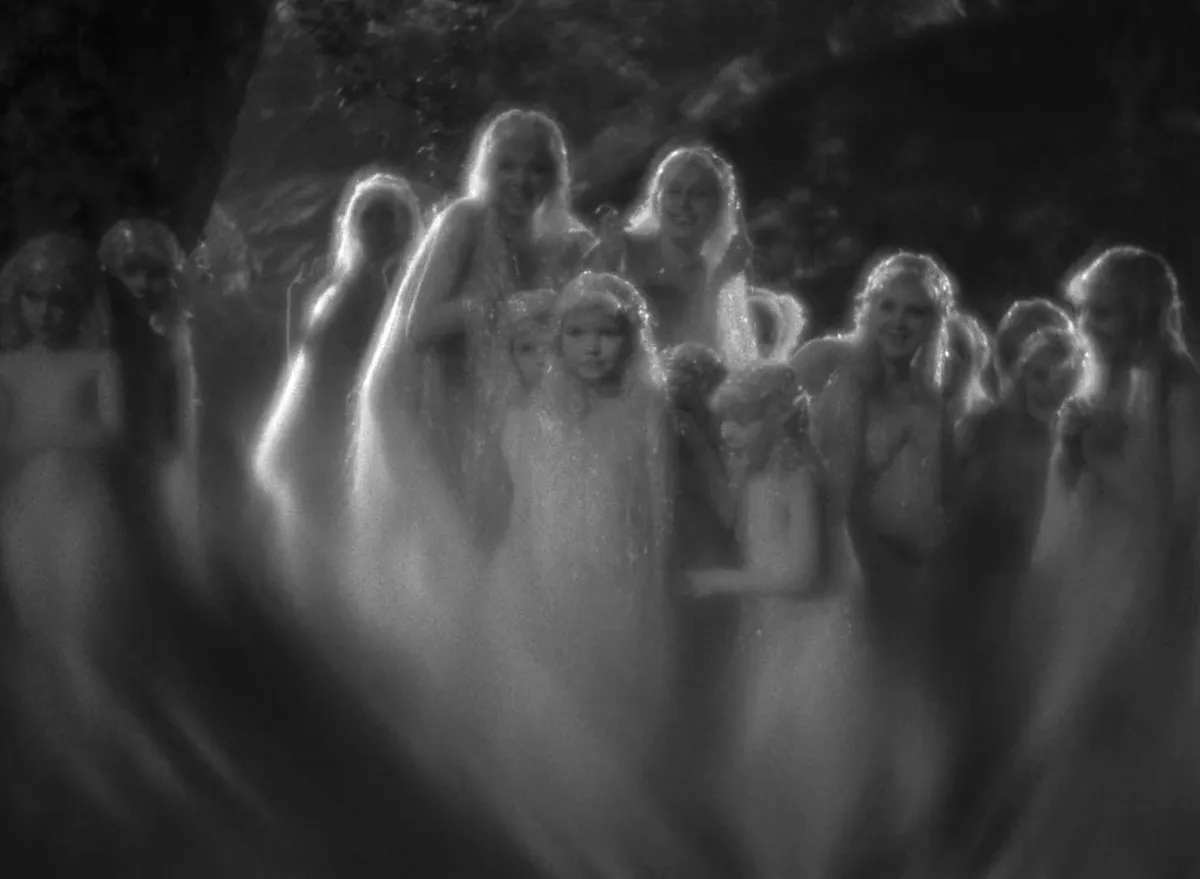
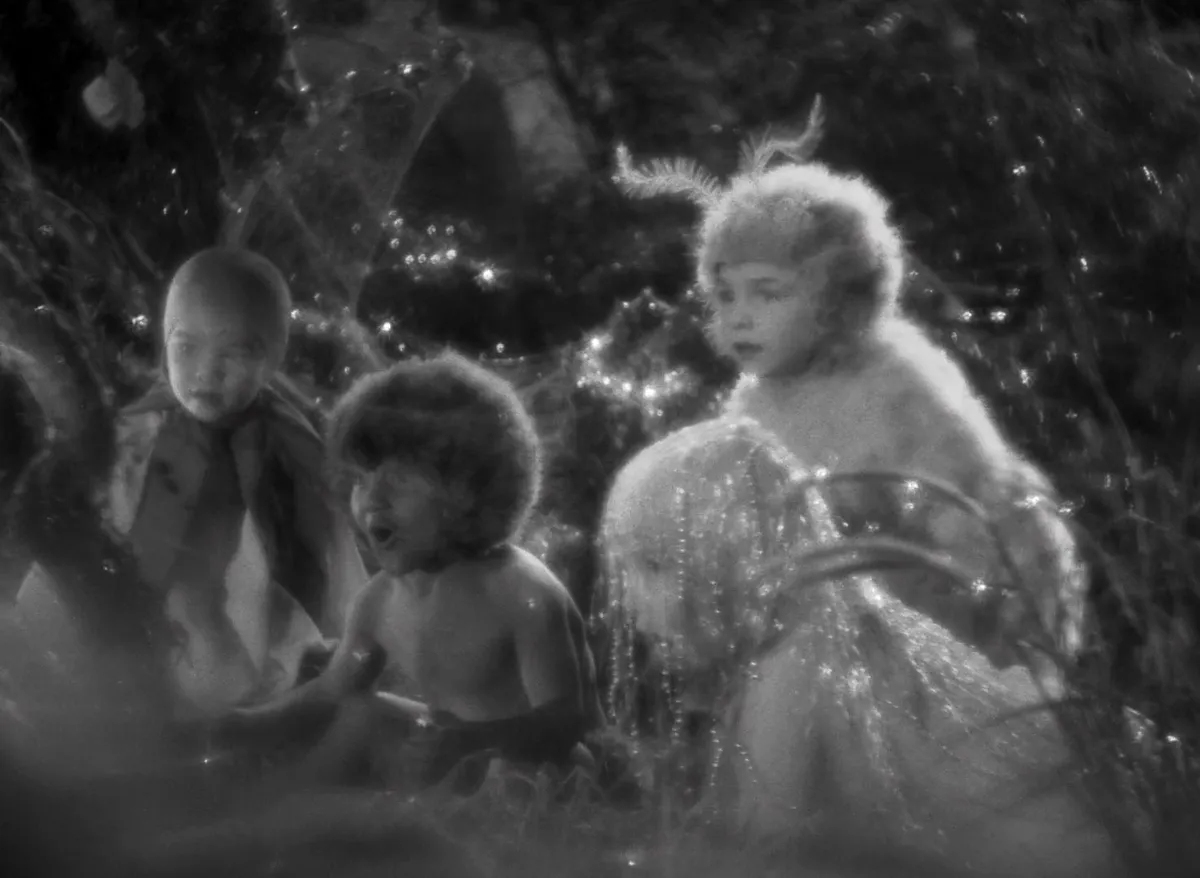
Max Reinhardt and William Dieterle’s 1935 production of A Midsummer Night’s Dream was an extraordinarily ambitious undertaking for its time, and even today, its visual splendor is astonishing. It remains among the finest adaptations of Shakespeare ever committed to the screen. What makes the film especially remarkable is its imaginative use of photographic effects to bring the fairy kingdom to life. The enchanted forest, with its shimmering lights, drifting mists, and ethereal supernatural creatures, remains one of the great achievements of fantasy filmmaking . . .
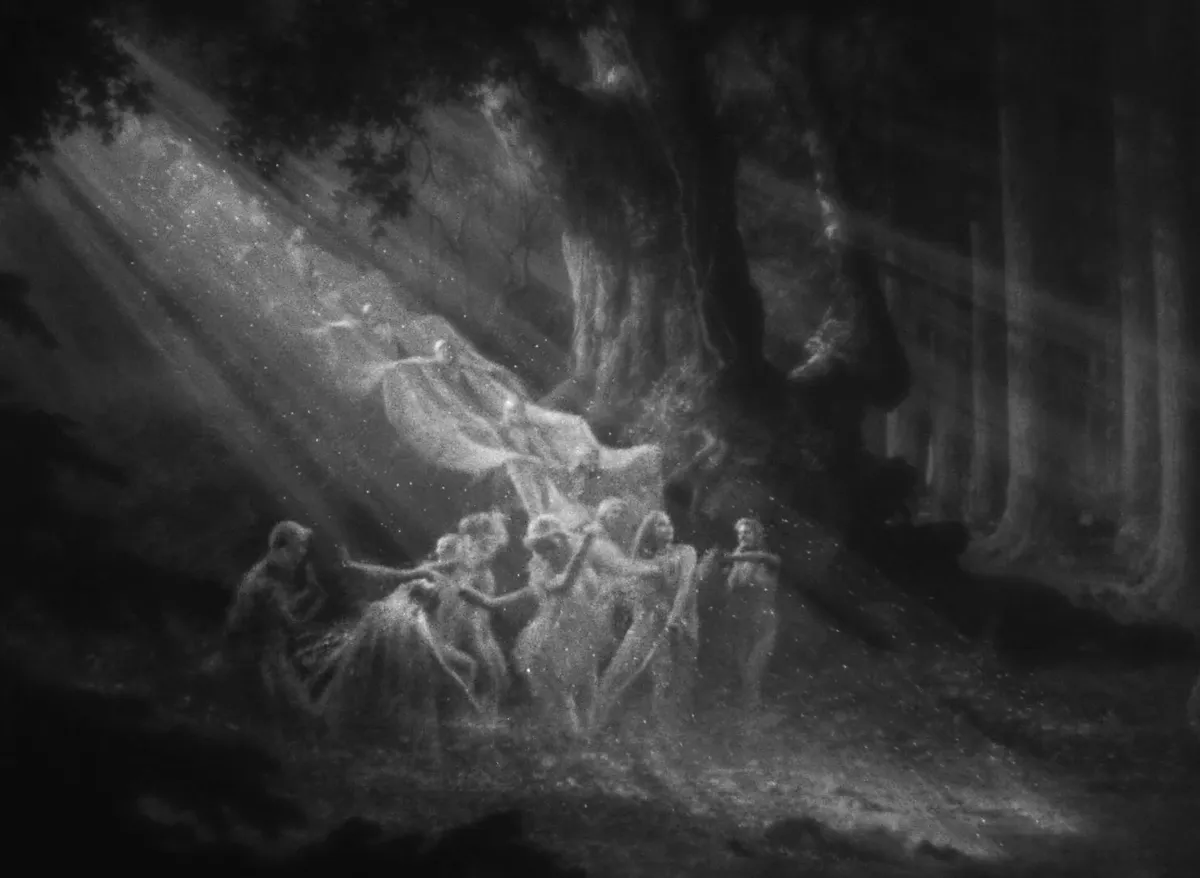 All stills from the Reinhardt and Dieterle film © 1935 Warner Bros. Pictures, Inc. All rights reserved.
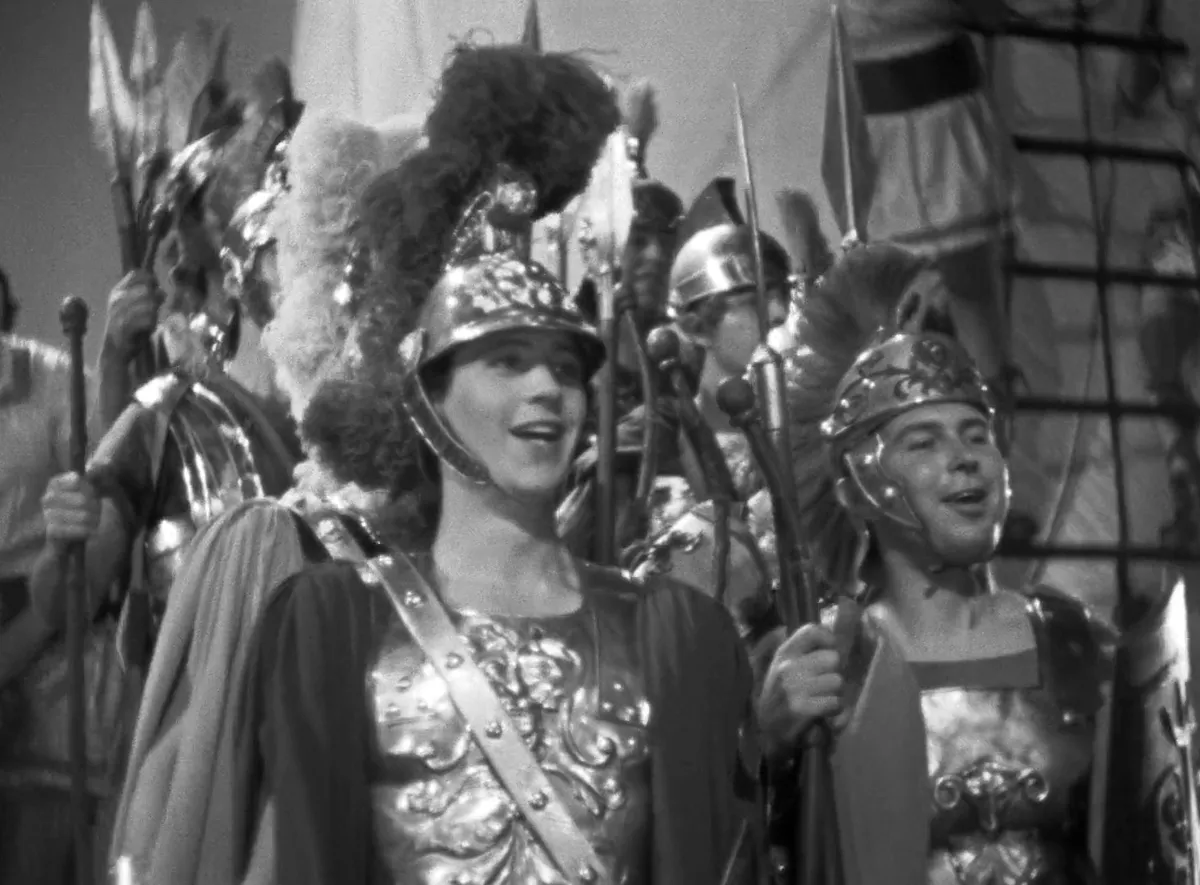
But my favorite part of the film is actually its opening scene: the magnificent triumphal procession of Theseus, “Duke” of Athens. It’s a glorious spectacle, with monumental architecture, sweeping festoons, and jubilant crowds filling the screen. Soldiers in gleaming armor, standard-bearers, and richly costumed attendants parade through the celebrations, all staged with the kind of extravagance and attention to detail that only Hollywood could accomplish so magnificently in those days. The sheer grandeur of the procession is breathtaking, and I find it even more enchanting than the film’s celebrated fairy sequences . . .
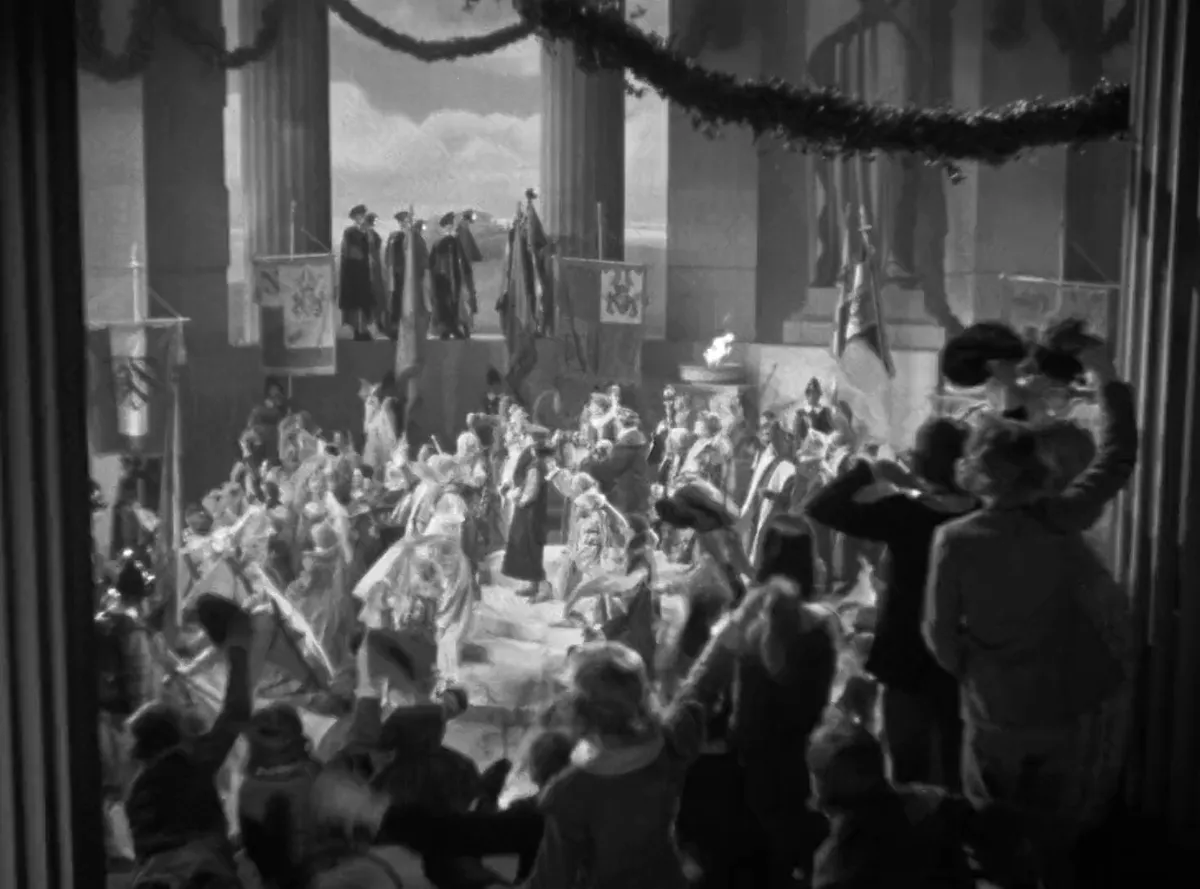
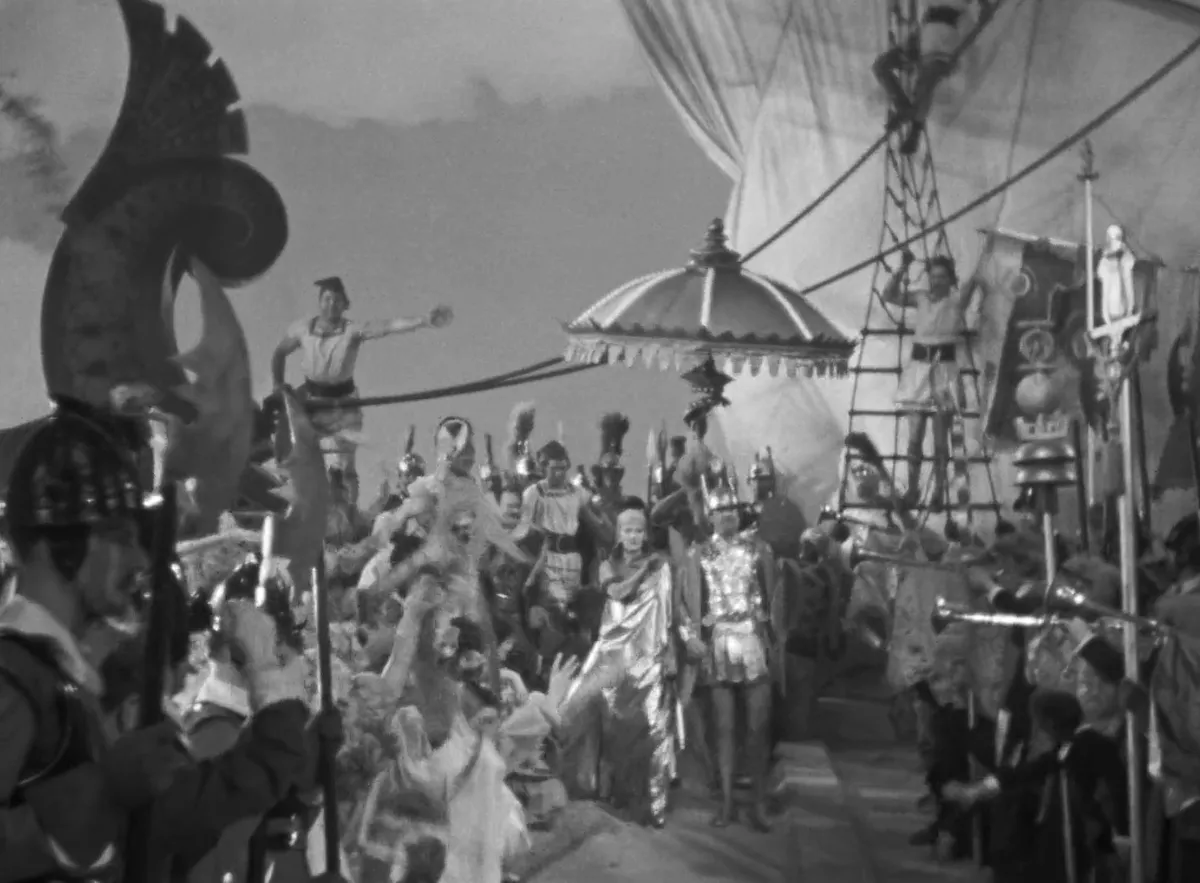
And the crowning glory of this magnificent procession is its music: Felix Mendelssohn’s triumphant Scottish Symphony, gloriously adapted by Erich Wolfgang Korngold and performed with a full orchestra and chorus.
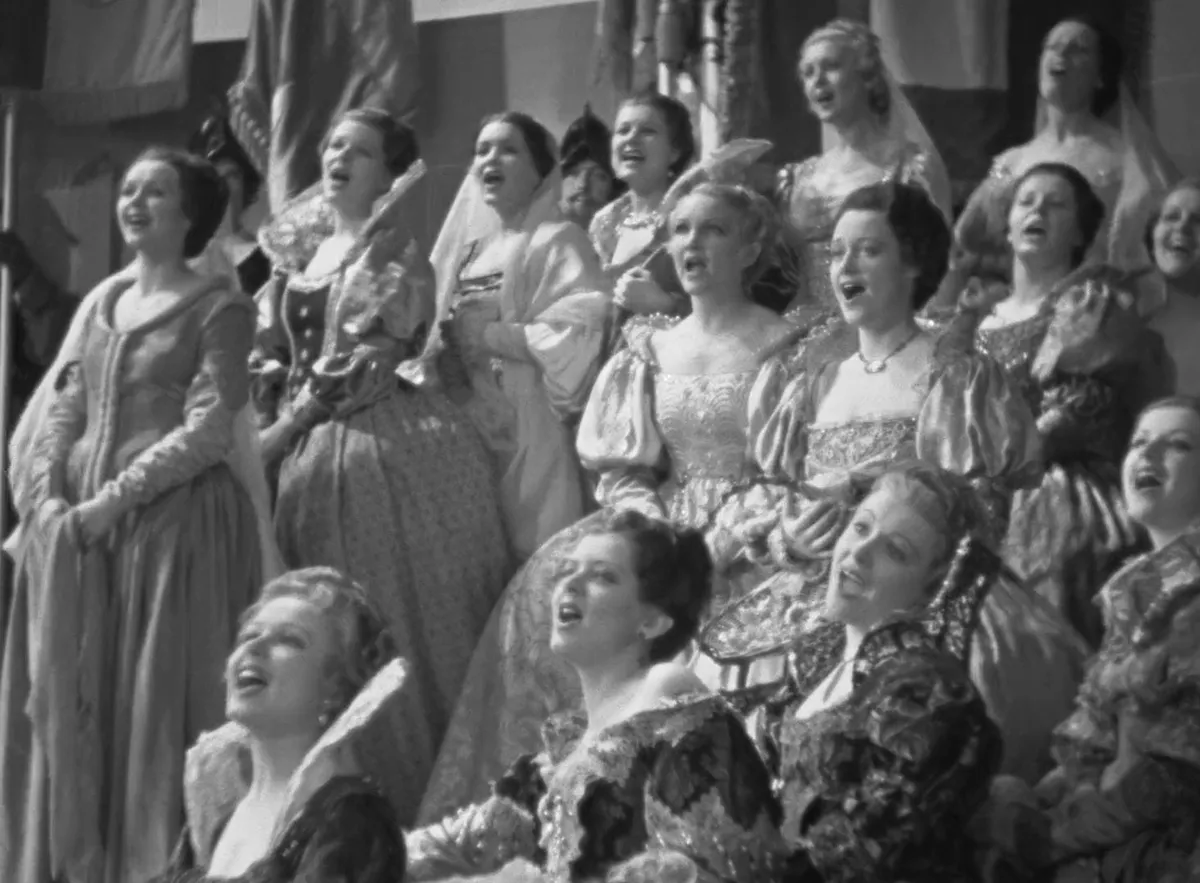
As though the spectacle itself were not already enough to overwhelm the senses, we are treated to the sight of singing ladies who seem to have stepped straight out of a painting by Paolo Veronese . . .
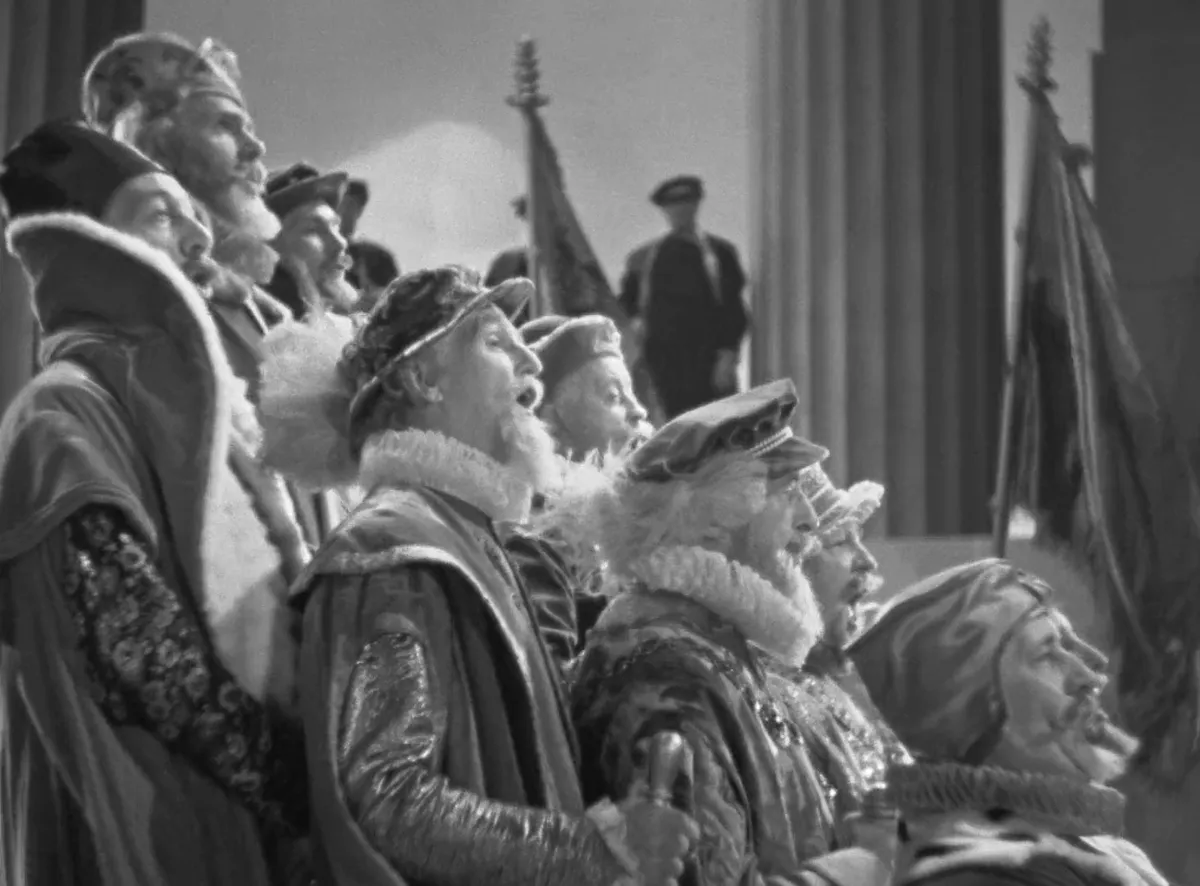
. . . solemn, white-bearded patricians in their magnificent robes and elaborate ruffs . . .
. . . and a chorus of children singing with all the enthusiasm their lungs can muster . . .
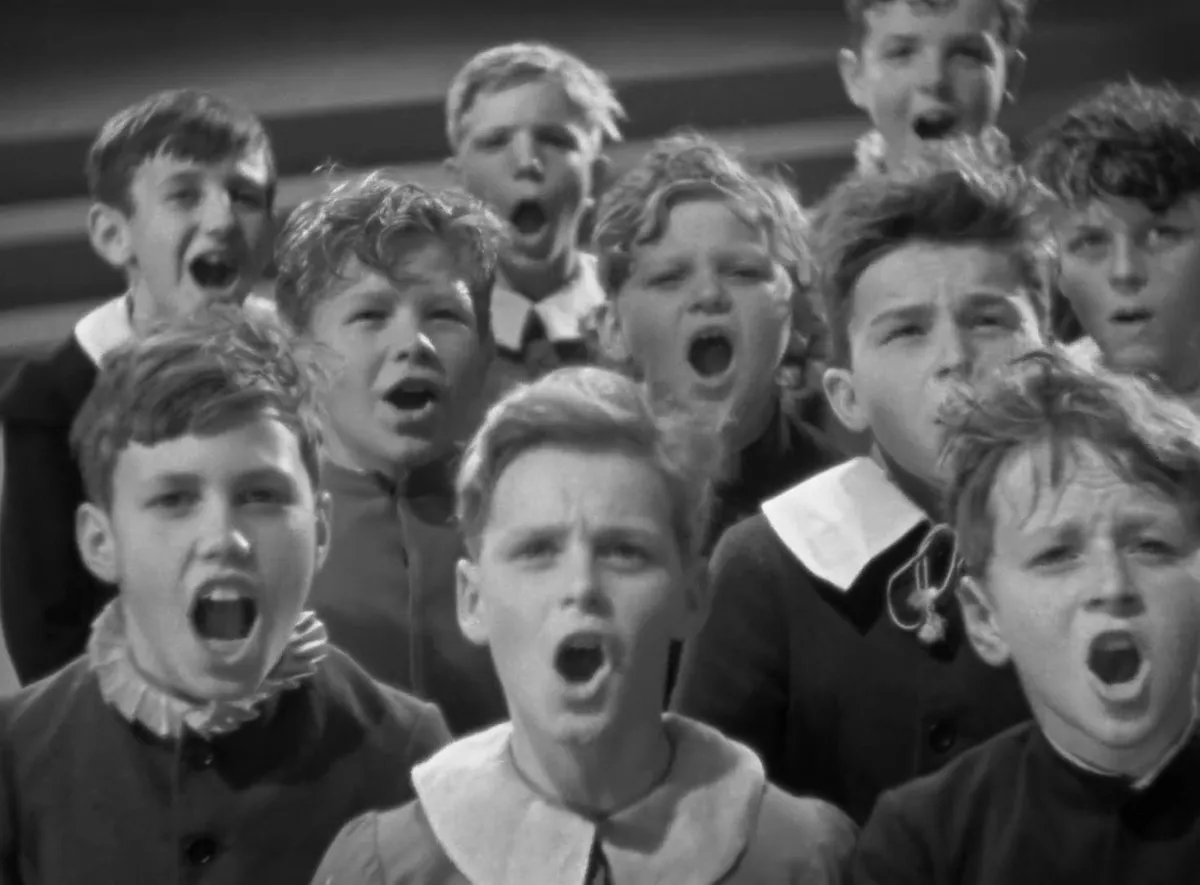
The combination of music, costumes, architecture, and those wonderfully theatrical faces is almost too much for me. This is Renaissance heaven!
Hence, this visual splendor is certainly not the Athens of Classical Antiquity; it is an imaginary realm born from Shakespeare’s wonderfully anachronistic vision. Although Theseus and Hippolyta belong to Greek mythology, the world they inhabit alongside Lysander, Demetrius, Hermia, and Helena looks and behaves much more like Elizabethan England than ancient Athens.
Rather than attempting to reconcile these different worlds, Shakespeare simply brings them together in one gloriously improbable universe. Ancient Greek heroes mingle with tradesmen bearing ordinary Christian names, while the surrounding woods are inhabited by fairies and mischievous spirits drawn from English and wider European folklore. Classical mythology, Renaissance pageantry, and the everyday life and popular beliefs of Shakespeare’s own England coexist without the slightest concern for historical accuracy or consistency. And somehow, the result is all the more enchanting for it.
This delightful blending of different historical periods is also reflected in the traditional staging of A Midsummer Night’s Dream, in which the characters are dressed in the elaborate fashions of Shakespeare’s own time rather than those of ancient Greece. The 1935 film follows this convention splendidly. Even Theseus and his soldiers, supposedly warriors of ancient Athens, resemble the classical heroes as imagined by sixteenth-century painters, complete with magnificent plumed helmets, sculpted breastplates, and flowing cloaks . . .
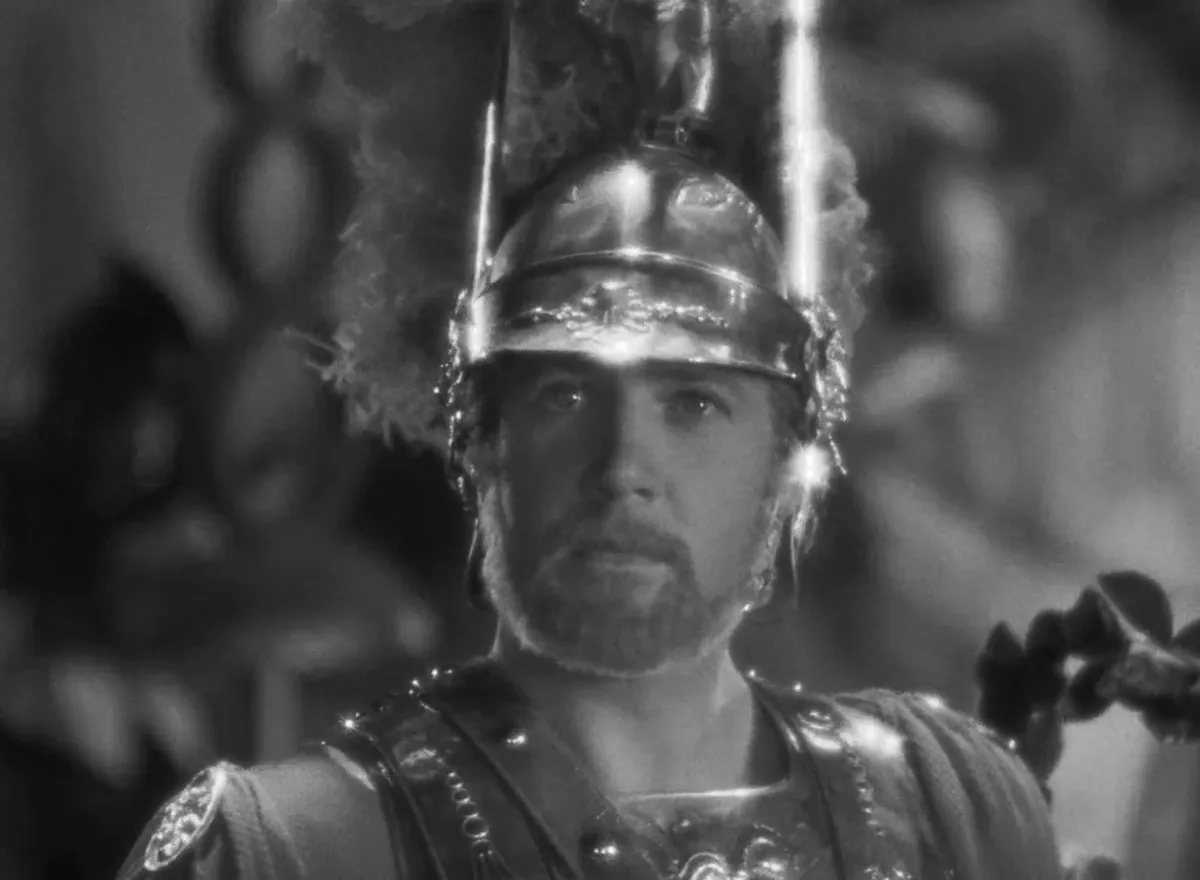
Hippolyta, the Queen of the Amazons—and, incidentally, the mother of Wonder Woman in DC Comics!—wears two costumes that I find especially remarkable. The first is a marvelous combination of bridal finery and martial splendor, reminding us that she is not merely the bride of Theseus but a warrior queen in her own right . . .
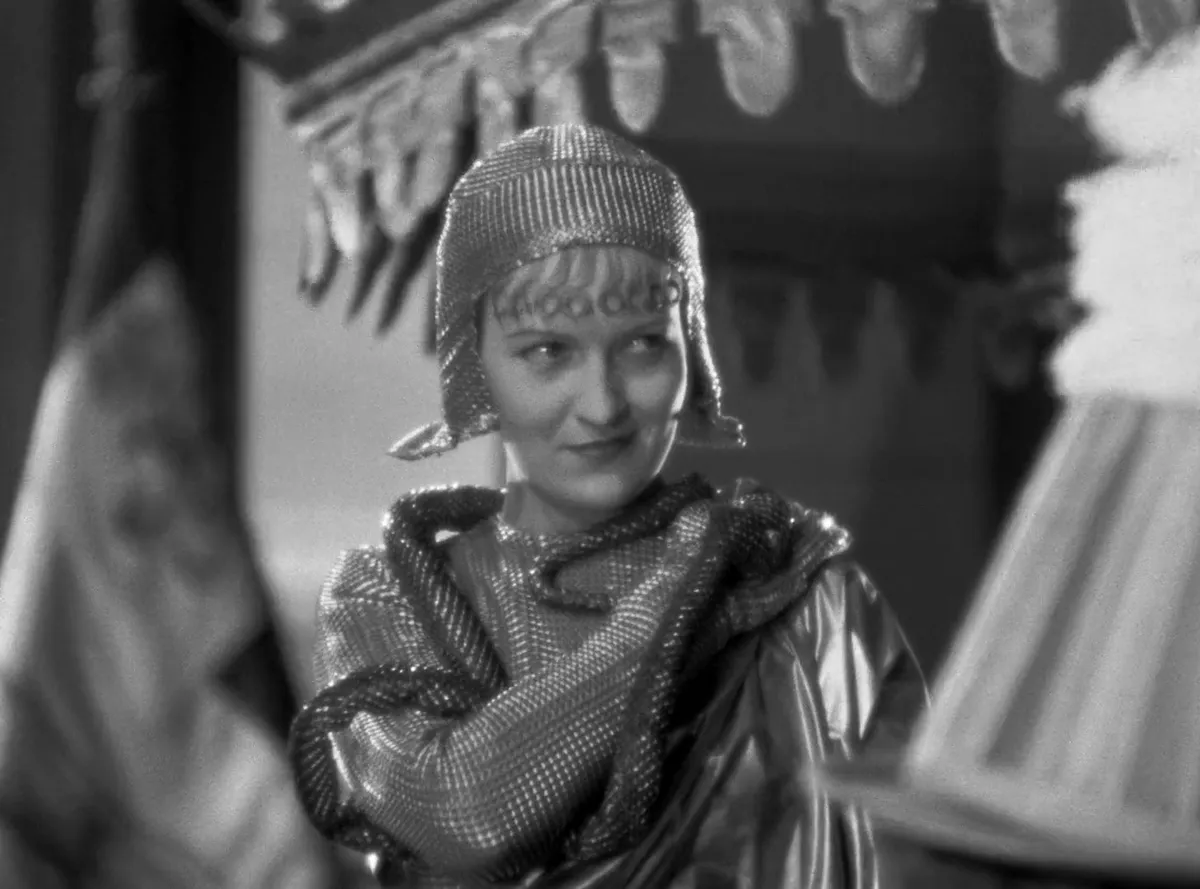
Her second costume is even more extraordinary, so wonderfully outlandish that it seems to belong neither to any recognizable period of human history nor entirely to this world . . .
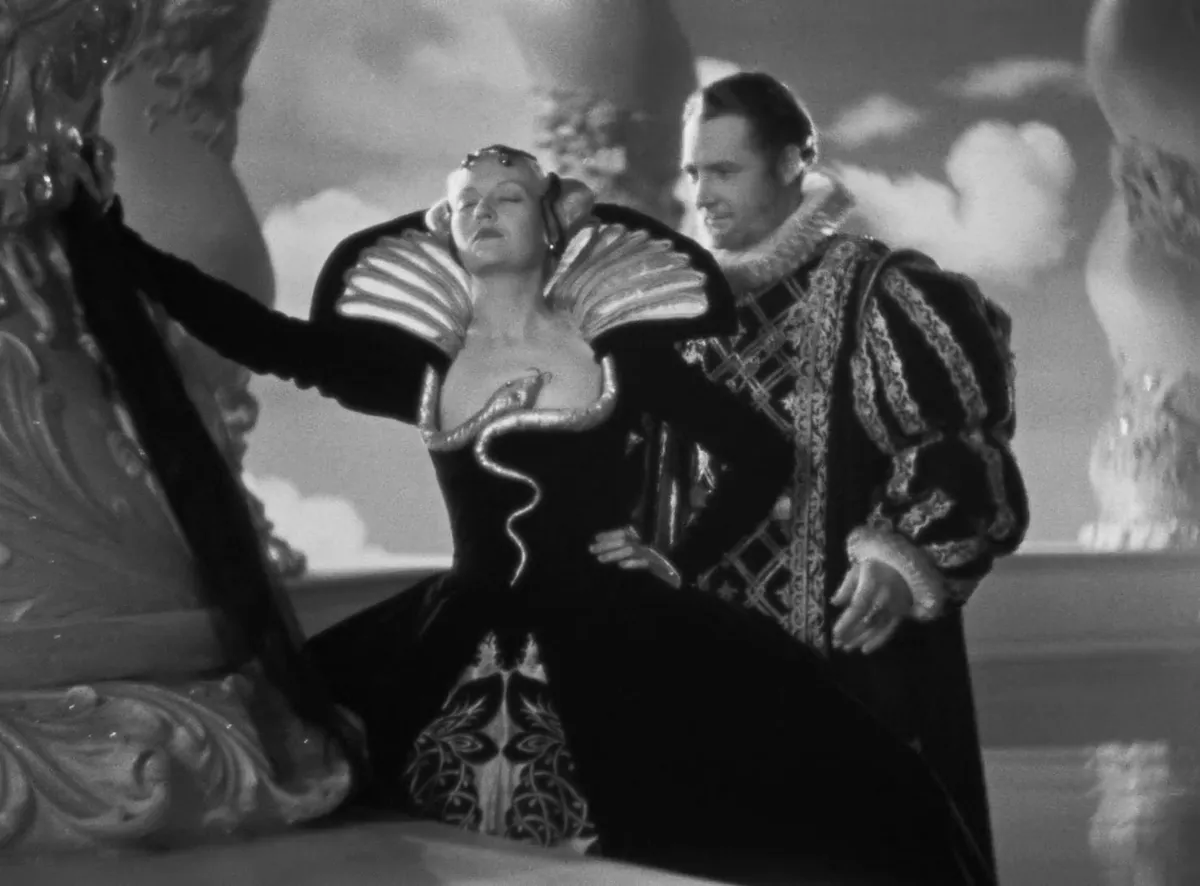
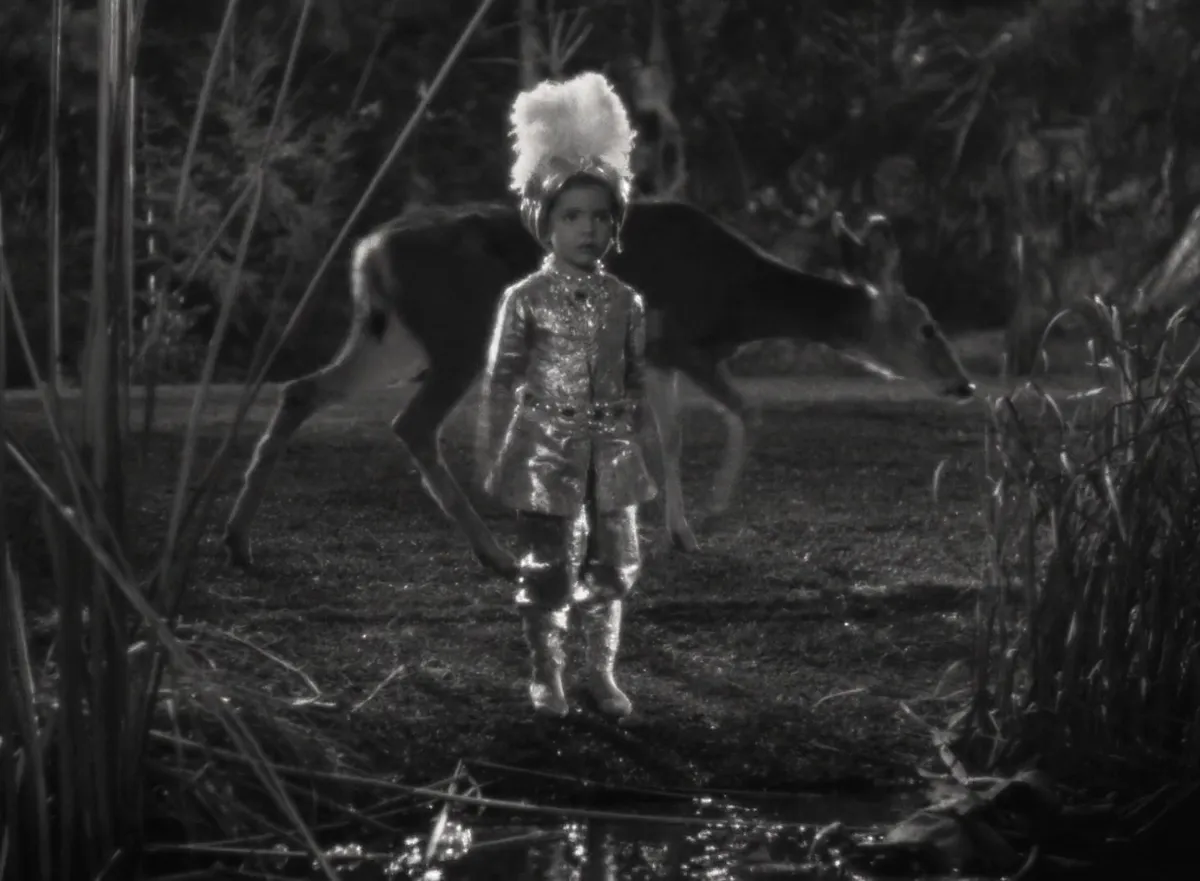
There is, however, one aspect of A Midsummer Night’s Dream that I have always found deeply disturbing: the mysterious changeling whose presence causes the quarrel between Oberon and Titania, the King and Queen of the Fairies. Oberon wants the boy to serve as one of his attendants, but Titania refuses to surrender him. The child’s mother, we are told, was a mortal Indian woman who had been a devoted follower and intimate companion of the Fairy Queen. She died giving birth to the child, whom Titania subsequently took into her care in memory of his mother.
What exactly did it mean for a mortal South Asian woman to become a follower of a European fairy queen, and what sort of relationship existed between them? Shakespeare leaves these questions unanswered. Even the identity of the child’s father is never revealed. And how does a flesh-and-blood human child come to live among supernatural beings in a realm that is not his own? More disturbingly, if he is indeed a changeling, who—or what—was left in his place? The account is presented almost tenderly, yet I cannot help sensing something distinctly sinister beneath it—something deeply unnatural, even malevolent.
The changeling’s presence makes the already bewildering setting of the story even more confounded. He never actually appears onstage in Shakespeare’s play, although in some older book illustrations he is depicted as resembling the child form of a Hindu god, Bala Krishna himself. The 1935 film also brings him before the camera, acknowledging his Indian origins . . .
Anachronisms and artistic license were understandable in Shakespeare’s day. After all, the Elizabethans did not have the benefit of modern archaeology, readily accessible historical scholarship, or the advanced technology we now have at our disposal.
What I find almost sacrilegious, however, is the tendency of many contemporary productions to tamper with the historical and cultural settings of Shakespeare’s plays, arbitrarily transplanting them into different periods, altering the races of their characters, and introducing changes that make no sense within the worlds they are supposed to inhabit. This whole pile of steaming horseshit is neither creativity nor ingenuity. It is the product of ignorance and laziness, and the results are always downright ugly.
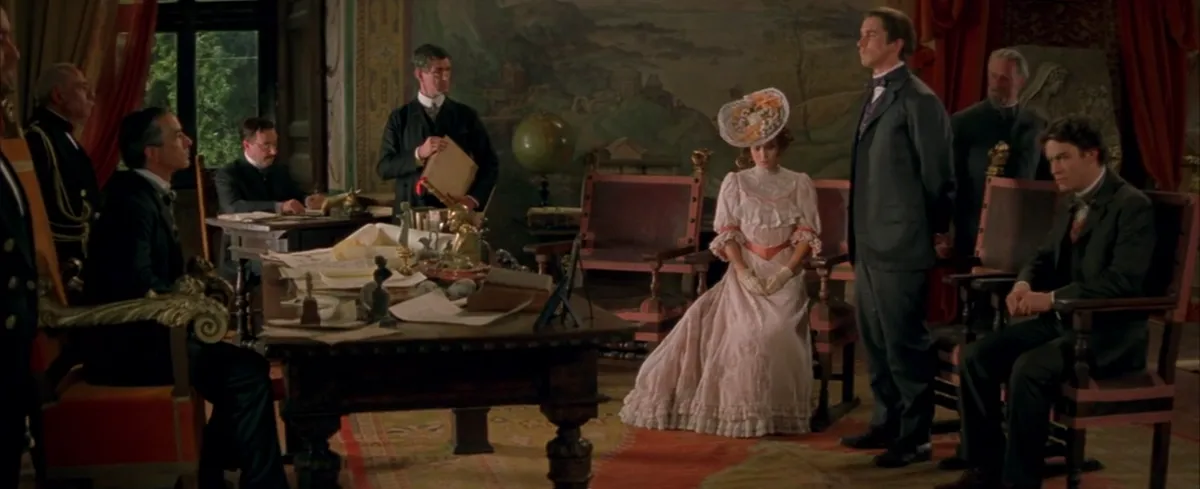
Take, for example, Michael Hoffman’s 1999 film adaptation of A Midsummer Night’s Dream, which inexplicably transports the action to late nineteenth-century Tuscany. Suddenly, everything is Victorian. Theseus becomes a respectable gentleman in a three-piece suit, while Hippolyta is transformed into a fashionable, thoroughly domesticated lady . . .
 All stills from the Hoffman film © 1999 Twentieth Century Fox Film Corporation and associated companies. All rights reserved.
But what exactly has this Victorian gentleman conquered? And who, pray tell, are these Amazons supposed to be in nineteenth-century Italy? Where do they come from, and what possible place could they occupy in the society depicted in the film? The whole premise becomes absurd once one begins asking even the simplest questions.
And as though that were not bewildering enough, the fairy kingdom seems to belong to yet another world altogether, with its imagery and decorative elements seemingly borrowed from Pompeii in A.D. 79. What on earth is ancient Rome doing in nineteenth-century Tuscany?
The 1935 adaptation pulled off its anachronisms because every strange, incongruous element was bound together by a single, gorgeous artistic vision. Hoffman’s film does the exact opposite: it tosses Victorian suits, bicycles, Tuscan villas, and Pompeian ruins into a blender and calls it style. These elements share no imaginative logic, nor do they serve a coherent reading of the text. Where Reinhardt gave us a far-fetched masterpiece, Hoffman gives us an unsightly, haphazard pile-up of periods—a prime example of aesthetic confusion masquerading as modern creativity.
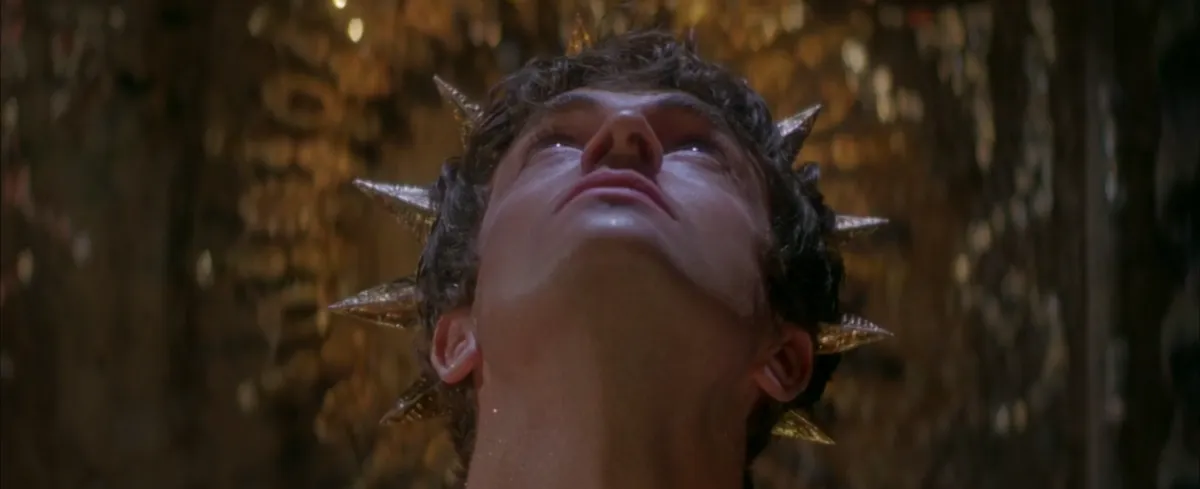
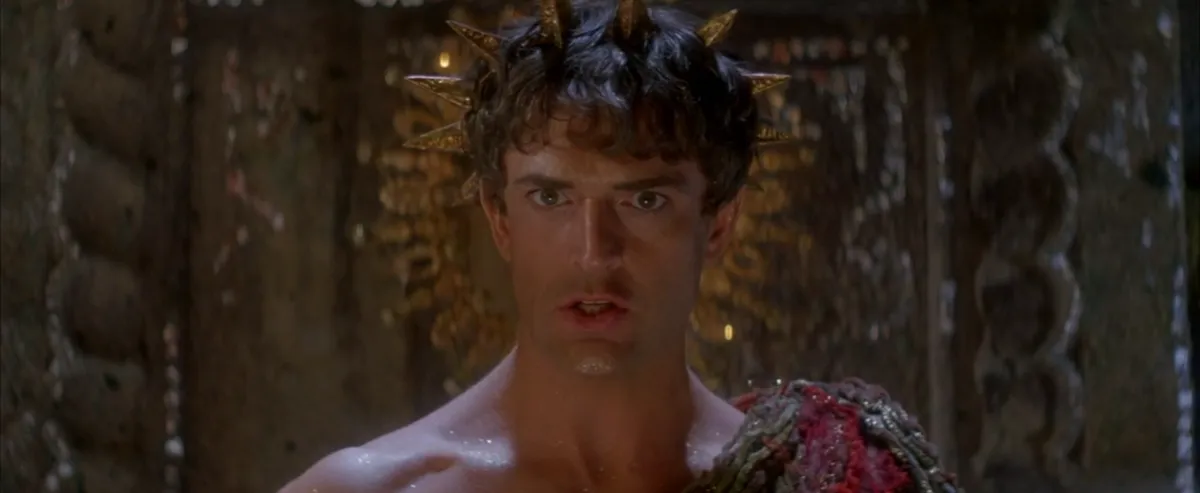
The only thing I really like about Hoffman’s film is Oberon’s radiate diadem, with its spiked rays fanning out around his head like a burst of light. It gives him the appearance of one of the ancient solar gods—or of a Roman emperor. It is a striking and genuinely evocative piece of design, suggesting the majesty and otherworldly authority that the rest of the film, unfortunately, seldom achieves . . .
What makes the 1935 production so remarkable, by contrast, is that its imaginative brilliance extends well beyond its sets, costumes, and photographic effects. Even its interpretations of Shakespeare’s supernatural characters are wonderfully unconventional. Take Mickey Rooney’s Puck, for instance . . .
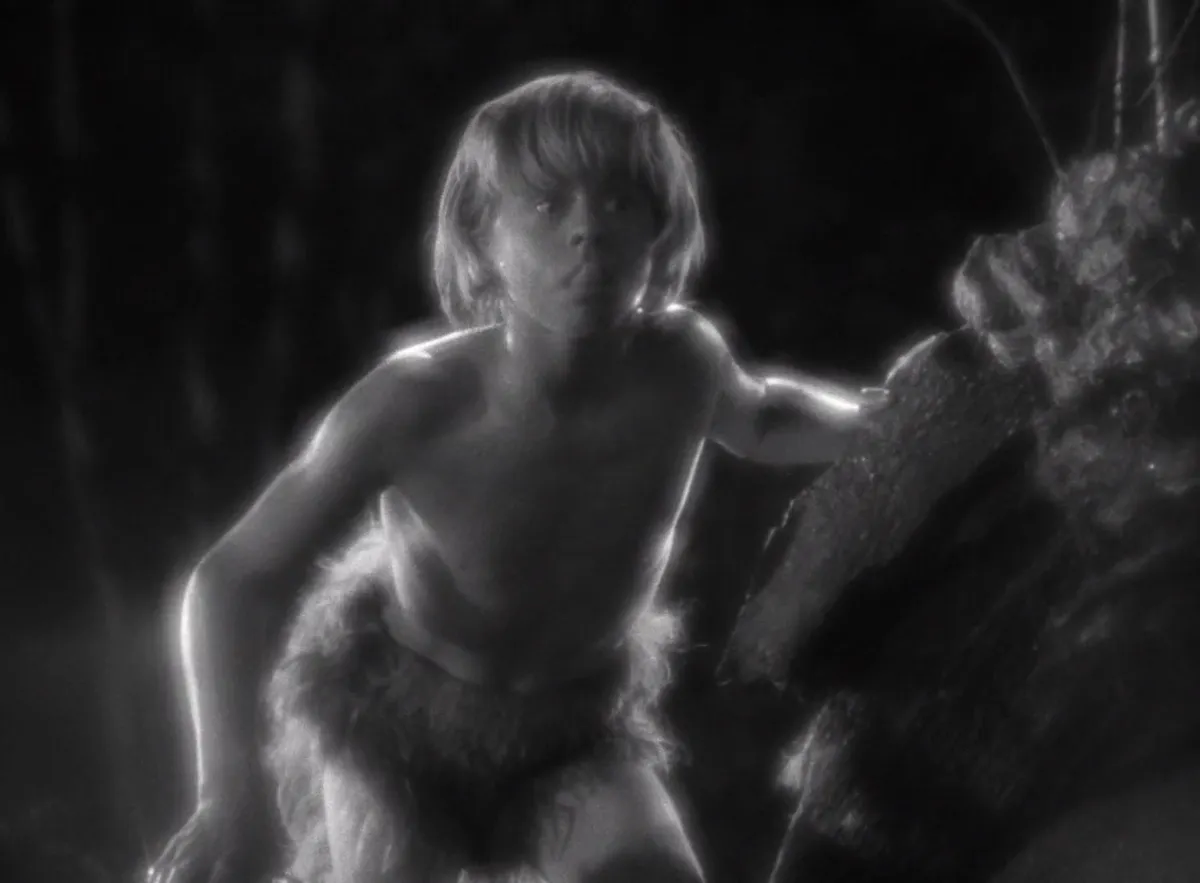
He is certainly no delicate, ethereal sprite from a Victorian picture book. Instead, Puck here is something much closer to an earthy and decidedly sensual faun from the pagan world. There is something feral about him, from his impish expressions and uninhibited movements to his raucous laughter and irreverent speech. His behavior is delightfully indecorous, utterly unconcerned with the conventions of polite society. He is playful, certainly, but there is also something wicked about him.
With this Puck roaming among the trees, the enchanted forest ceases to be merely a beautiful refuge of shimmering fairies and moonlit enchantments. It becomes a place of unruly desires, unpredictable mischief, and supernatural beings whose idea of amusement is considerably less harmless than our own.