The art of unpacking a disappointment
For a little context, revisit our earlier essay → here, in which we attempted to make sense of Madonna’s Confessions II LP.
Only hours after purchasing two variants of Confessions II, I began regretting my decision not to order what apparently was its definitive edition: the one in the premium packaging, available exclusively through Madonna’s official website and at select pop-up stores in the US during the height of the promotional blitz.
You see, when the album was first announced, I immediately ordered the numbered edition, which seemed at the time to be the obvious choice . . .
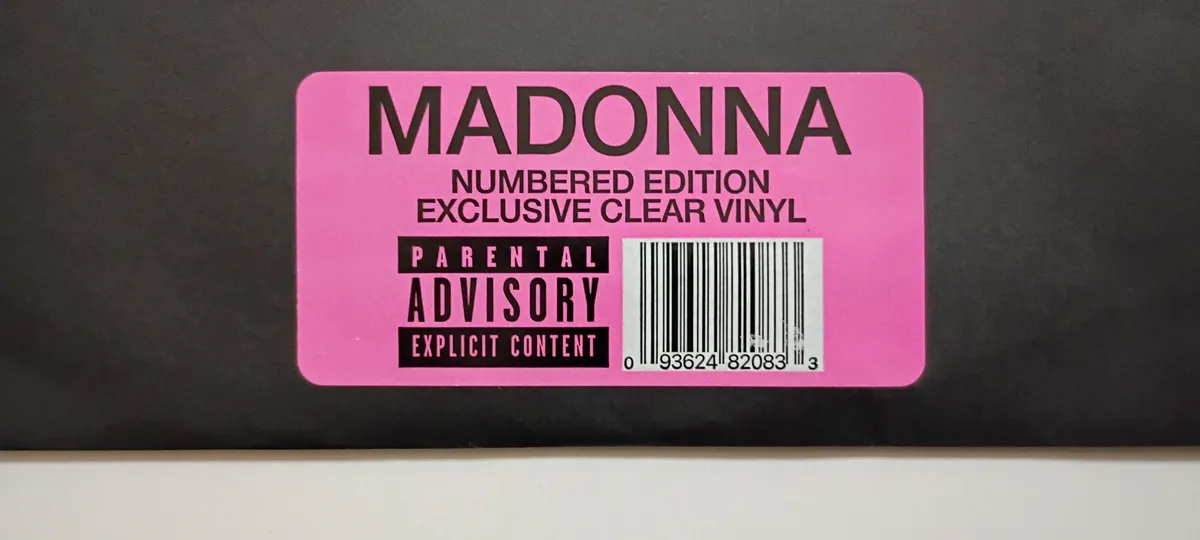
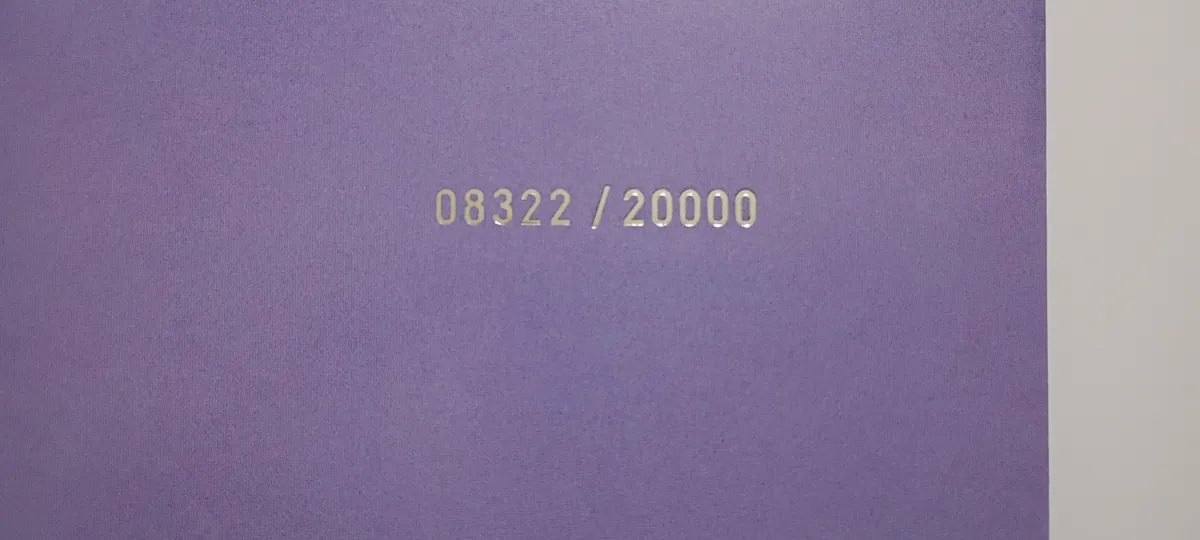
. . . on clear vinyl . . .
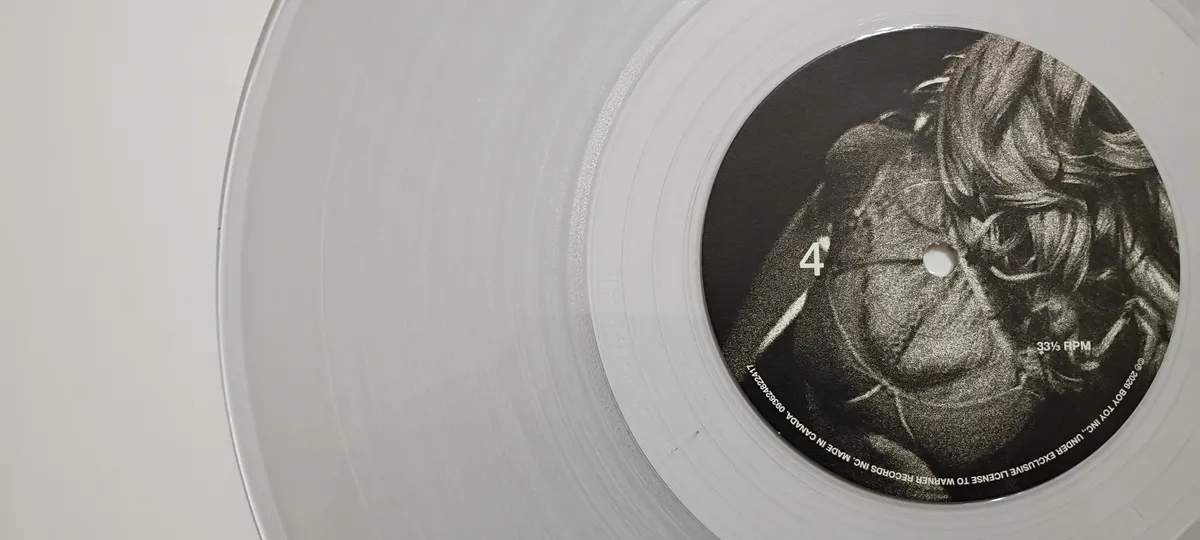
But the sleeve arrived damaged . . .

And so I gave it away.
Having given away the damaged numbered edition, I turned my attention once again to the premium edition. But by then, Madonna’s official website had sold out. I had missed out on the one that mattered most.
The natural—and apparently last—resort was eBay, where resellers had wasted no time turning the suddenly coveted edition into an opportunity for shameless profiteering. Whether they were being outrageously greedy or simply had lost all sense of proportion was difficult to tell. The asking prices were atrocious, ranging from several hundred dollars to figures that bordered on the absurd. And once converted into Canadian dollars, they became downright idiotic, after taxes, shipping charges, and customs duties had been added . . .
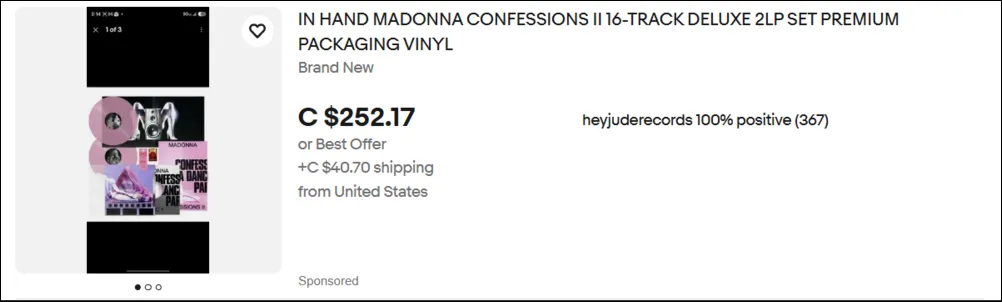
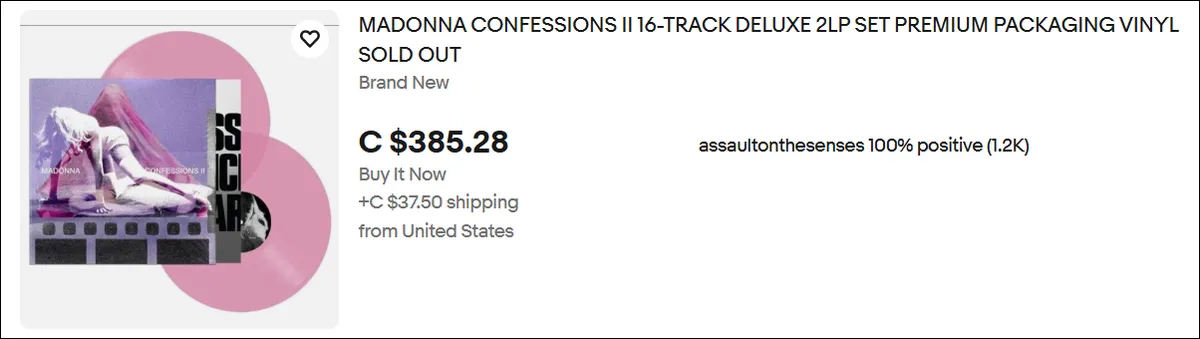
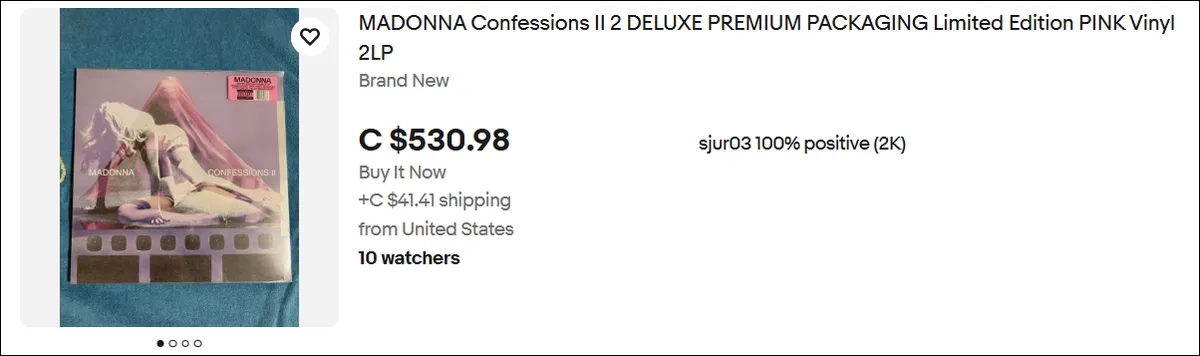
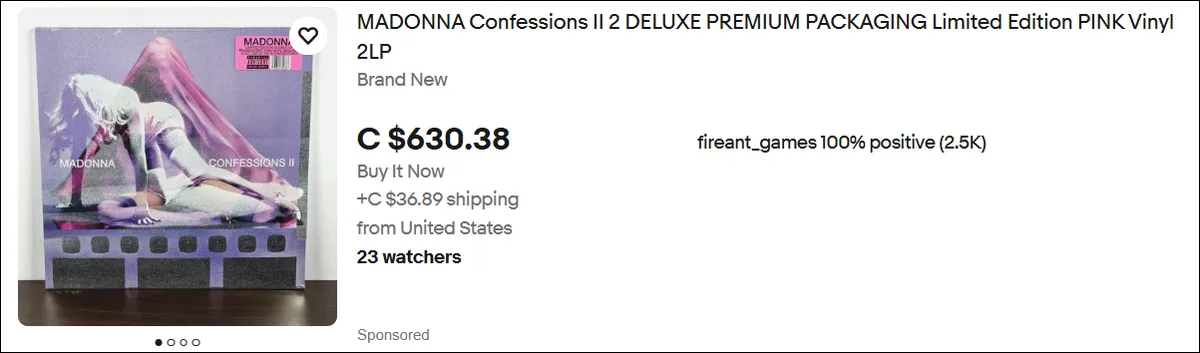
But I had no intention of financing somebody else’s early retirement. Besides, I am now an older and wiser person who has acquired that most elusive of virtues: patience. There was every reason to believe the LP would eventually turn up again, because it wasn’t a strictly limited-edition release. And so I waited.
Three or four months later, the premium edition quietly resurfaced on Madonna’s official website, available once again for a perfectly reasonable price . . .
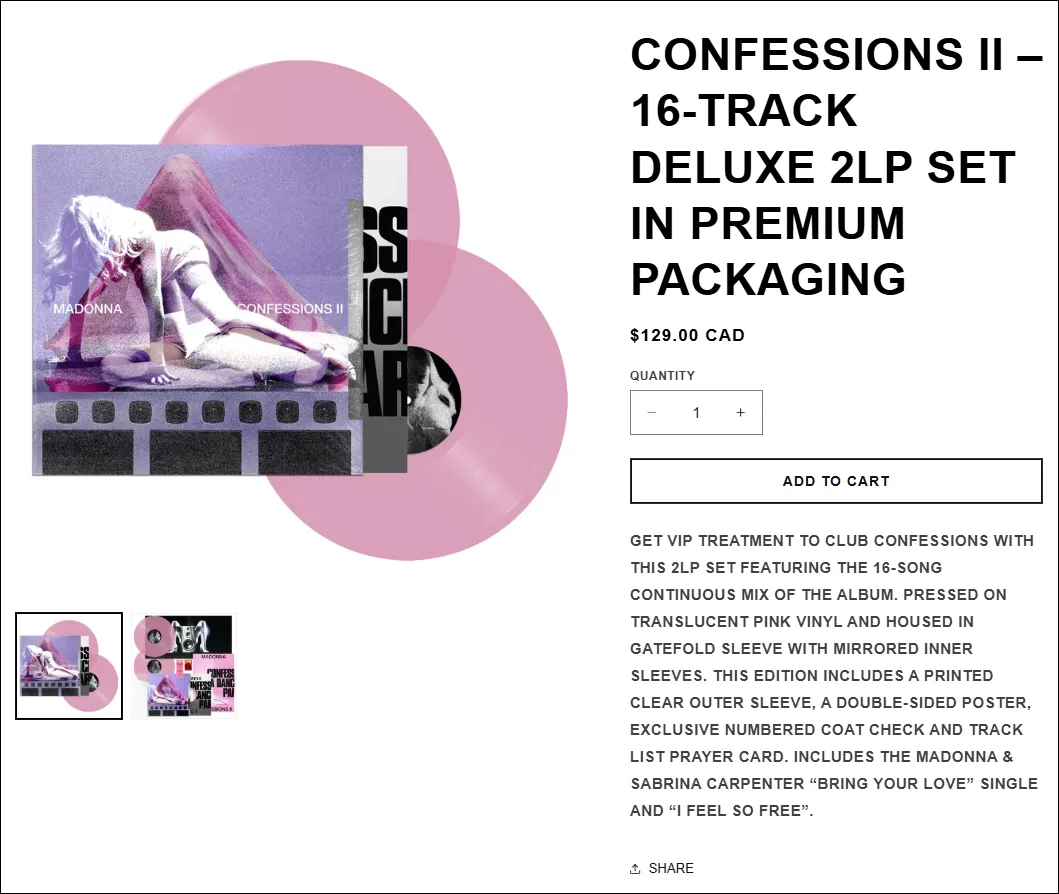
There was no hesitation this time. I placed my order immediately.
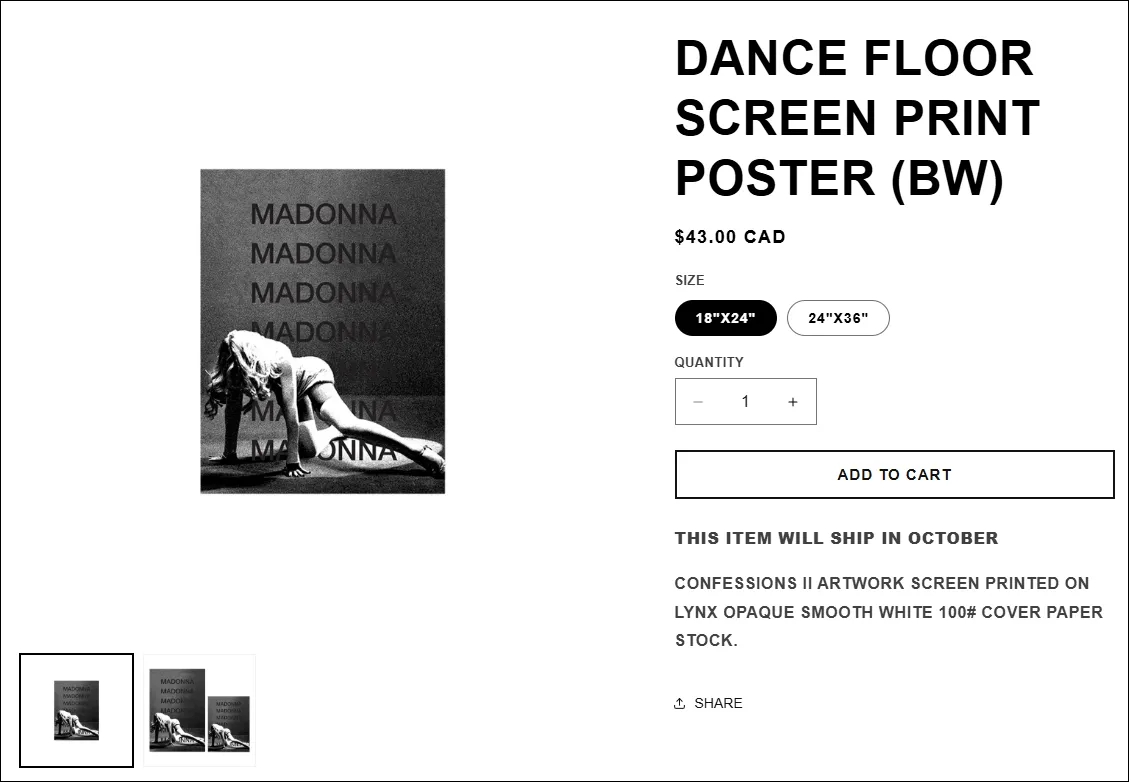
It is also worth noting that the very same promotional posters—those rather unsightly specimens that the record store had generously thrown in for free when I purchased my regular editions—were now being sold on the site for C$43 apiece. What had once been complimentary advertising material had acquired a monetary value of its own. Fans must now pay for the privilege of displaying an ad . . .
But I digress.
Now that I finally have the album, we can proceed with a proper “unboxing.” (God, how I hate that term!)
Here is the album, front and back, still in its original shrink-wrap, with a close-up of the hype sticker . . .
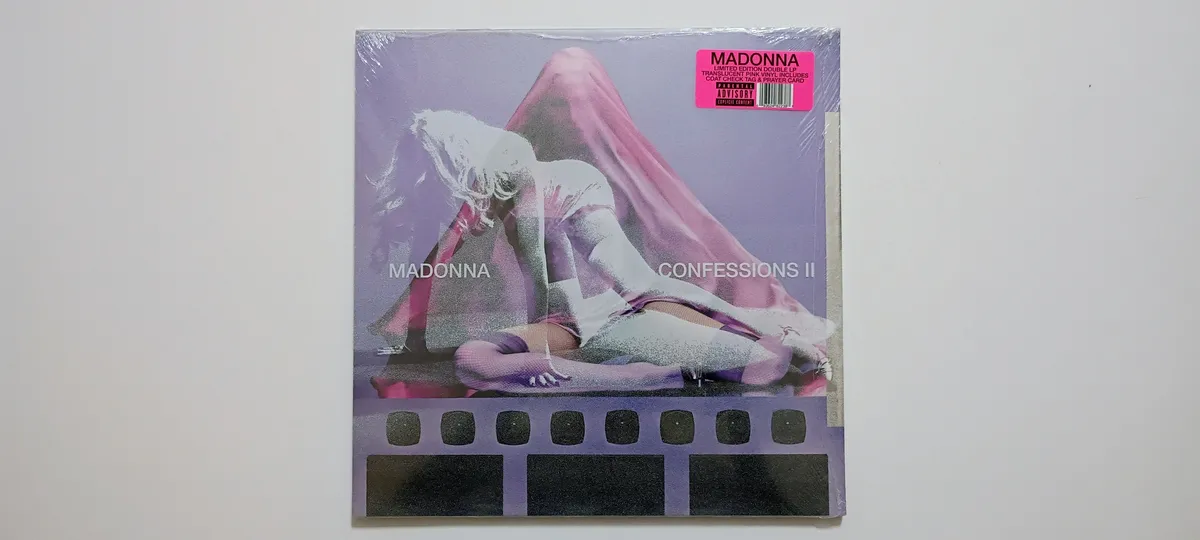
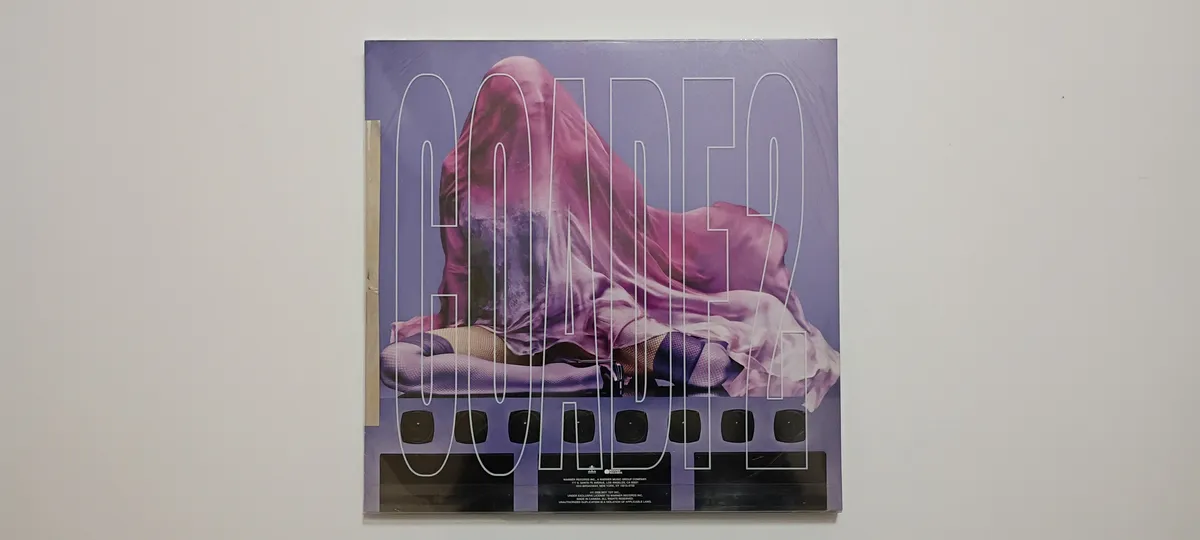
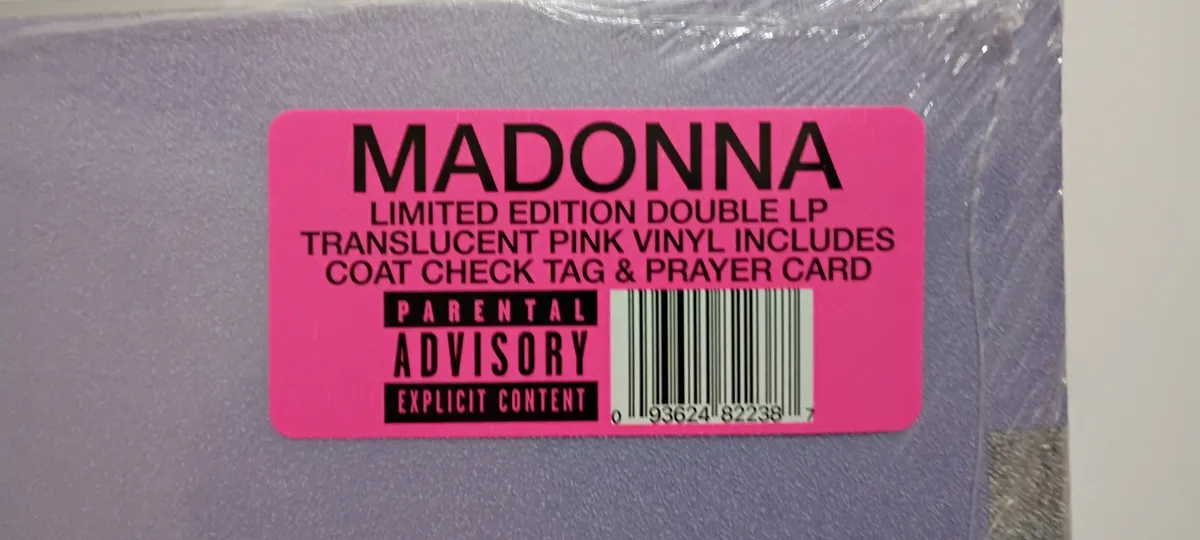
But there is the matter of that hideous metallic silver foil seal affixed directly to the cardboard sleeve, wrapping around its opening from front to back . . .

Every vinyl edition of Confessions II has been subjected to this particularly unfortunate packaging decision. The adhesive is so stubborn that attempting to remove the seal risks peeling away the printed surface of the sleeve itself, while leaving sticky residue on whatever survives the operation.
I am not alone in finding the thing objectionable; other collectors have complained about it online, with some advising against removing it altogether. However, for someone with my obsessive-compulsive tendencies, leaving that ugly strip of metallic tape disfiguring an otherwise attractive album cover was simply unthinkable. So began the painstaking business of peeling it away, millimeter by millimeter, with the sort of care normally reserved for restoring a Leonardo painting.
What distinguishes this edition from the regular release is its printed transparent PVC slipcase, which transforms the familiar album cover into a layered composition. The translucent outer sleeve carries additional artwork and oversized outlined lettering that interact with the images beneath it, creating different visual effects depending on whether the sleeve is viewed from the front or back . . .
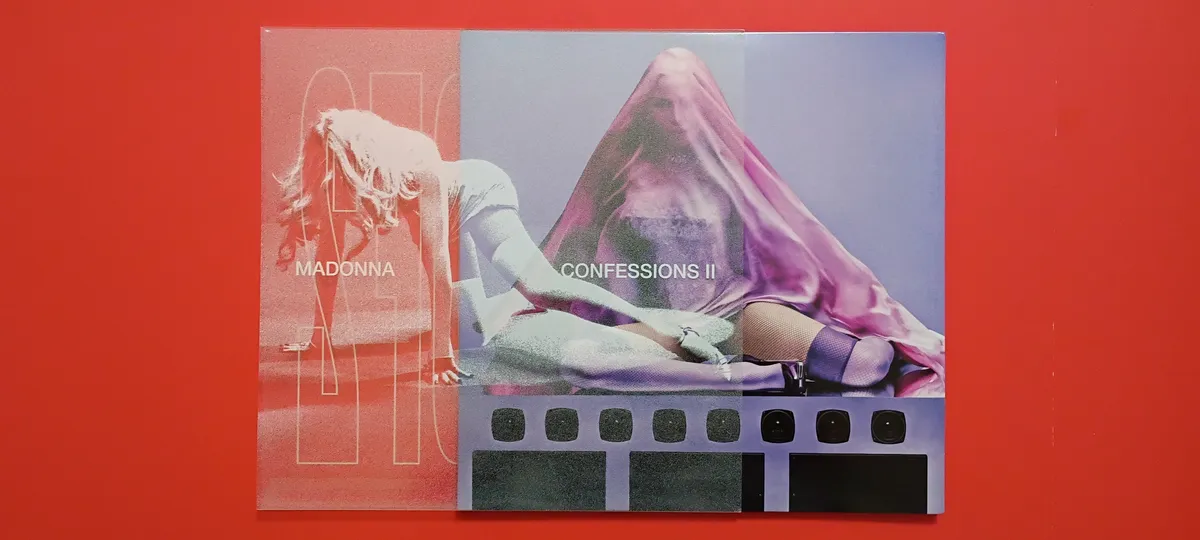
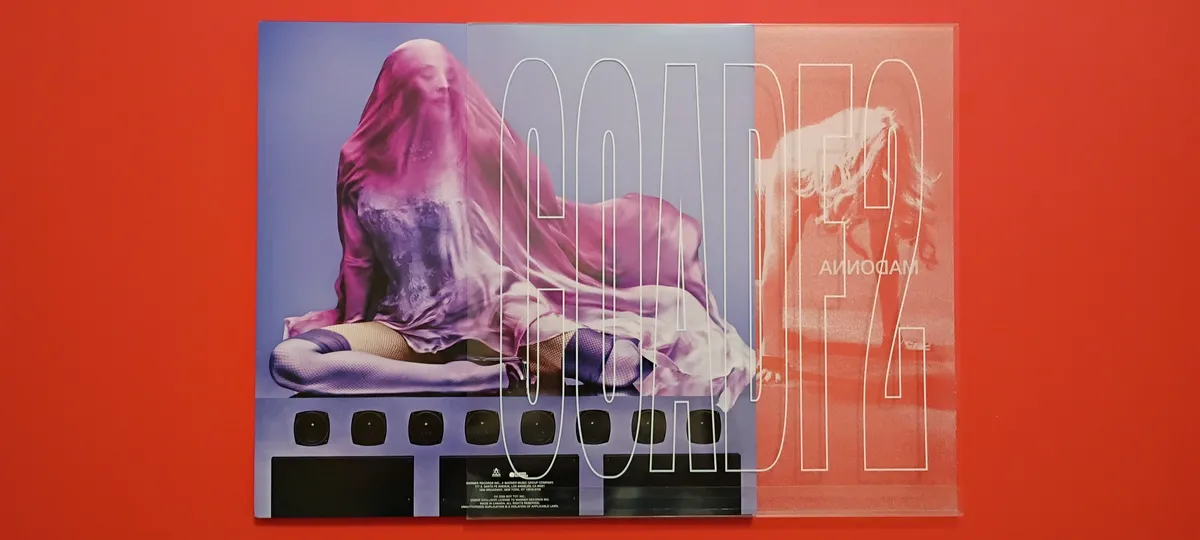
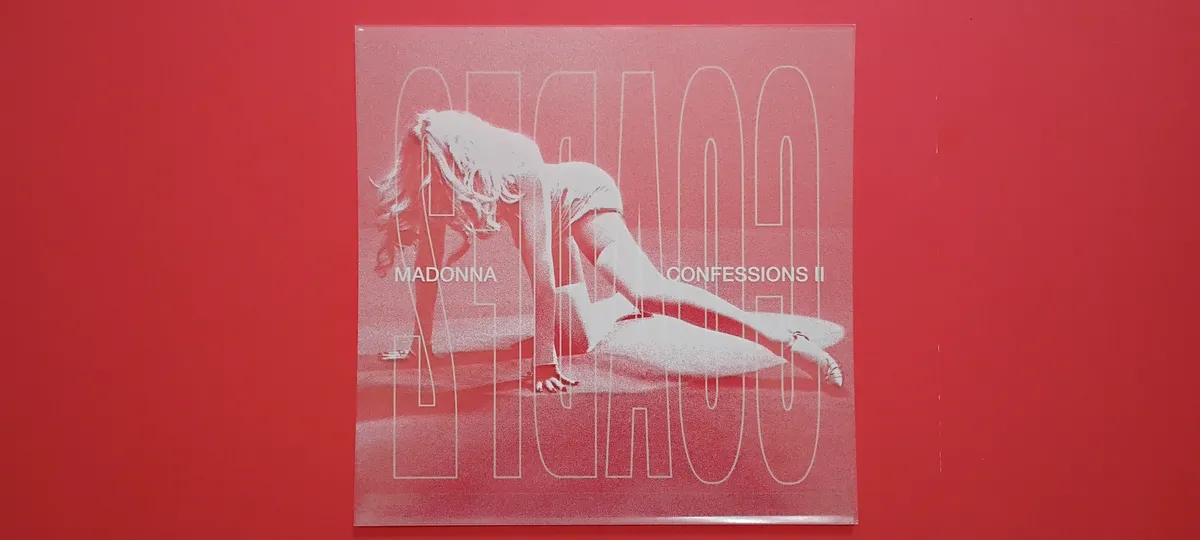
Remove it, and the slipcase becomes an artwork in its own right, with Madonna’s photograph rendered in white and an enormous outlined abbreviation for “Confessions on a Dance Floor 2.” It is a rather clever piece of graphic design, and perhaps the most convincing justification for calling this edition “premium” . . .
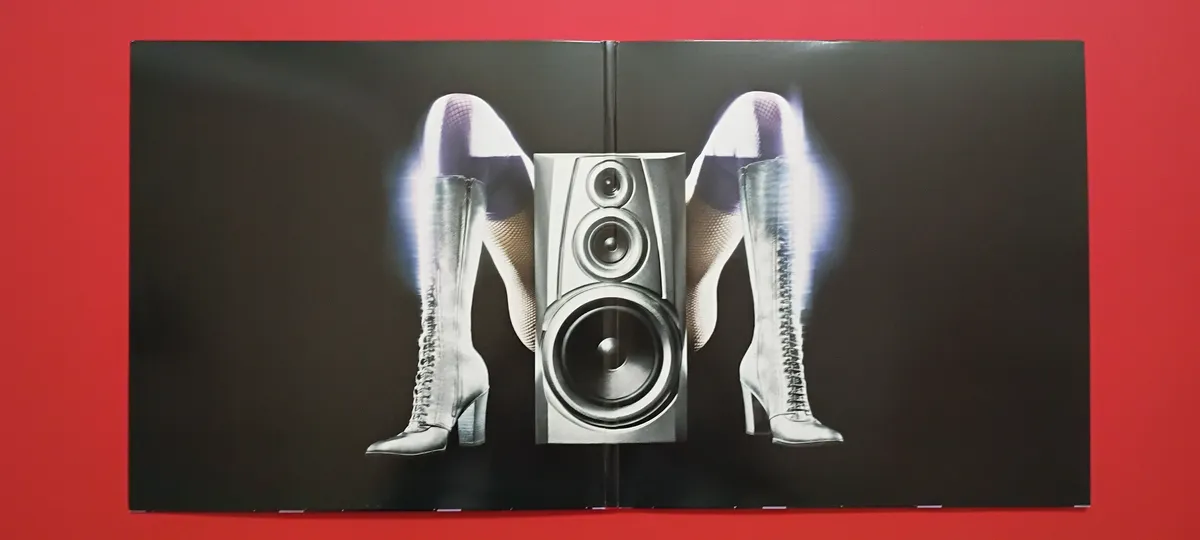
And then we open the gatefold—where whatever admiration I had for the packaging promptly evaporates. There ought to be merciless and severe penalties for crimes against record packaging.
The effect is stomach-churning, not because it is particularly shocking, but because it is so desperately immature. What might once have passed for provocative now looks unimaginative, distasteful, and embarrassingly cheap. There is something profoundly sad about an artist who has spent decades challenging conventions resorting to an unfunny visual joke that would look out of place even in a 1980s adolescent’s bedroom. This is not transgressive, daring, or even remotely sexy. It is simply ugly . . .
But things improve considerably with the two mirrored inner sleeves. Their reflective silver surfaces, printed with enormous black lettering, are designed to be placed side by side, forming a single typographic composition announcing the full, unofficial album title . . .
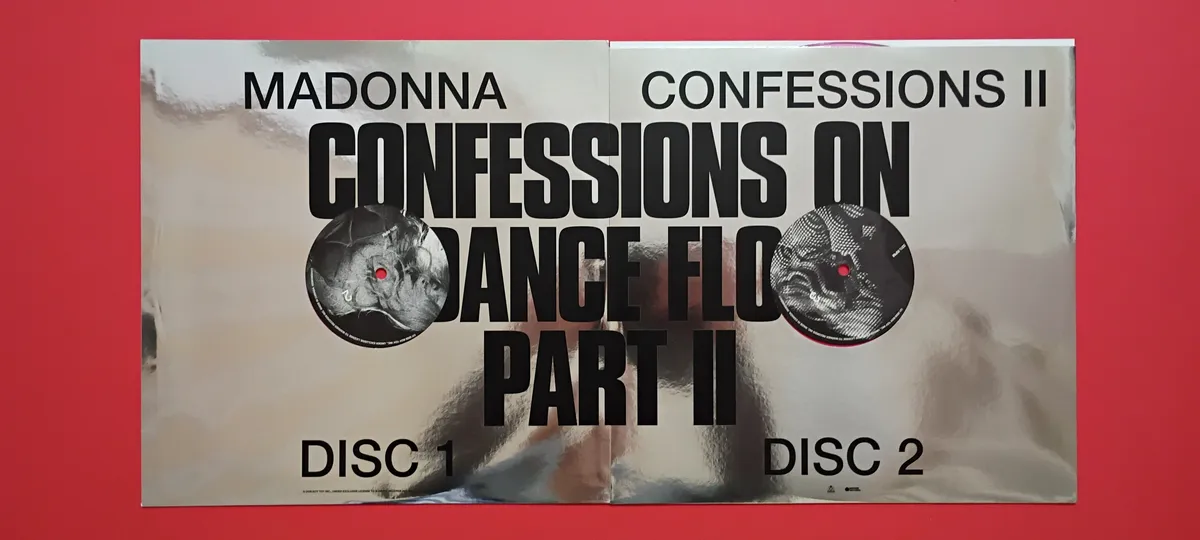
Turn them over, and the arrangement changes . . .
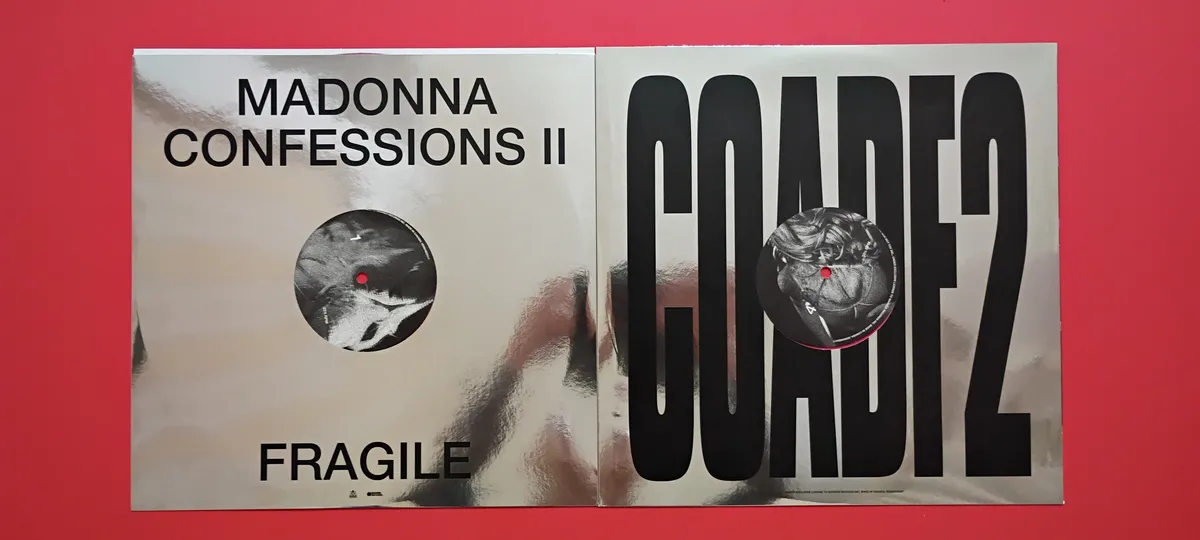
It is a rather striking presentation, although the idea of arranging separate record sleeves to complete a larger graphic design feels very Taylor Swift. Still, unlike the unfortunate gatefold illustration, this is a gimmick that actually works, and the metallic finish gives the packaging something approaching the luxury its premium designation promises.
And here are the records themselves, pressed on translucent pink vinyl, with all four sides featuring different black-and-white photographs of Madonna on their center labels . . .
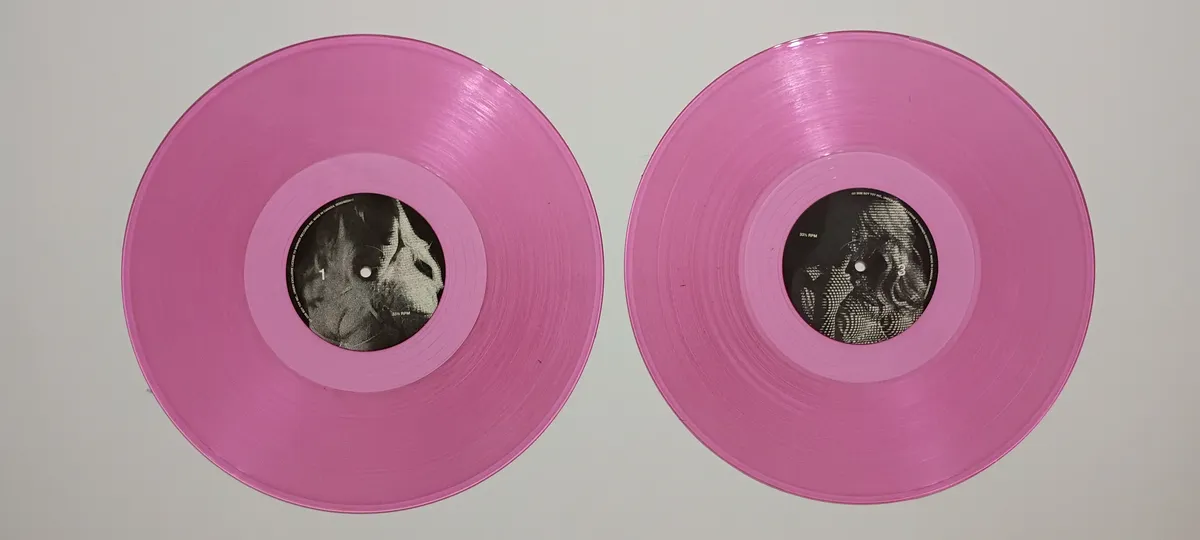
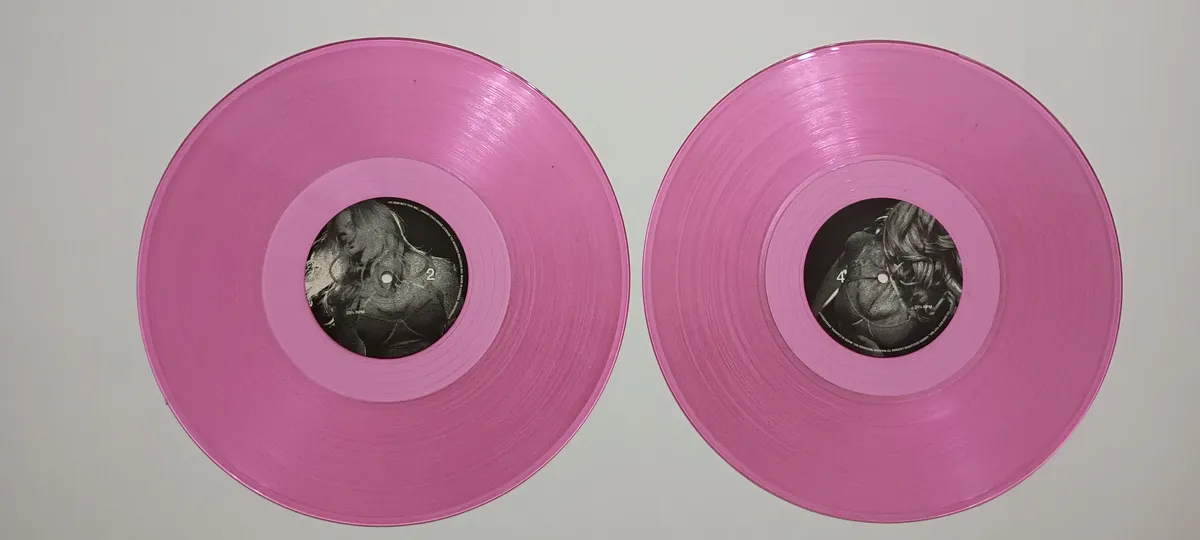
Pink is certainly attractive, and the monochrome labels provide a pleasing contrast. But colored vinyl has become such a commonplace marketing gimmick that its novelty has long since worn off. I hate colored vinyl.
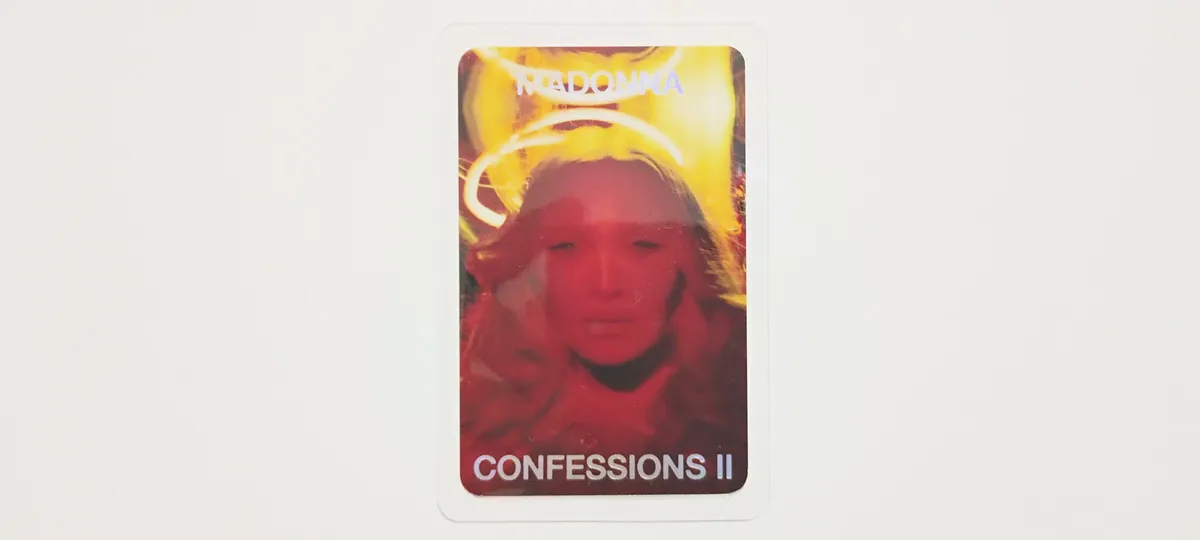
Then there are the little treats tucked inside: a double-sided poster, a pink numbered coat-check ticket, and a laminated “prayer card” . . .
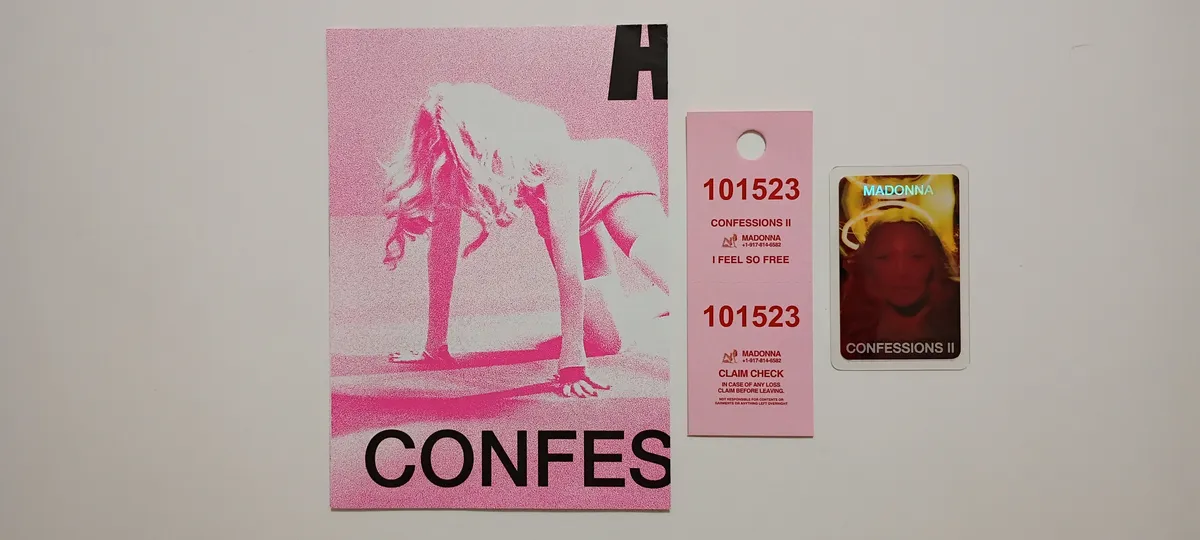
The poster and coat-check ticket are also included with the regular double-LP edition, but the “prayer card” is exclusive to this premium package. The ticket is a playful nod to the imaginary Club Confessions, complete with a claim number and instructions to retrieve one’s belongings before leaving.
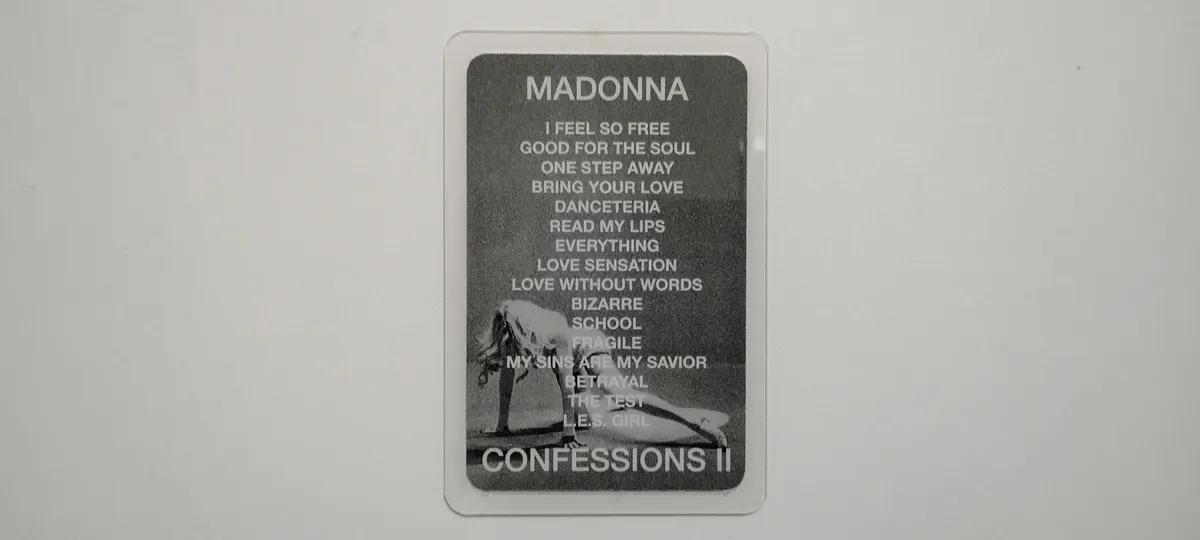
Why a nightclub should require a “prayer card” is anybody’s guess, but Madonna’s habit of mingling the sacred and the profane has become tiresome already. The “prayer card” contains the complete album track list . . .
And finally, here is the album, front and back, with its transparent PVC slipcase back in place and that damned metallic seal successfully removed without so much as a scratch on the cardboard sleeve. A small triumph, considering the painstaking operation required to get rid of the wretched thing . . .
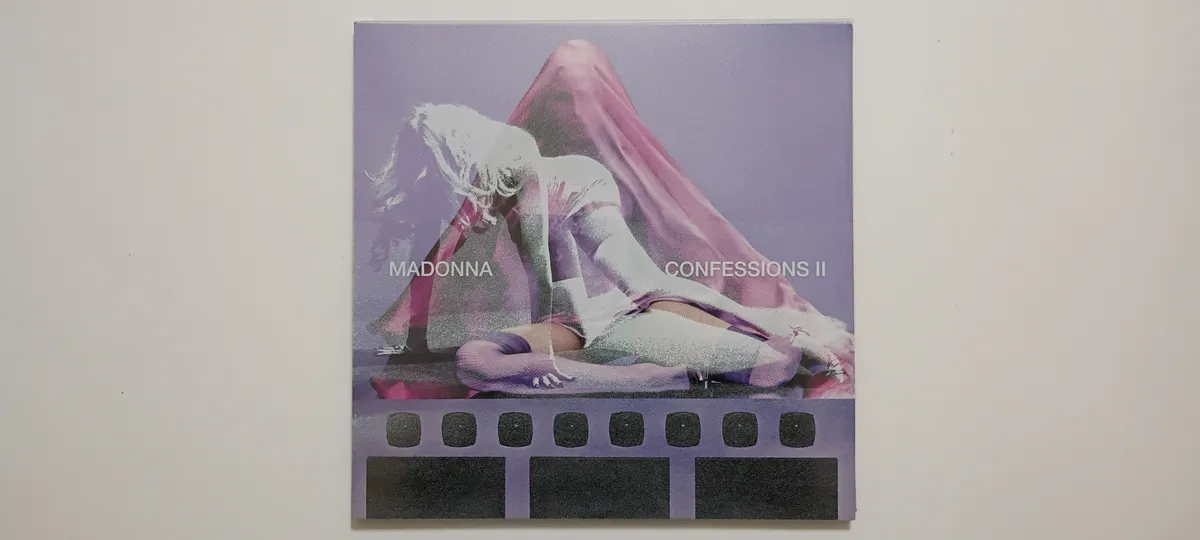
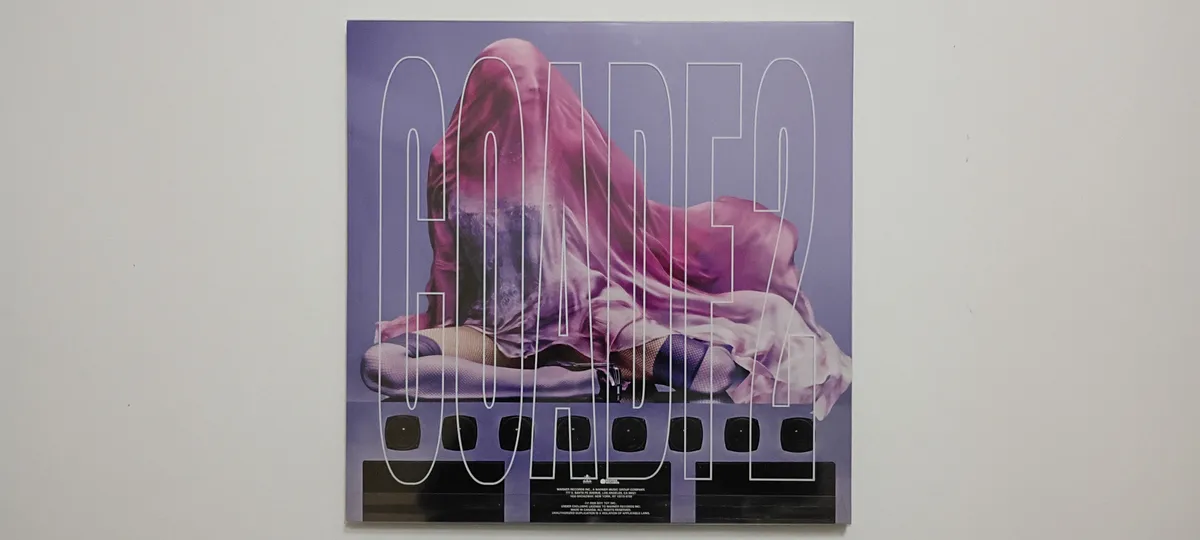
When I return home to St. John’s, I will, of course, place the entire album in a protective plastic outer sleeve, onto which I shall carefully affix the original hype sticker. I always save these stickers and transfer them to the protective sleeves of my records.
Four months after its release, I can now say with finality that, contrary to my earlier hopes, the album has not grown on me. If anything, repeated listening has merely stripped away whatever optimism I once entertained about it. I have finally come to accept what I was quite reluctant to admit at the beginning: the album sucks. It is boring as hell.
But somebody up there, or down there—depending on where the daímones1 happen to reside—appears to have heard me.
Despite my disappointment with Confessions II, I really like Stuart Price’s instrumentations. Another version of the LP—this time without Madonna’s vocals, interminable spoken passages, and even images—will be released early next year . . .
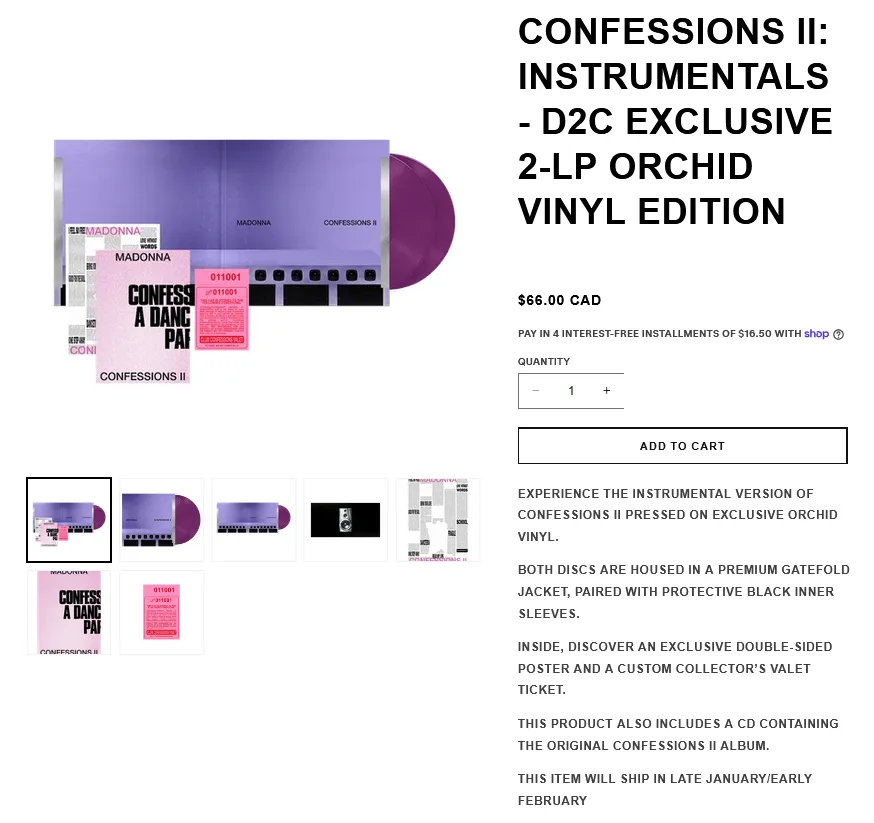
This is precisely the album I want. Liberated from Madonna’s increasingly tiresome vocal mannerisms and visual gimmickry, Stuart Price’s production might finally reveal the qualities I have been struggling to appreciate beneath all that unnecessary interference.
1. daímones [δαίμονες] (AGr.): supernatural spirits of ancient Greek religion and mythology, sometimes understood as intermediaries between gods and mortals. Unlike the exclusively malevolent demons of later Christian imagination, the daímones could be benevolent, protective, or troublesome, influencing our fortune and occasionally intervening in our affairs. I can only hope that whichever ones have been listening to my grievances about Madonna belong to the beneficent variety, preferably those specializing in the miraculous delivery of complimentary vinyl records 😉.