Surreal!
These are surreal . . .
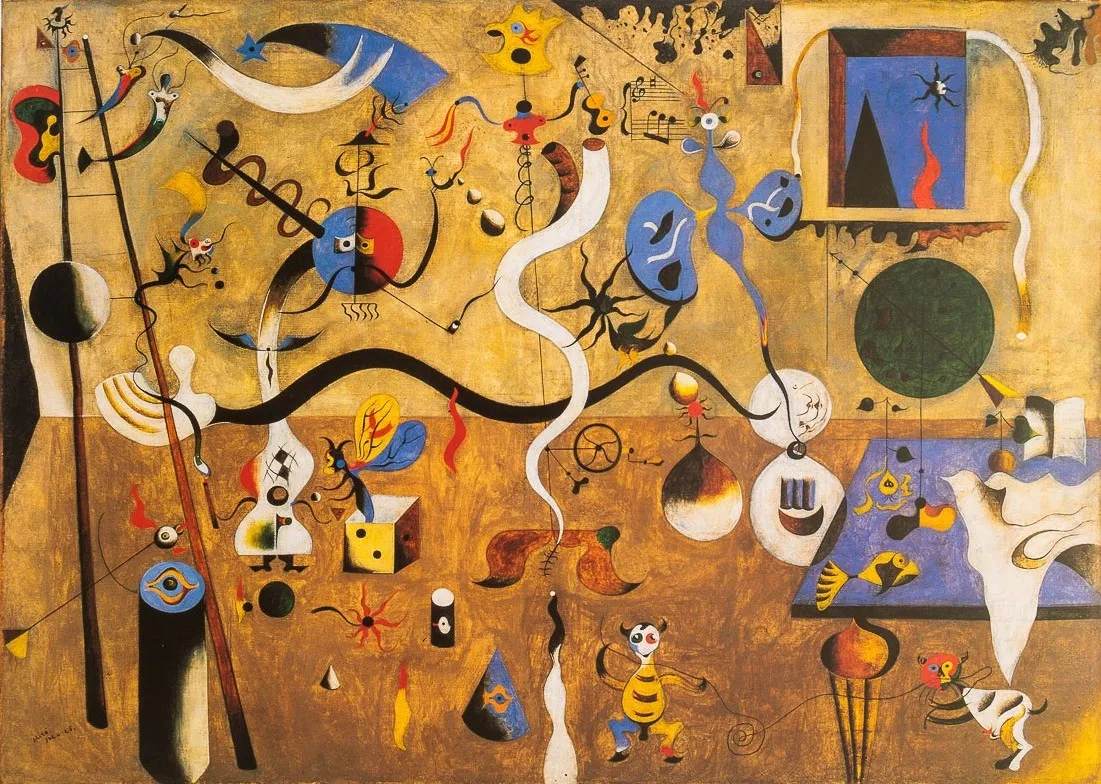 Carnaval de Arlequín [1924–1925] by Joan Miró. Albright–Knox Art Gallery, Buffalo.
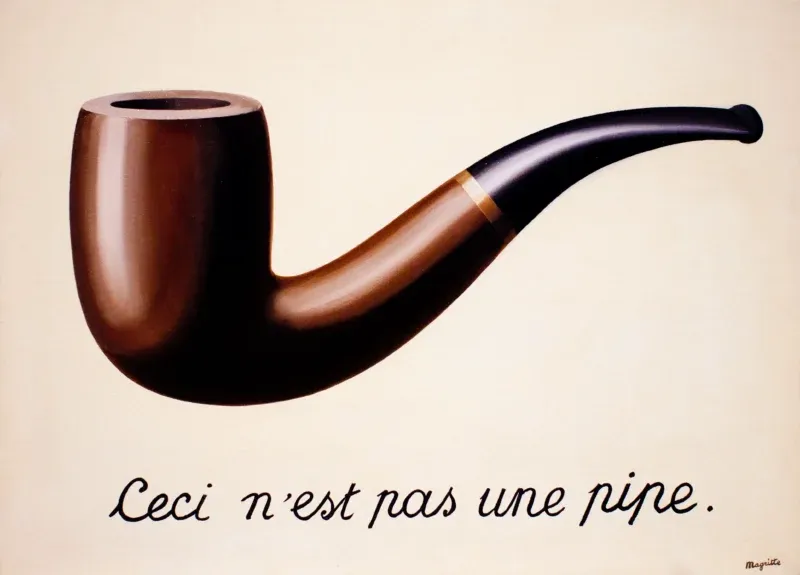 La Trahison des images [1929] by René Magritte. Los Angeles County Museum of Art.
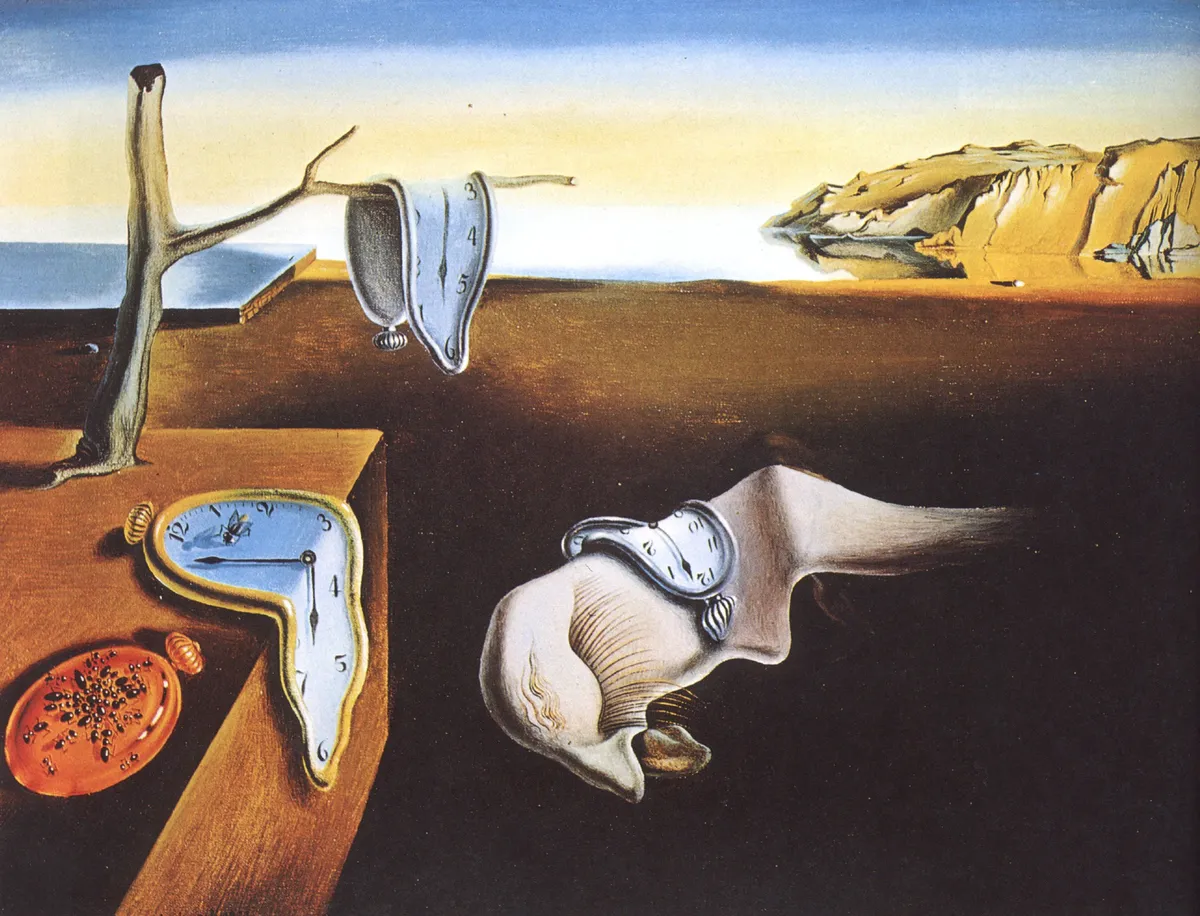 La persistència de la memòria [1931] by Salvador Dalí. Museum of Modern Art, New York City.
In art, the surreal is most closely associated with Surrealism, a movement that transformed the way artists understood and represented reality. It emerged in Paris in the early twentieth century and was formally established in 1924 when French poet André Breton (1896–1966) published his Manifesto of Surrealism, outlining the movement’s principles.1
Influenced by Sigmund Freud’s theories of the unconscious, Surrealist artists sought to liberate imagination from the constraints of reason, convention, and ordinary reality.2 For them, dreams and the unconscious mind offered a way to explore a deeper reality beyond the world as we ordinarily see and understand it. In painting, this meant creating strange, dreamlike scenes or depicting impossible situations with astonishing realism.
Therefore, all your experiences, whether good or bad, happy or sad, extraordinary or ordinary, and whatever feelings they provoke in you, are not “surreal.”
They’re what is called mundane.
1. Tessel M. Bauduin, Surrealism and the Occult: Occultism and Western Esotericism in the Work and Movement of André Breton (Amsterdam: University Press, 2014), 9.
2. Aaron H. Esman, “Psychoanalysis and Surrealism: André Breton and Sigmund Freud,” Journal of the American Psychoanalytic Association 59, no. 1 (February 2011): 173.