Salvē, Rēgīna Perón
I hate received wisdom—that is, opinions so widely repeated and accepted that people begin treating them as the gospel truth rather than subjective judgments—especially when it comes to popular culture, where it becomes cultural conditioning, manufactured consensus, and the policing of taste.
Take the Beatles, for example. We are constantly told that they are good, that they are great, that they are the best.
The best? According to whom? There is absolutely no such thing as “the best.” Such judgments are relative, subjective, and personal. If there is anyone who is “the best,” it is their publicists, promoters, and business machinery, which have conditioned people not merely to accept these judgments as established “truths” but to regard anyone who disagrees with them as some kind of heretic. Because of that, disliking the Beatles is no longer simply a difference of taste—it has become a moral failing.
At the opposite end of this cultural orthodoxy is Madonna. We are repeatedly told and thus we accept it: she cannot sing and she cannot act.
But the simple truth is that she is a bitch who has pissed off both the right and the wrong people with her arrogance, meanness, and refusal to behave herself. And because she has offended so many people, the verdict has already been handed down: she cannot sing and she cannot act! Never mind what she actually does in a recording studio or in front of a camera. Her personality has become the measure of her talent, and her reputation has become the evidence against her. Apparently, being an unpleasant person automatically disqualifies one from being a competent singer or actor.
In the case of the Beatles, we are conditioned to admire the artists regardless of our personal judgment of their work. In Madonna’s case, we are conditioned to dismiss the artist regardless of her merits. In both cases, someone else has already decided what we are supposed to think.
“Did you hear that? They called me a whore—they actually called me a whore!” Thus, when Madonna starred in the 1996 film adaptation of Andrew Lloyd Webber and Tim Rice’s Evita, the reaction was really hysterical. How dare Madonna, of all people, presume to play Eva Perón? She could neither sing nor act, remember?
Among the supposedly definitive standards against which she was measured was Patti LuPone, who had originated the role on Broadway in 1979. By then, people had been conditioned to believe that LuPone was the Evita, the one and only, and that anyone else who dared to attempt the role was committing some kind of theatrical sacrilege.
But biases aside, have you actually watched Patti LuPone perform as Eva Perón? Those crazy eyes! And as for the singing, she seemed less interested in singing the songs than in screaming them at the audience. Once again, we are not asked to judge two performances on their respective merits. We are told that one is the standard and the other is an affront to it. And we still accept and believe it.
But contrary to popular myth, and my personal biases aside, Madonna can actually sing—and she has a beautiful singing voice. For the information of those who seem to think that “Like a Virgin” is the only song she has ever recorded, some of her biggest and greatest hits (and she has many!) were not bubblegum disco tunes but tender, heartfelt, and even devastating ballads: “Take a Bow,” “I’ll Remember,” “Crazy for You,” and “Live to Tell,” for example. These songs became classics not because of provocative costumes and music videos, clever choreography, or sexual controversy. They were carried by a voice capable of tenderness, vulnerability, genuine emotional expression, and restraint.
And even before Evita, Madonna had already demonstrated considerable vocal and stylistic versatility. Have you ever actually listened to I’m Breathless, her Dick Tracy-inspired album? But then again, why bother listening when someone has already told you that the woman cannot sing?
For Evita, Madonna underwent intensive vocal training, working with a coach to expand her range and meet the demands of the score. Some of the songs were even transposed into lower keys to accommodate her voice. But the result was beautiful, delicate, and wonderfully understated—qualities that Patti LuPone hardly exemplified in her own performance.
Madonna’s delivery was youthful, almost innocent, vulnerable, and extraordinarily pleasing to the ear. Indeed, her interpretation was remarkably close to the performances of Julie Covington and Elaine Paige, who originated the role on the 1976 concept album and the London stage in 1978, respectively. Both approached the songs with sweetness and sensitivity, not aggression.
“I have to be rainbow high.” And now, as a Madonna collector, I am delighted to have Madonna’s Evita again in my life in the format it never had when it first appeared—on vinyl . . .
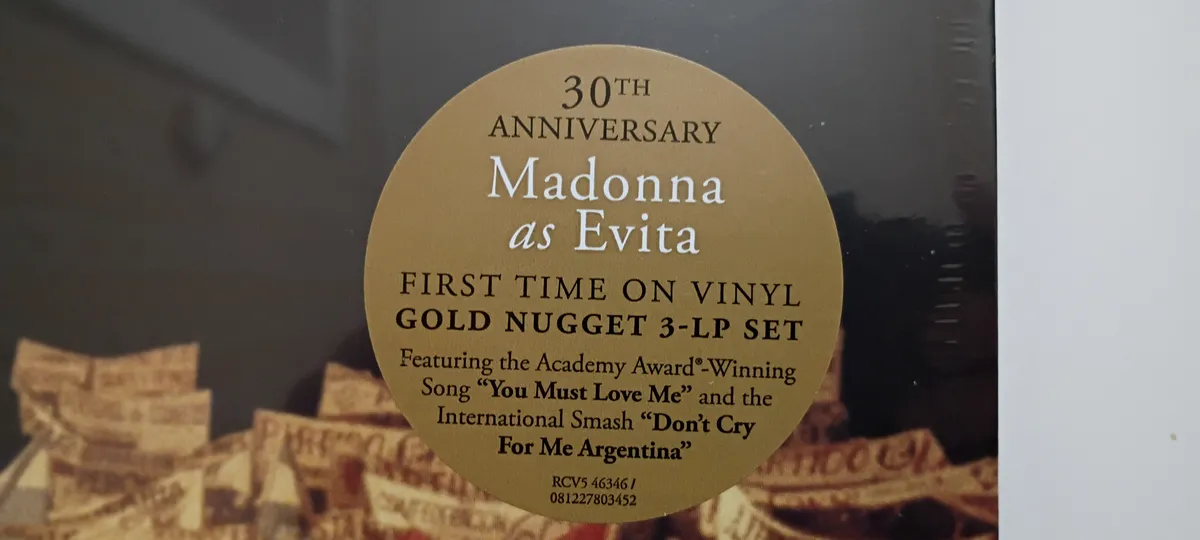
But there is something wonderfully absurd about all this. Think about it. Vinyl records had been around for decades before CDs came along, yet here I am in 2026, writing about the arrival of a thirty-year-old album on vinyl as though the format were some exciting new invention. It is like a time warp in reverse. I am not merely revisiting the music of Andrew Lloyd Webber, Alan Parker’s film, or the story of Eva Perón. I am “celebrating” the technological novelty of something that actually predates the technology on which we first heard the album. Imagine telling someone in 1996 that, thirty years into the future, we would be excited about finally being able to buy a new album on vinyl!
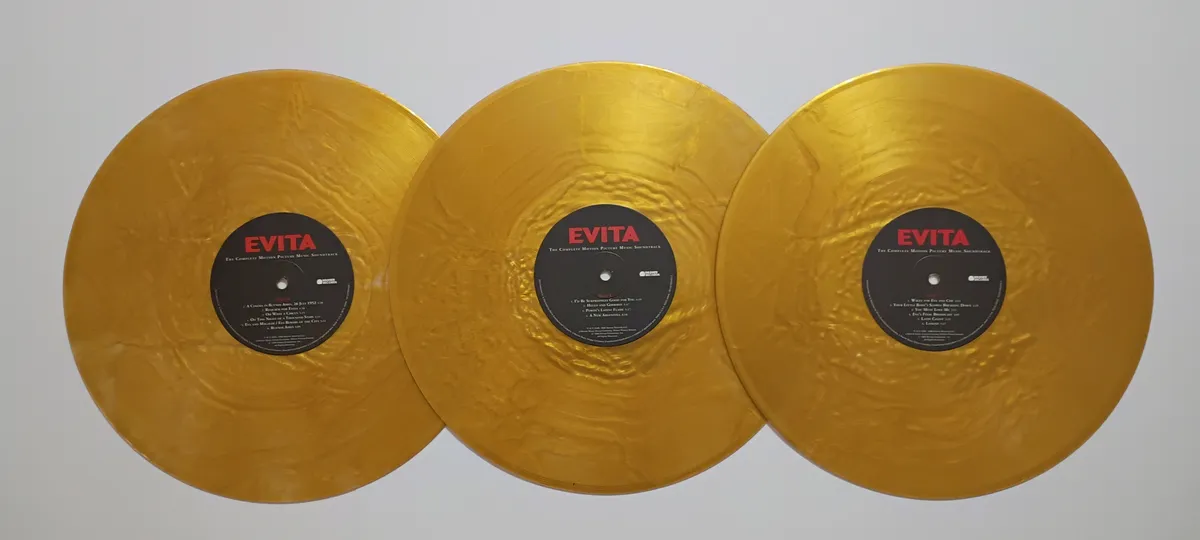
Yes, this Warner/Rhino deluxe three-LP set marks the first time the Evita film soundtrack has ever been issued on vinyl. And what a beautiful edition it is!
However, this is what it really is: an enlarged, vinyl-sized replica of the original complete CD edition! The artwork, the photographs, the presentation—everything that once came packaged in a compact little CD case has now been reproduced on a much grander scale. What I have now is essentially the same thing I bought thirty years ago, only much, much bigger . . .
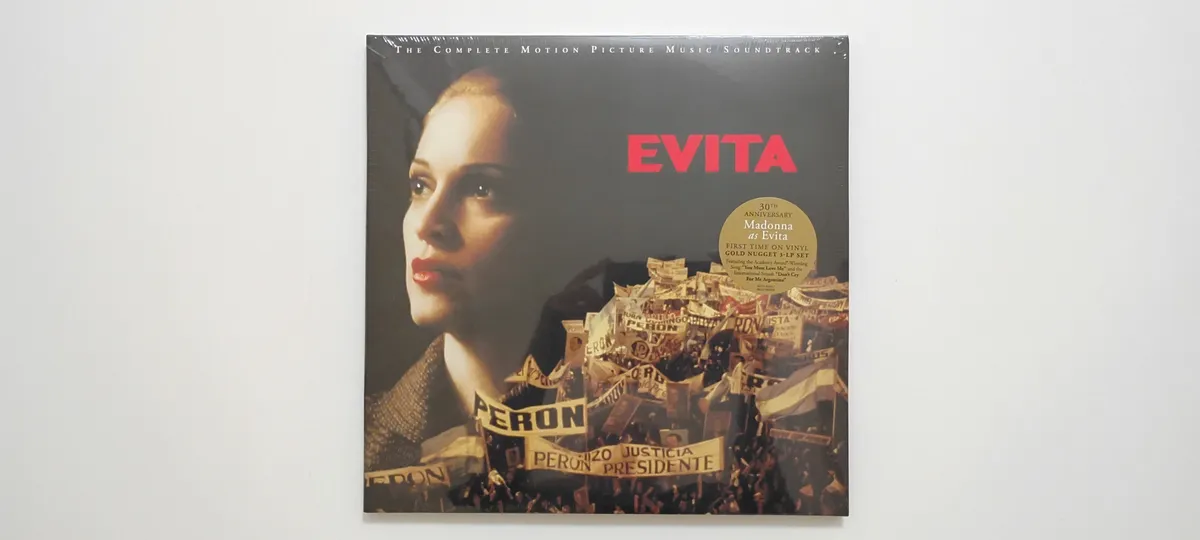
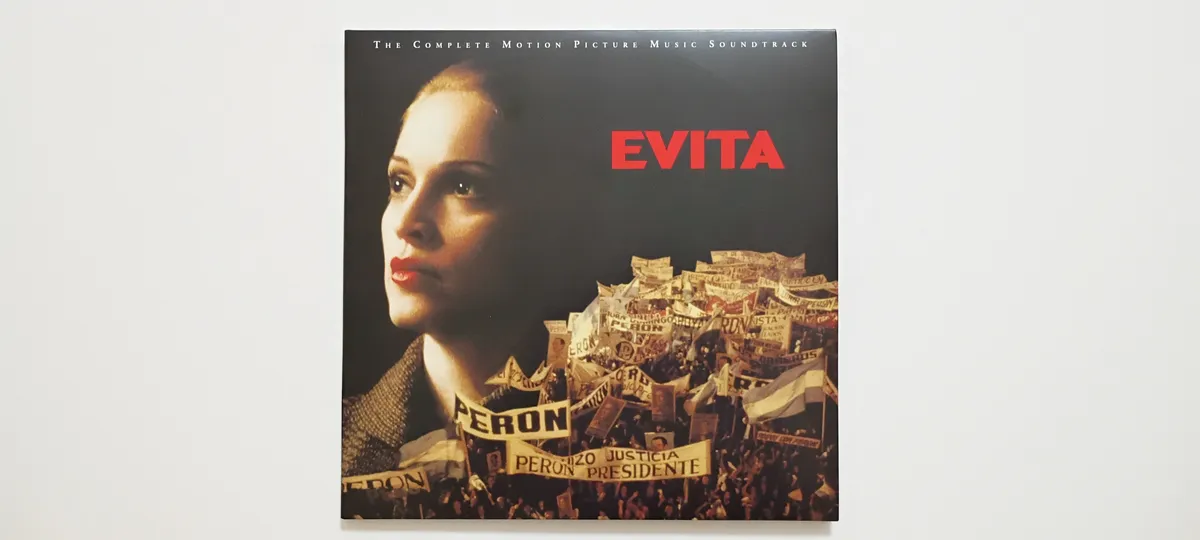
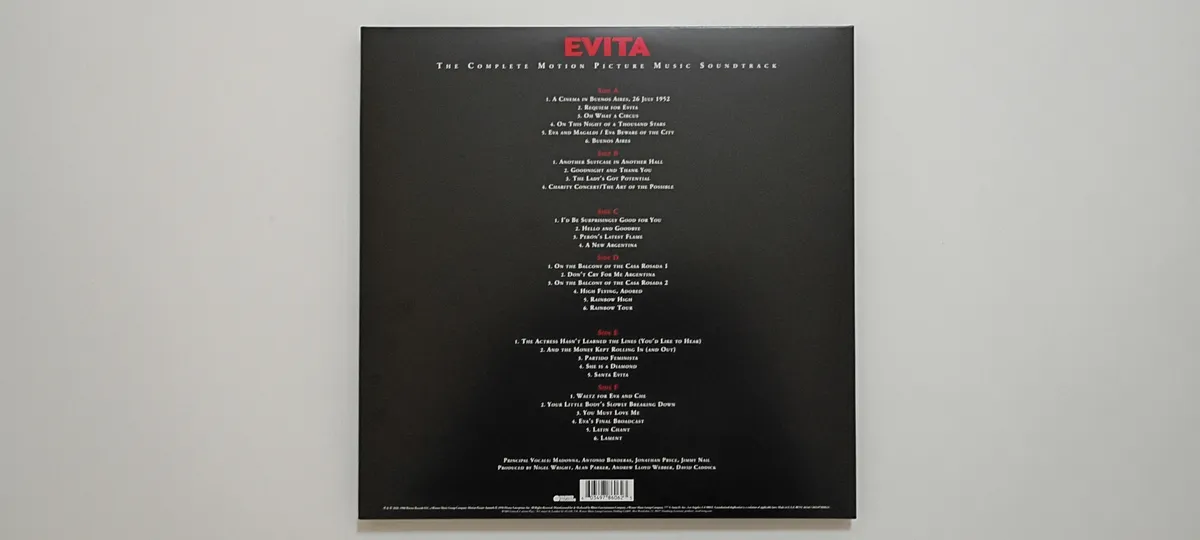
The three records come housed in a lavish trifold sleeve, which unfolds to reveal the familiar artwork and imagery from the original release, now reproduced in glorious LP dimensions . . .
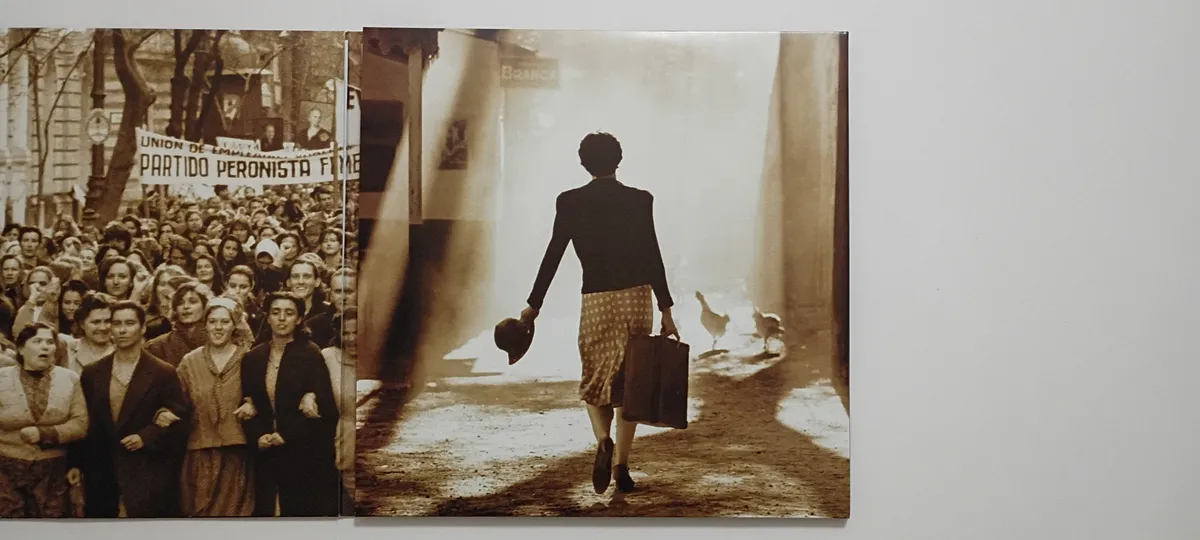
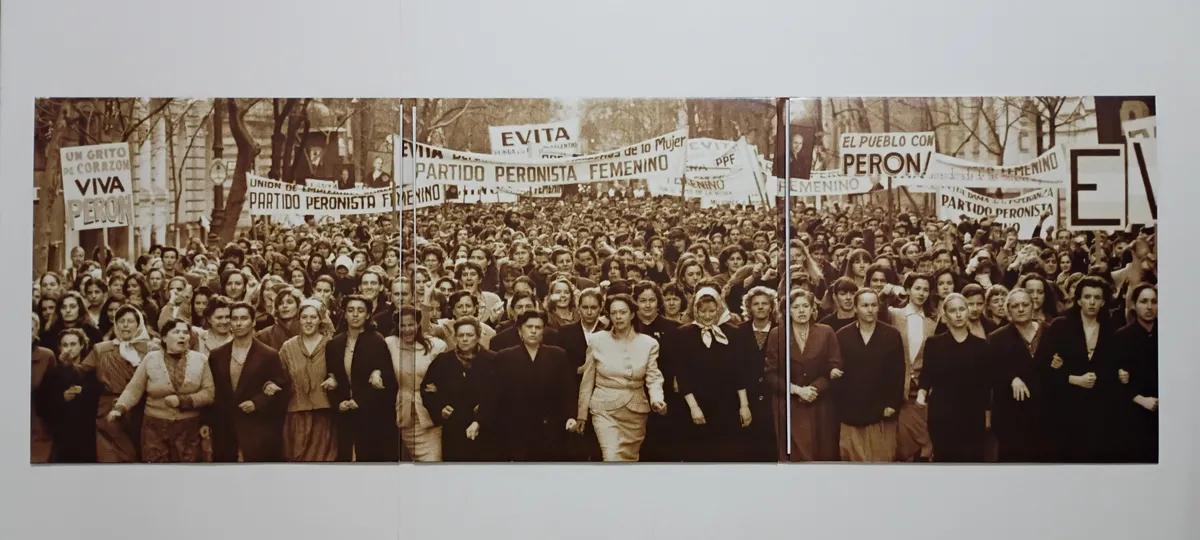
The twenty-page booklet, featuring photographs from the film, is likewise an enlarged reproduction of the booklet that accompanied the original CD. One of the great pleasures of collecting vinyl in 2026 is discovering how wonderful a CD booklet looks when it has been allowed to “grow up” . . .
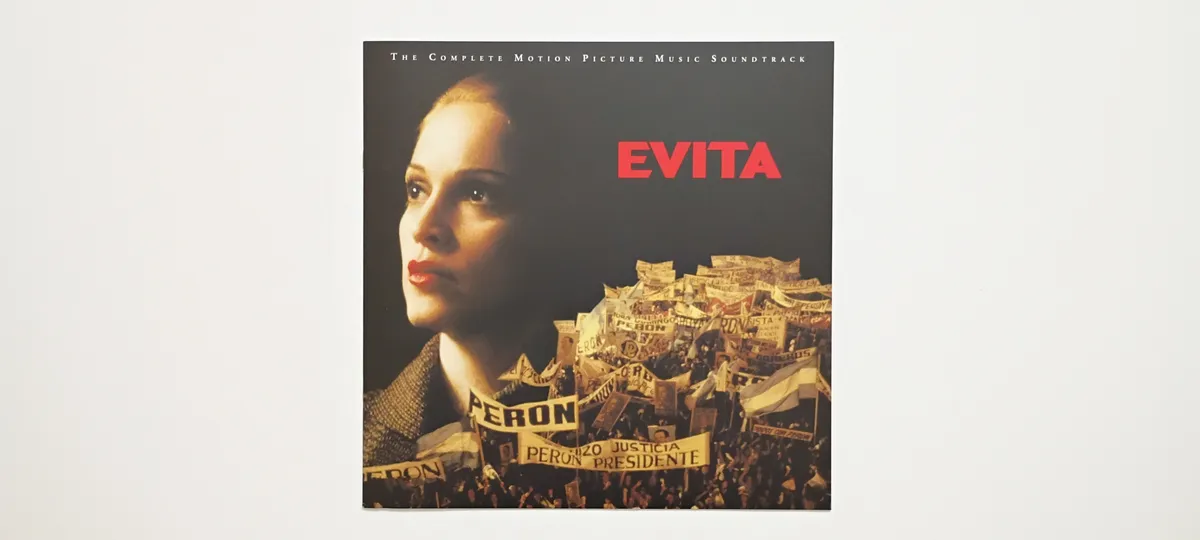
The same visual experience, only now the photographs are bigger, the pages are bigger, and everything feels considerably more “luxurious” . . .
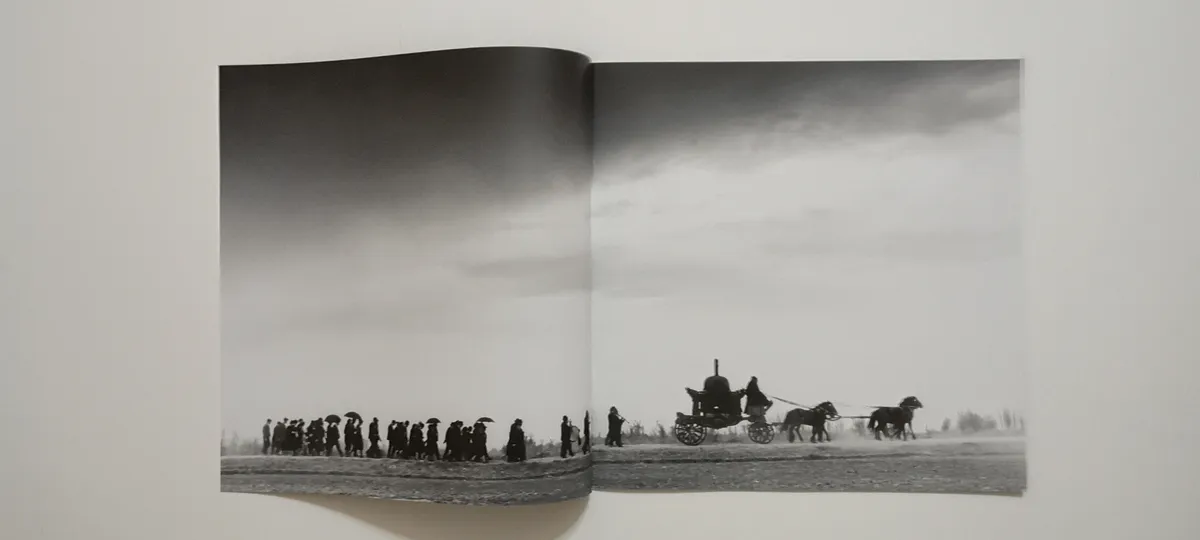
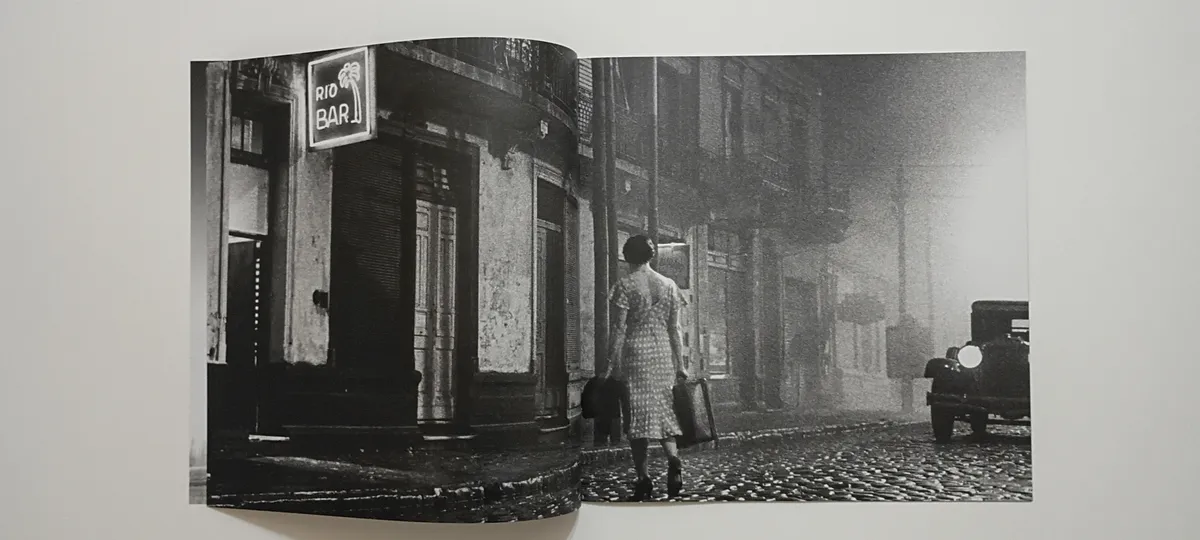
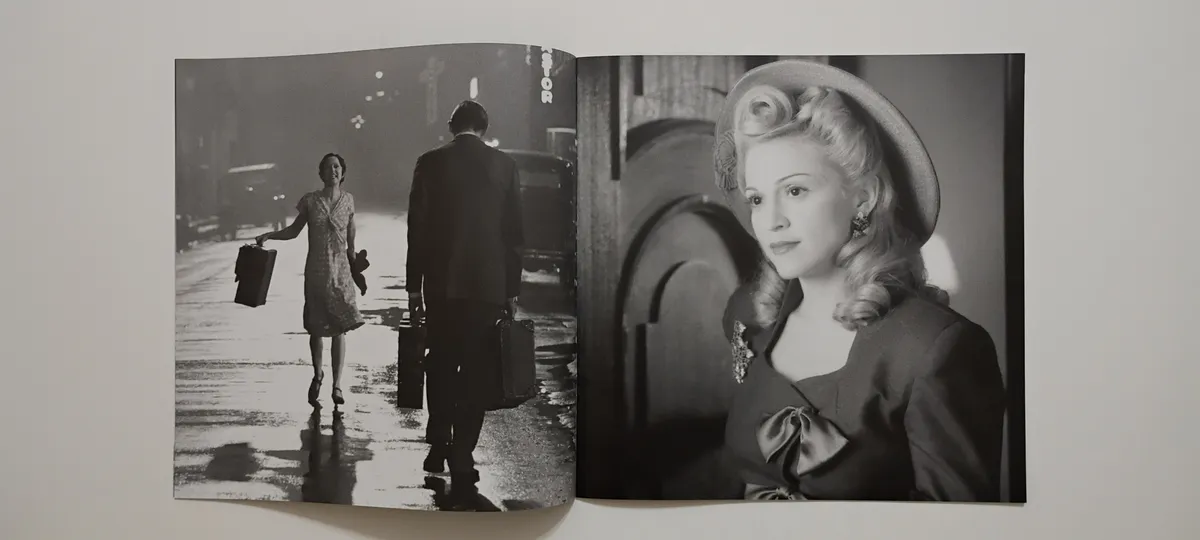
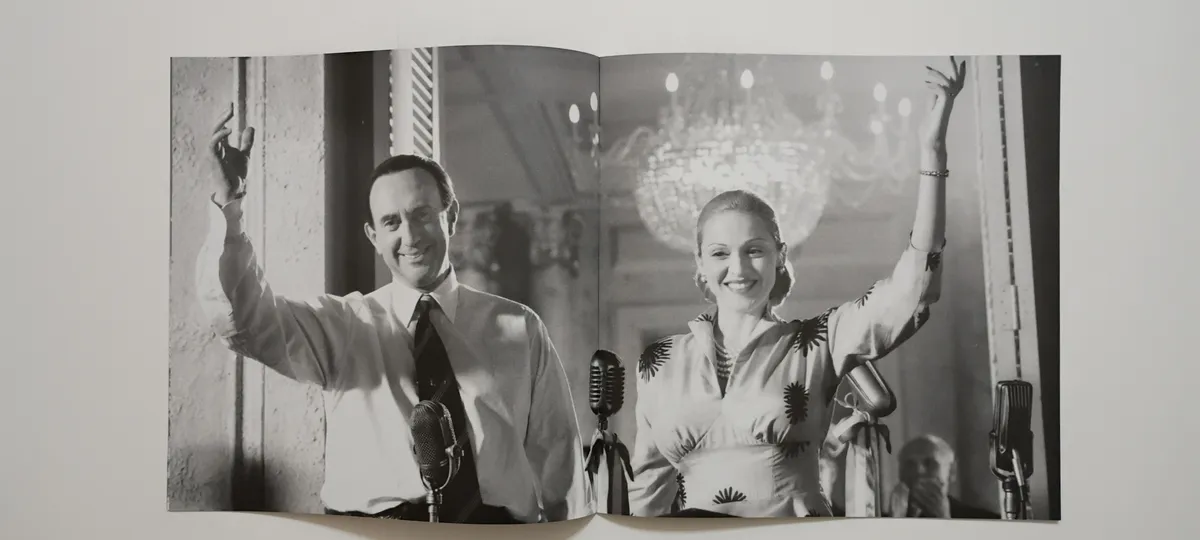
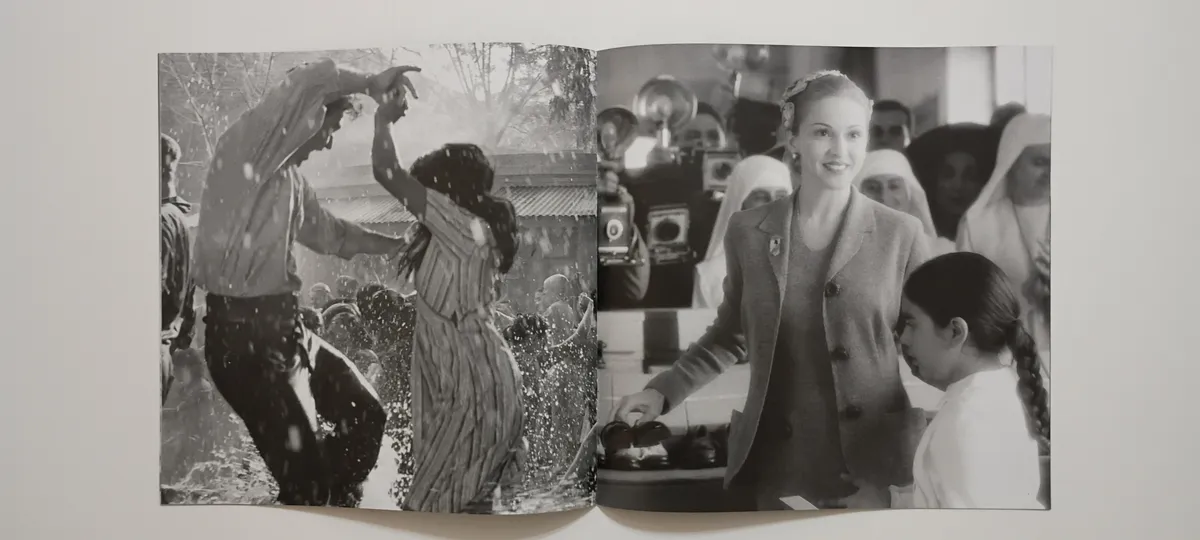
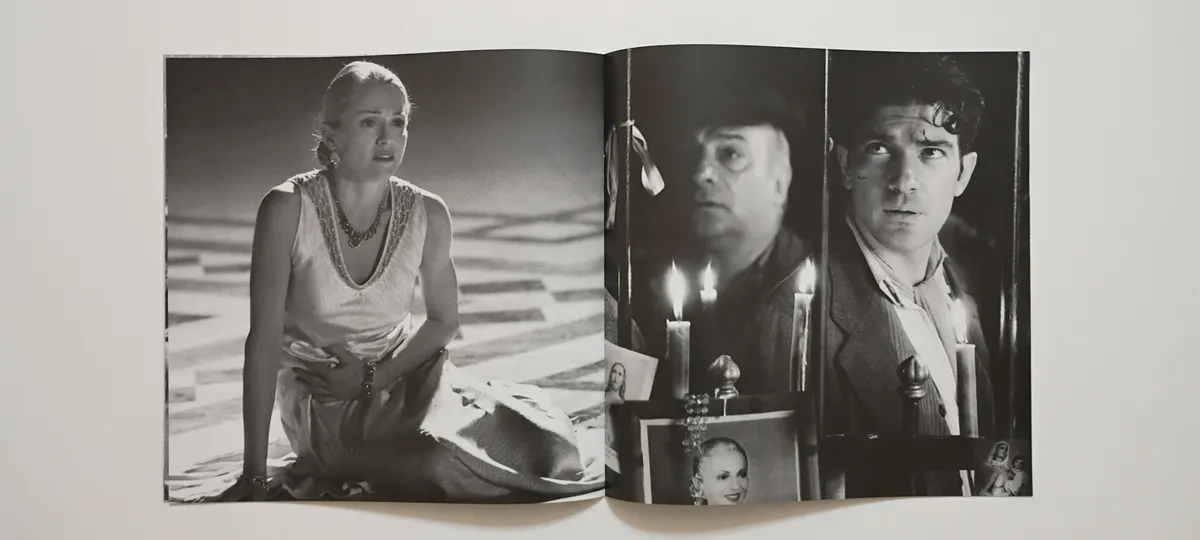
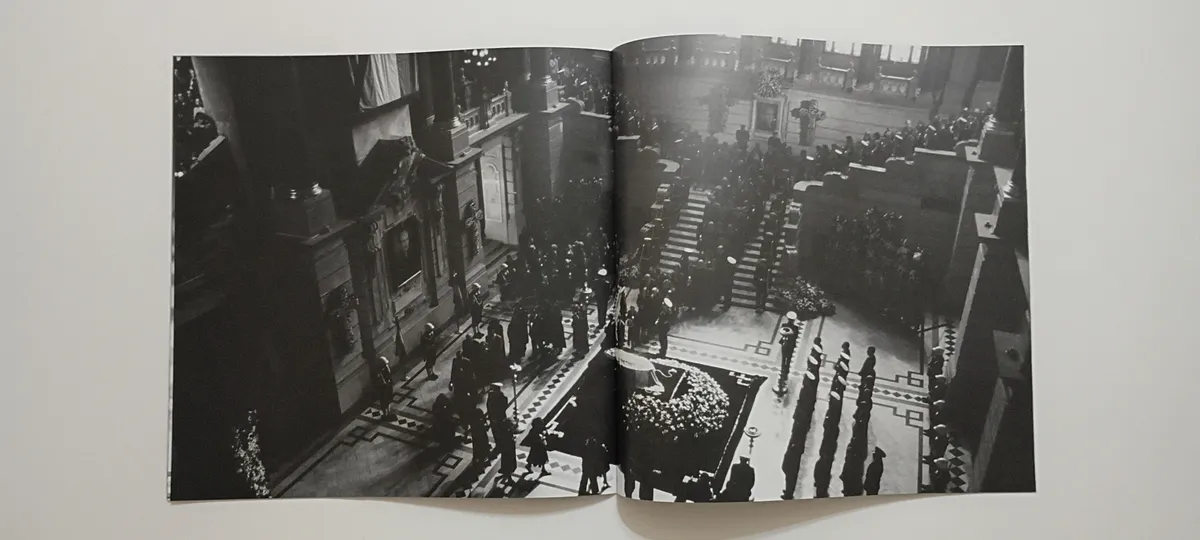
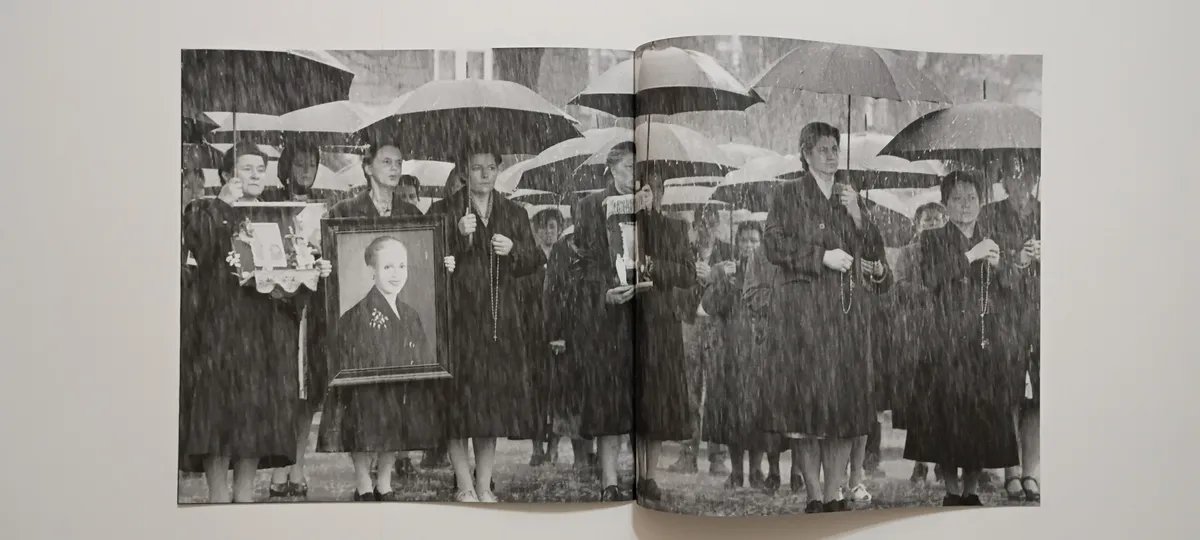
Red, black, and white dominated the promotional artwork and visual identity of Evita, so the standard edition’s translucent red vinyl is entirely appropriate. But gold has always complemented red and black beautifully, and that is precisely why I chose the limited-edition version pressed on gold vinyl. A little more sumptuous, a little more regal, and perfectly suited to an album about the woman who is Argentina and always will be . . .
The “rainbow” connection, pre-Madonna. In 1980, when I was still a child growing up in the Philippines, I knew Evita only as a recording.
There was, in fact, a rather interesting political reason for this. Because of the striking parallels between the lives of Eva Perón and our own First Lady, Imelda Marcos, the latter was said to have banned performances of the rock opera in the Philippines. Yet the music itself was very familiar to Filipino audiences. Songs from the original concept album, particularly “Don’t Cry for Me Argentina” and “I’d Be Surprisingly Good for You,” were staples of Philippine radio around that time. Curiously, Evita would not be staged in Manila until 1986, following the so-called People Power Revolution that finally ousted the Marcoses from power.1
At that time, I had no idea who Eva Perón was, what she looked like, or what she had done to deserve an entire rock opera about her life. Nor did I have any visual reference for its characters. Everything I knew—or thought I knew—about Eva Perón came from “Don’t Cry for Me Argentina,” “I’d Be Surprisingly Good for You,” and, above all, the voice of the woman singing them on the radio.
Julie Covington, who sang as Eva in the concept album, did not sound to my young ears like some formidable political figure or grand theatrical heroine. She sounded like a young girl: sweet, innocent, and vulnerable—even when the music became grand and dramatic. Without knowing anything about the historical Eva Perón, I imagined a young woman who dreamed of something bigger than the life she had been given. I was not listening to the story of a controversial political figure or a woman who would become a sacred national icon. I was listening to the story of an ordinary girl.
Oddly enough, I associated that girl with another song I knew at the time: “Rainbow Connection,” from The Muppet Movie. The version constantly played on Philippine radio back then was sung by a woman (whom I would only later learn to be Judy Collins). There was something about the wistfulness of that song, its innocence, its longing for something wonderful and perhaps unattainable, that seemed to belong to the same girl I heard in Evita.
Somehow, in my childhood imagination, the girl singing about dreams and rainbows and the girl singing about being dressed up to the nines but still at sixes and sevens became one and the same. The songs had nothing to do with each other, of course, but that hardly mattered to me. I had already made the connection, and once a child has constructed an image in his mind, no amount of adult explanation is likely to dislodge it.
To this day, I cannot hear either “Rainbow Connection” or the Evita concept album without that childhood image returning—despite everything I have since learned about Eva Perón, Argentina, the musical, and the many women who have performed the role. But the historical woman and the girl who lived in my imagination were never quite the same person, nor did one necessarily have to replace the other.
And then came Alan Parker’s Evita movie in 1996. By that time, I knew perfectly well who Eva Perón was, and I certainly knew who Madonna was! Yet when I heard Madonna sing the role, I was astonished by how closely her voice corresponded to the Eva I had imagined sixteen years earlier. There was that same sweetness, that vulnerability, that almost girlish quality I remembered from the concept album.
Madonna only affirmed and strengthened my childhood conception of Eva and—through the film—finally gave it a face. Therefore, Madonna to me is not only one of the many women who played Eva. She was the one who finally looked and sounded like the Eva I had known since childhood.
1. Joel David, “Film Plastics in Manila by Night,” Kritika Kultura 19 (August 2012): 62.