Older. Take a bow. The end.
Thirty years ago, DC published one of those rare superhero stories that almost immediately ceased to feel like merely another comic book.
Mark Waid and Alex Ross’ Kingdom Come began appearing in 1996. The first issue actually reached comic shops on 8 May, although—as comics often did—it carried a July cover date. The four-issue series ran through August of that year. So 6 October is not the literal thirtieth birthday of Kingdom Come; rather, 2026 is its thirtieth-anniversary year. And today, DC is releasing a deluxe 30th anniversary edition, of course.
But I still have my decidedly less exalted old paperback, which has survived perfectly well in my library . . .
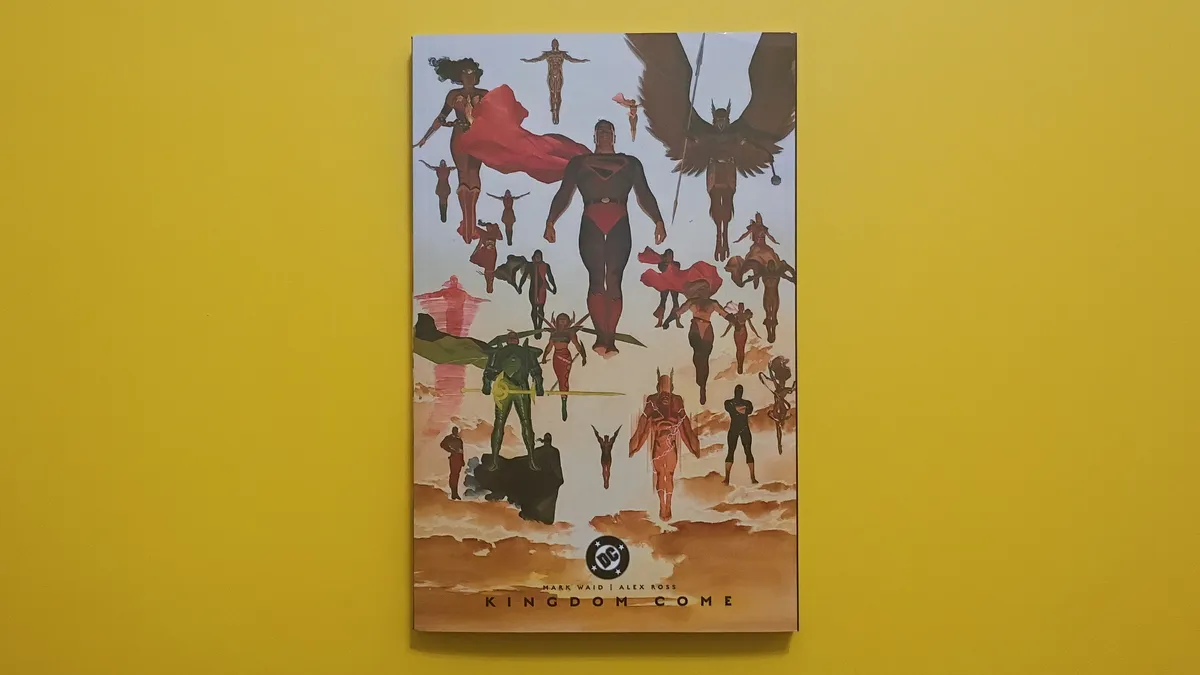
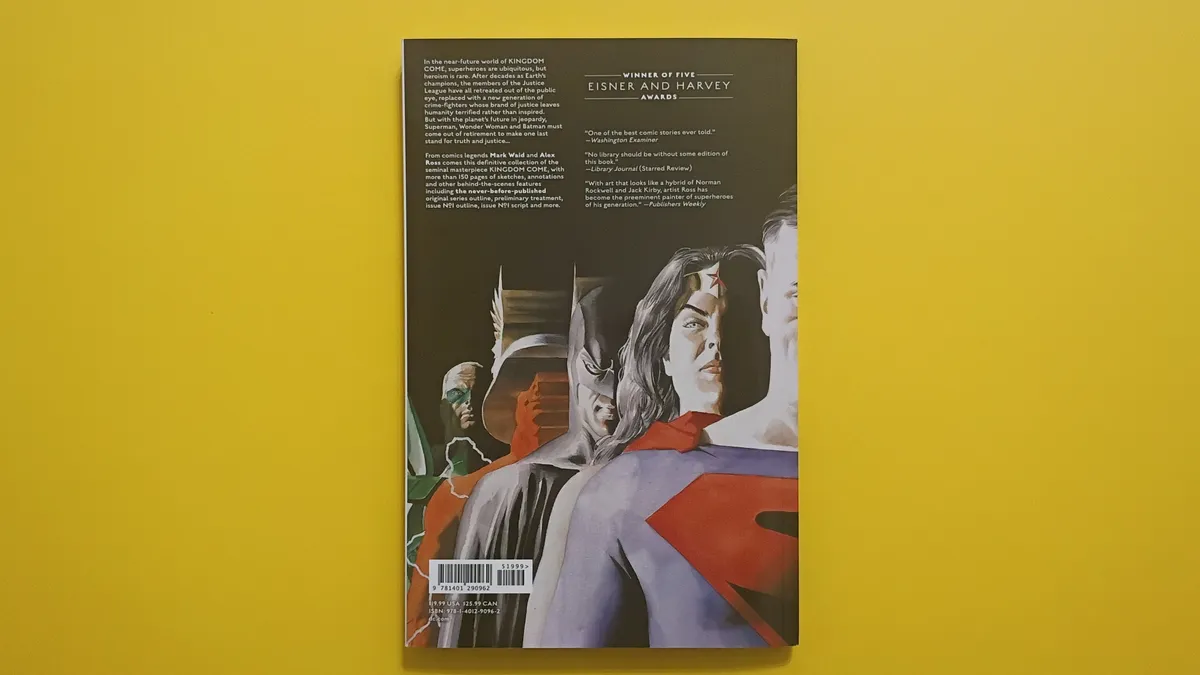
Superhero fatigue. Kingdom Come takes place in a possible future of the DC Universe in which the great superheroes have grown old, disappeared, retired, or simply given up. The world has moved on from superheroes
A new generation has taken their place. They possess extraordinary power but little of the moral restraint that once distinguished superheroes from the villains they fought. Their battles are increasingly destructive and increasingly indifferent to ordinary human life.
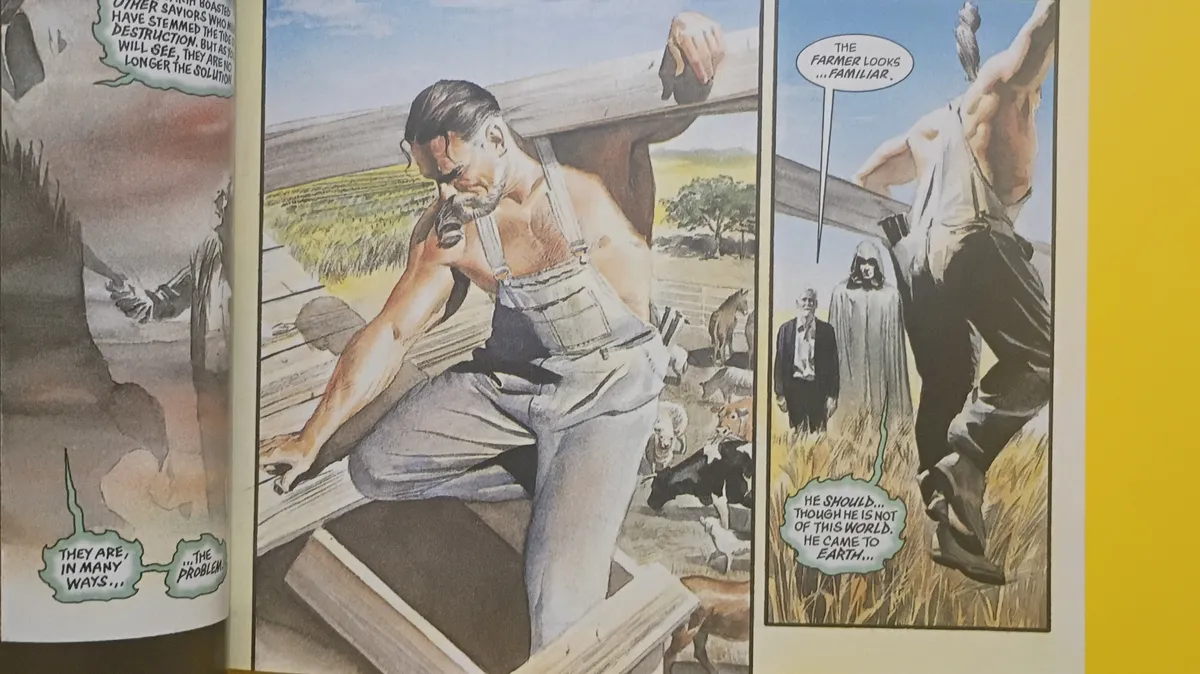
Superman has withdrawn to his family farm in Kansas after society effectively decided that his ideals were obsolete. Batman remains in Gotham but governs it through technology rather than his younger body. Wonder Woman has suffered losses of her own and has become harder, more militant, and considerably less patient with humanity.
Then one catastrophic act by the new generation kills an enormous number of civilians. Wonder Woman goes to Kansas. And Clark Kent comes back.
What follows is not really a story about whether Superman can defeat somebody. Of course, Superman can defeat anybody! The real question is whether the old heroes have any right to impose their conception of justice upon a world that has rejected it—and what happens when moral authority itself acquires nearly unlimited physical power.
All of it is witnessed by Norman McCay, an elderly minister who is drawn by the Spectre into an apocalyptic vision of approaching judgment. The question is who, exactly, deserves to survive it.
Alex Ross. Calling Ross an “illustrator” almost seems inadequate for Kingdom Come. He paints the story. These are not conventional inked comic-book bodies covered with color. They have weight, texture, age, flesh, wrinkles, fatigue and gravity . . .
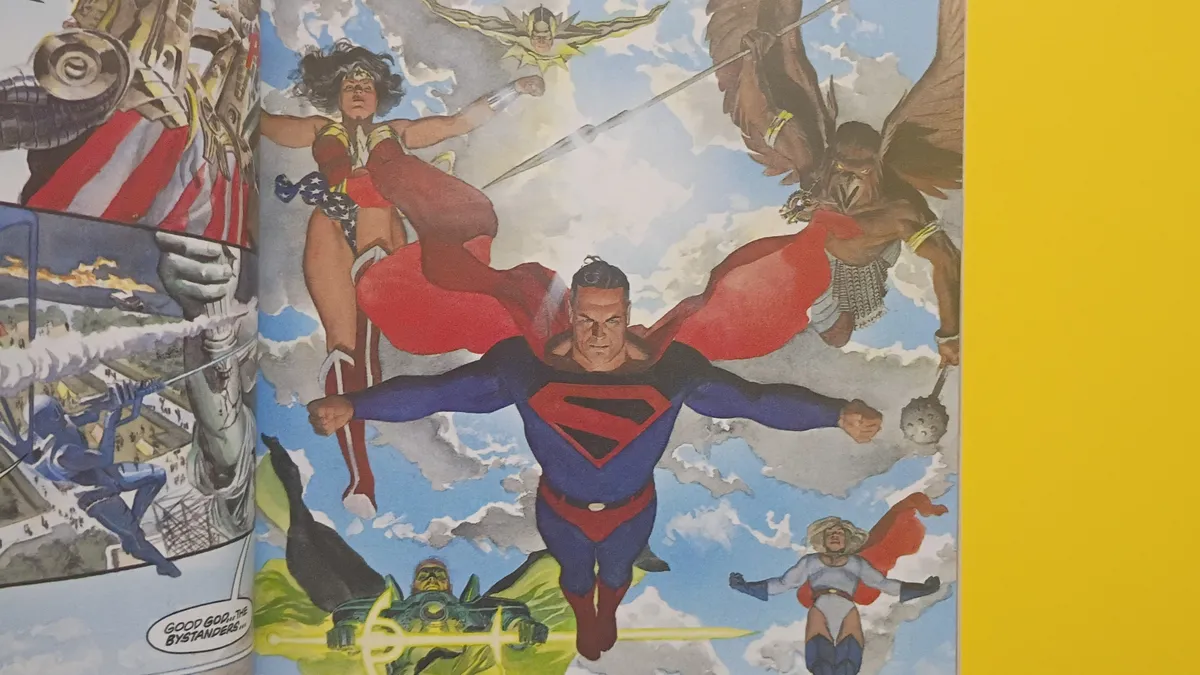
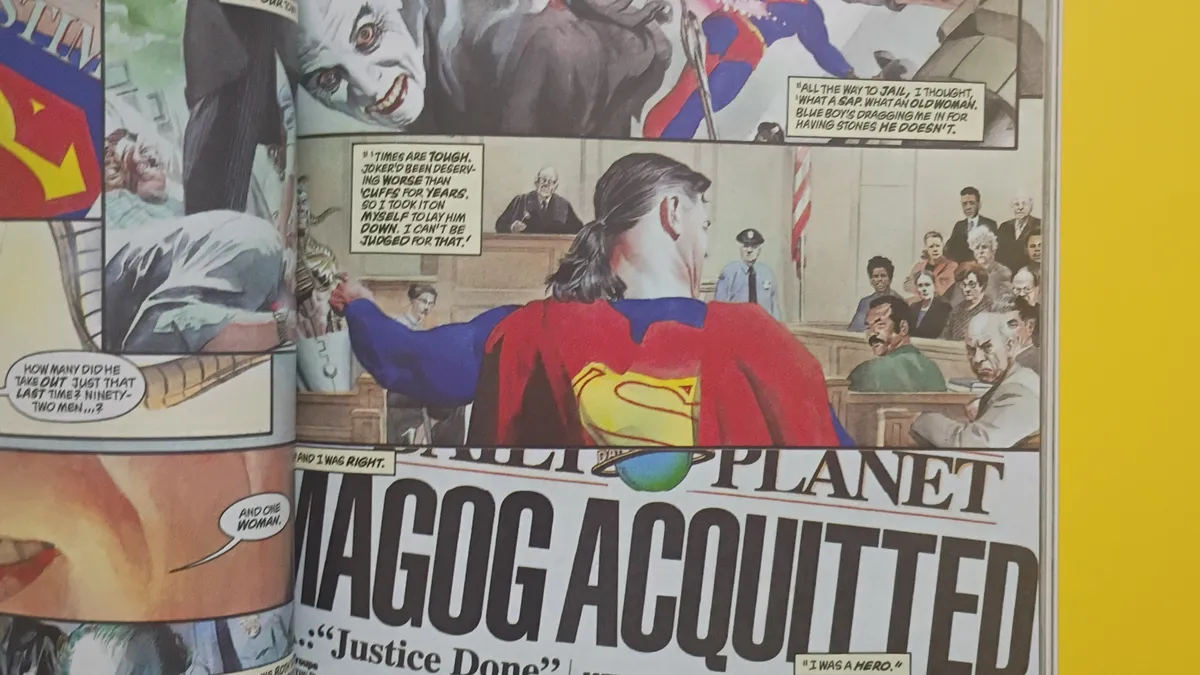
That matters enormously because Kingdom Come is fundamentally a story about older superheroes.
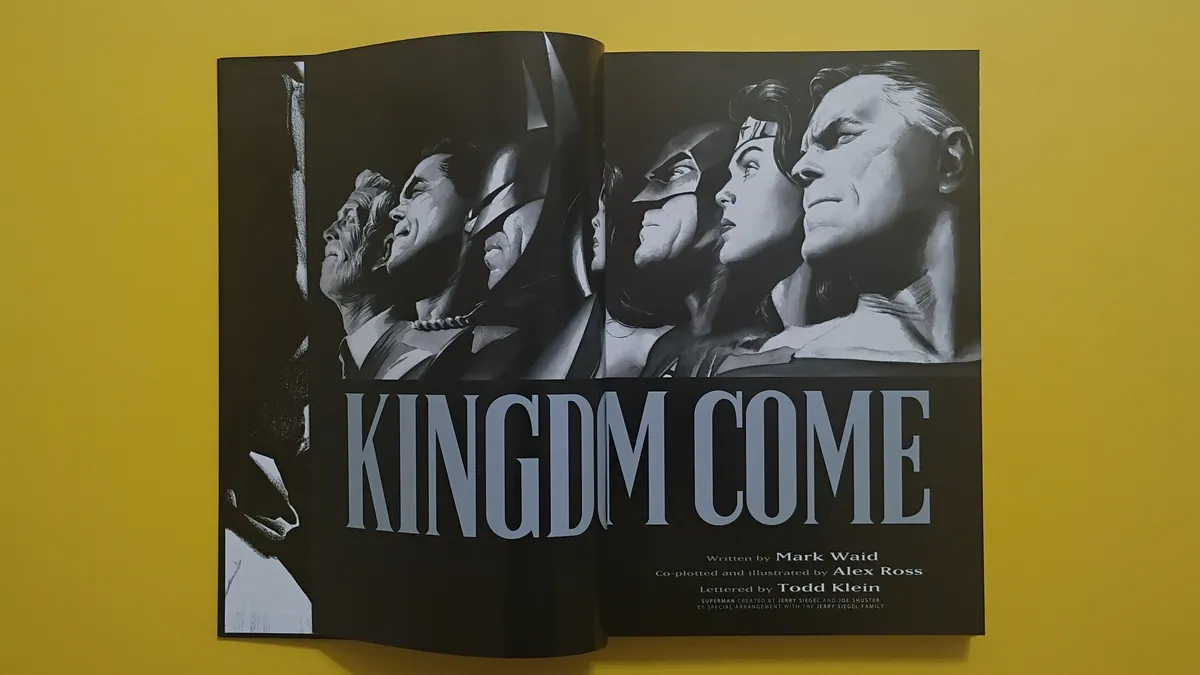
Ross does not simply put gray hair on Superman and declare him middle-aged. Clark Kent has become a mature man. His face has thickened. The lines around his eyes have deepened. His shoulders and chest are still enormous, but he no longer looks like an impossibly smooth twenty-five-year-old fitness model . . .
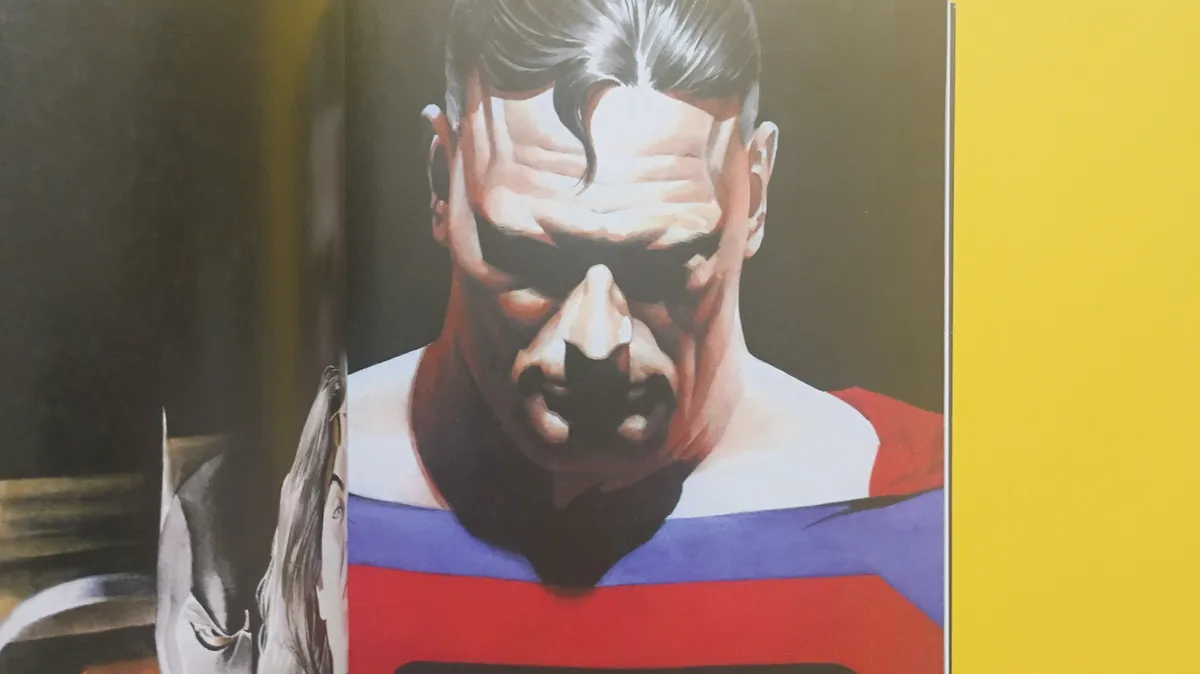
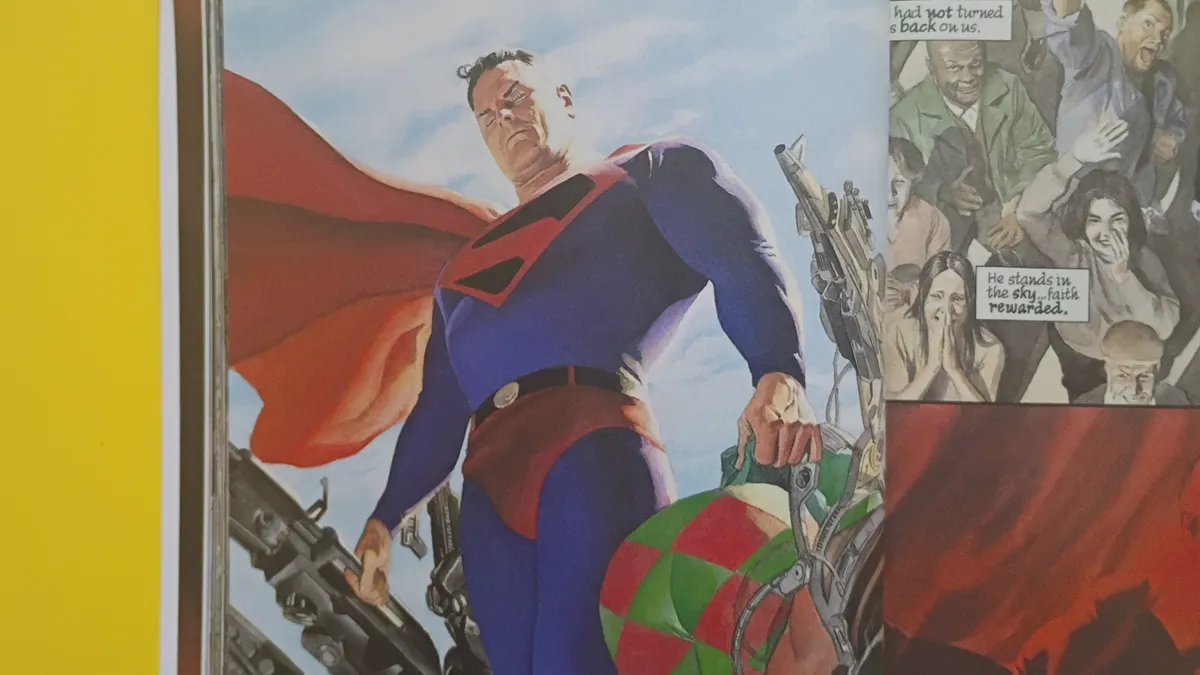
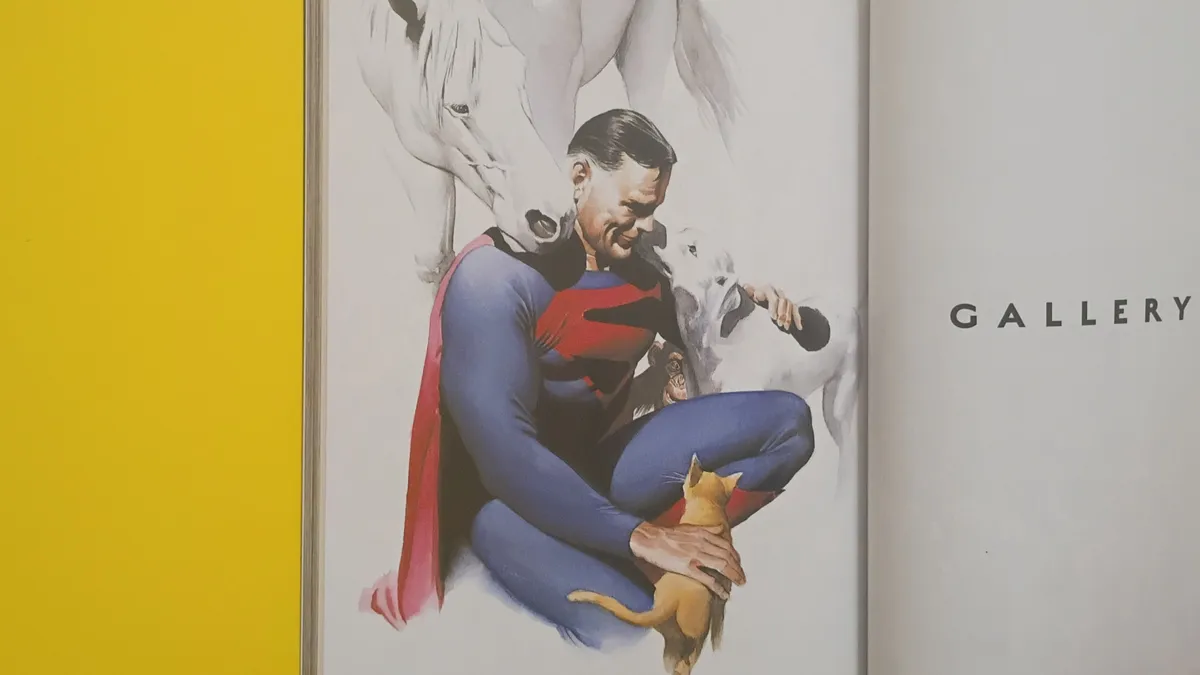
There is something wonderfully appropriate about the farm version of him in particular: the beard, the gray at the temples, the overalls, the enormous arms, the slightly battered face. He looks more like someone who has actually spent decades carrying the world . . .
Wonder Woman has aged too. This is important because Diana is literally a demigoddess, and superhero art has traditionally been much more reluctant to allow its women to visibly mature. Ross gives her a slightly older face without diminishing her beauty at all. If anything, she becomes more imposing. This is not the ingénue version of Wonder Woman. She has ruled, fought, failed, buried people, made terrible decisions and lived long enough to become impatient with compromise . . .
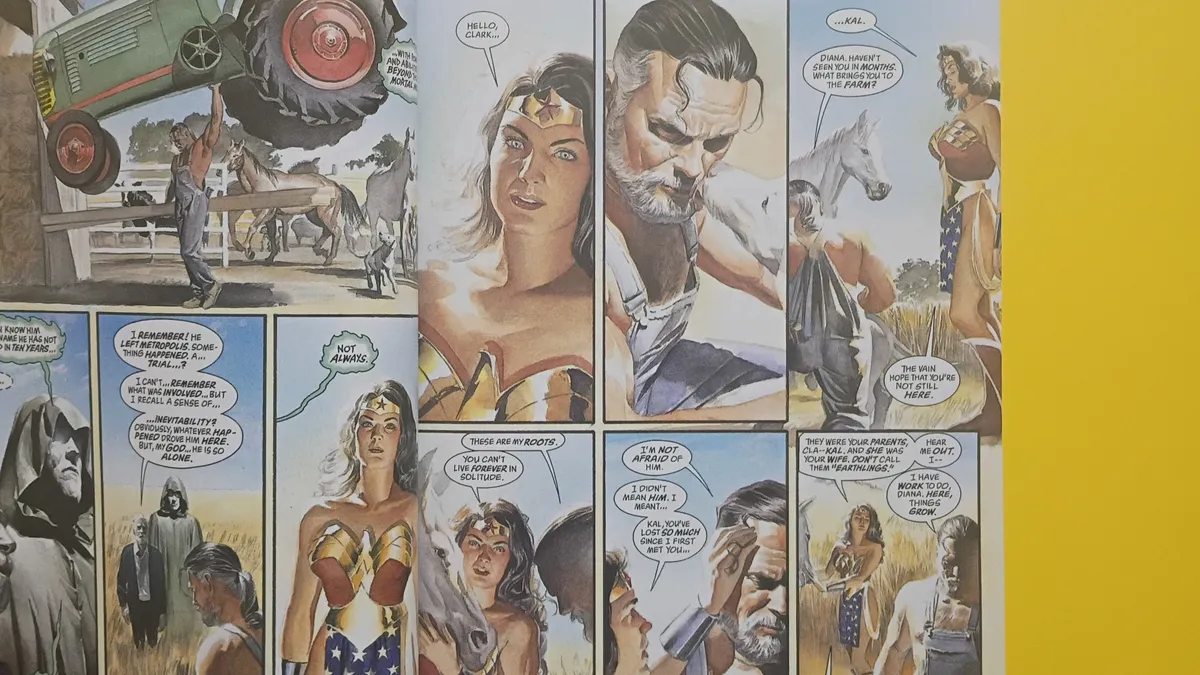
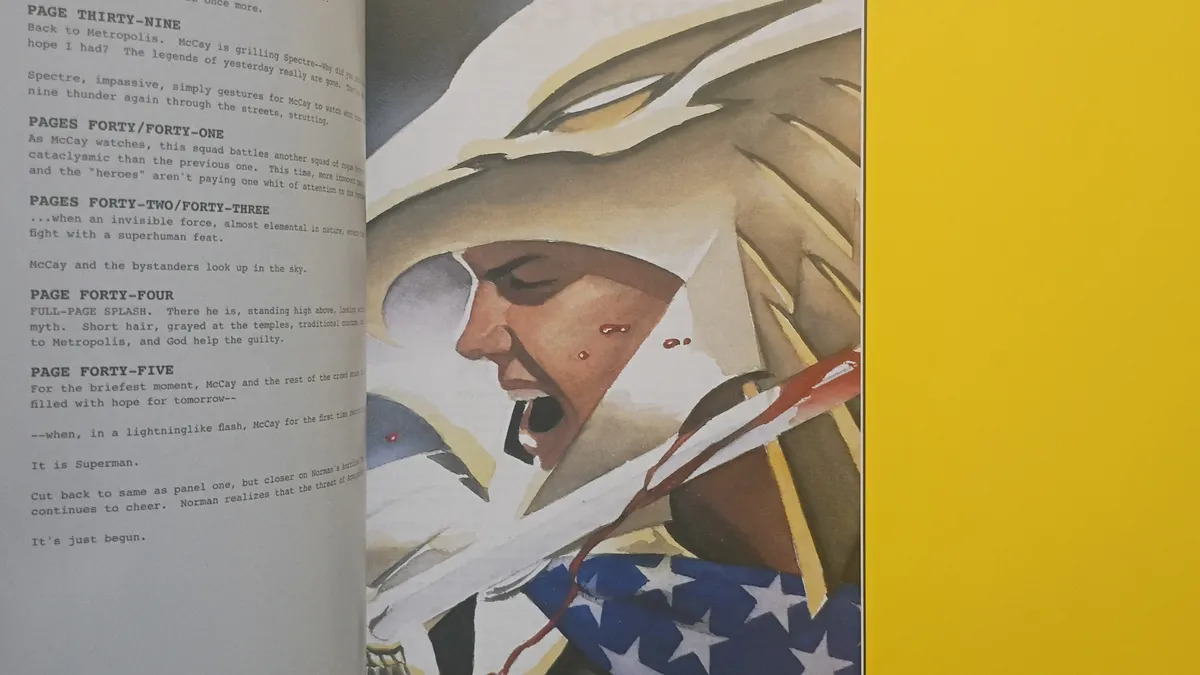
But Superman, Wonder Woman, and Batman are neither decrepit nor irrelevant in Kingdom Come. Ross merely permits them to become what pop culture never permits its icons to become: OLD. And, therefore, different—holy.
I am not buying it. Despite all that, I am not buying the 30th anniversary edition. I already own the edition of Kingdom Come that I want.
In 2006, for the tenth anniversary, DC published Absolute Kingdom Come: an oversized, slipcased hardcover containing the complete story, extensive annotations, sketches, development art, galleries and other material. Its slipcase is more gorgeous . . .
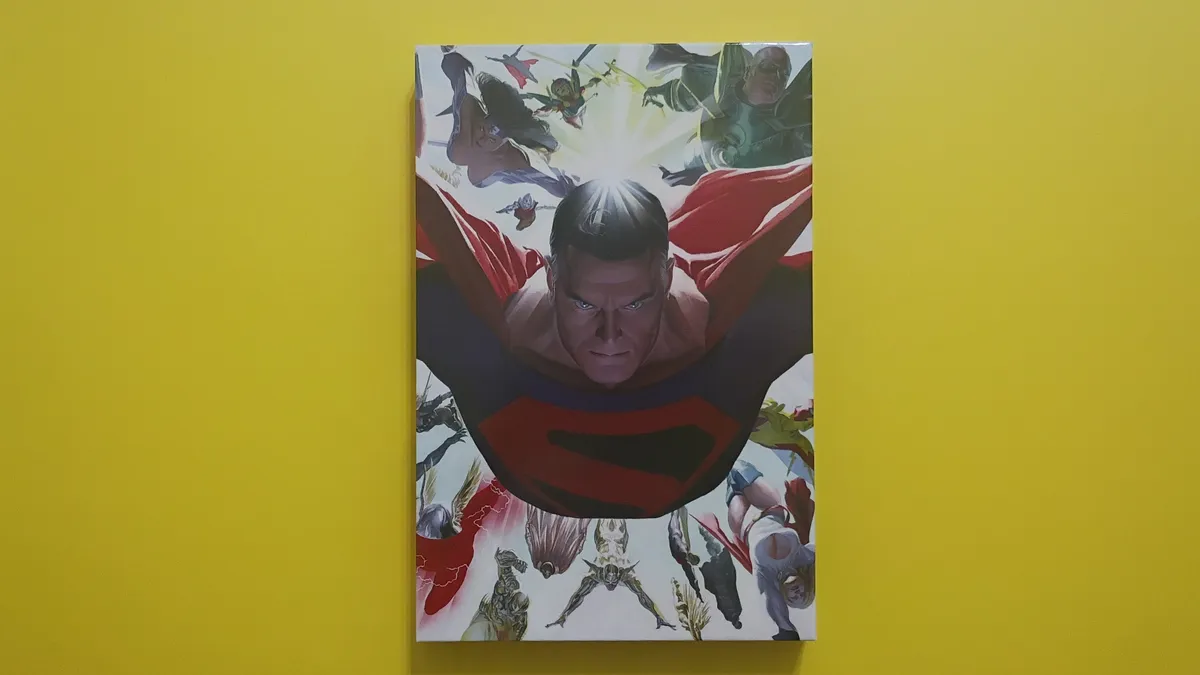
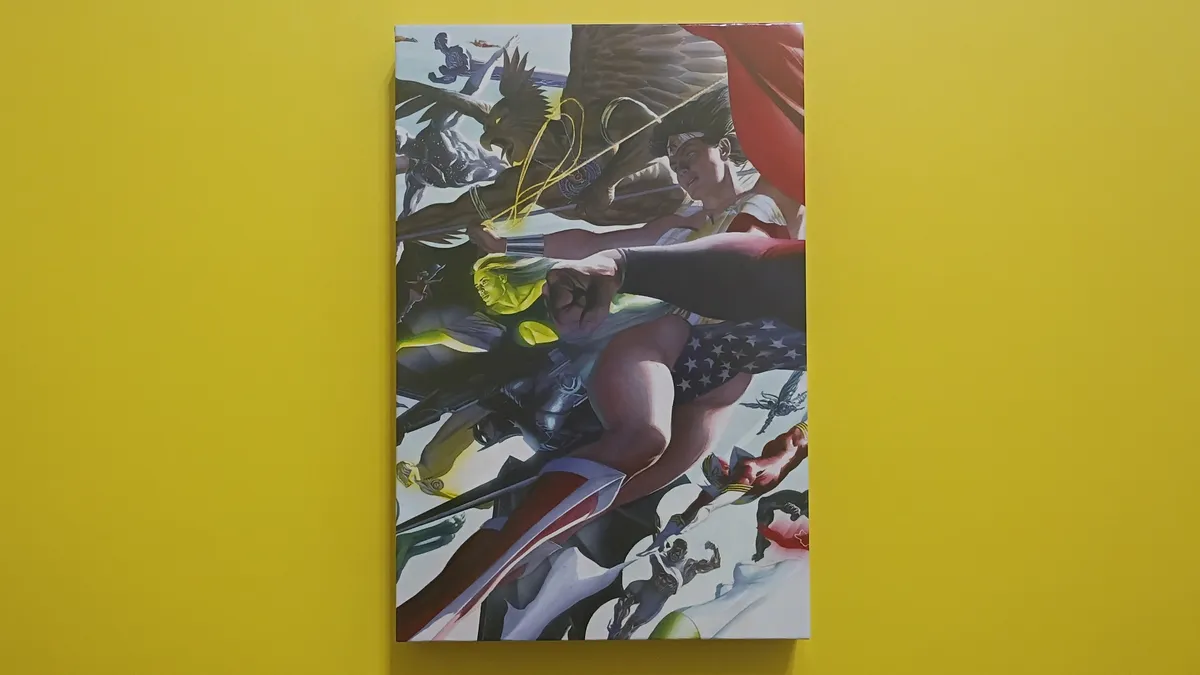
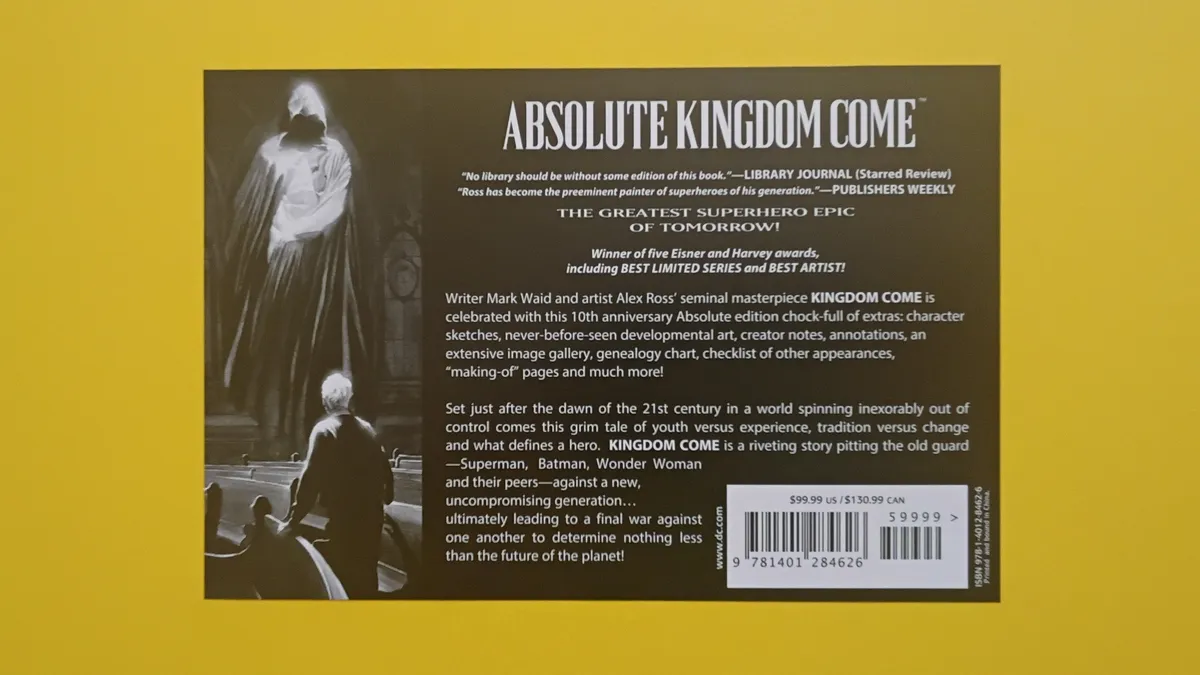
The new thirtieth-anniversary book may contain newer retrospective material, but physically I prefer this older edition by a considerable margin.
It looks liturgical. More appropriately, it looks rather like a ceremonial King James Bible. The black binding, restrained metallic lettering, inset religious-looking image and oversized proportions give the whole object the appearance of something that ought to be resting on a Protestant lectern . . .
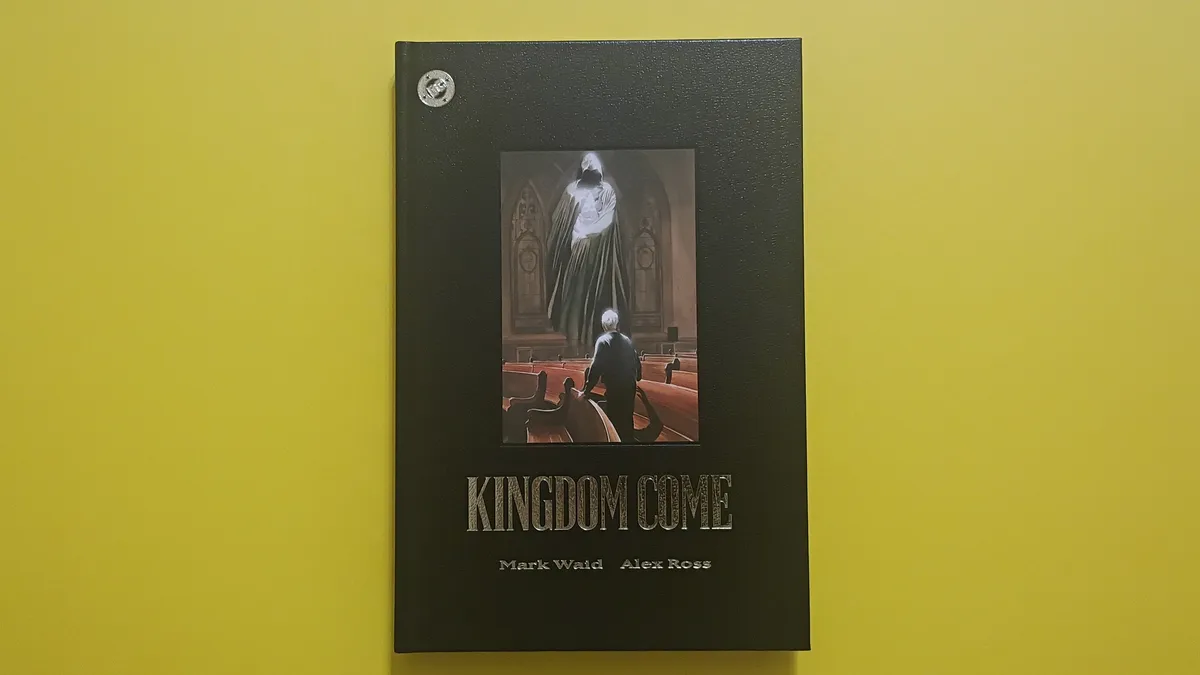
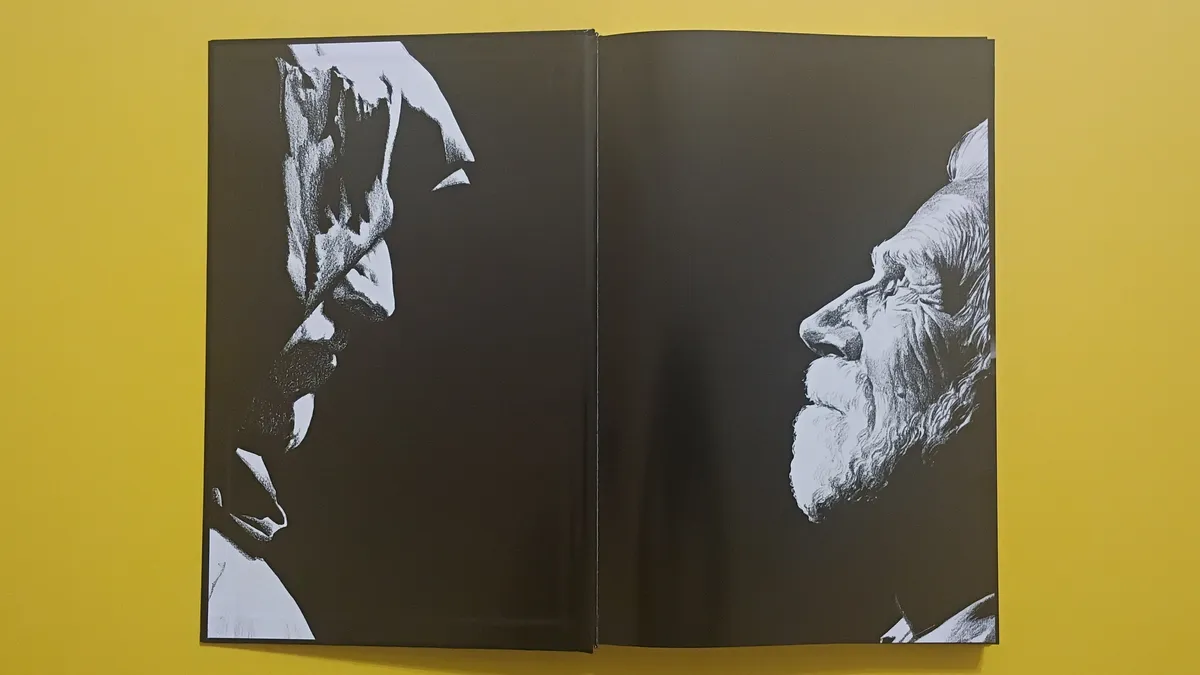
Which is strangely perfect, because Kingdom Come is soaked in biblical imagery and language.
The movie DC will never make. There is another reason Kingdom Come feels oddly relevant thirty years later: those uneven, problem-plagued DC superhero movies have “moved on.”
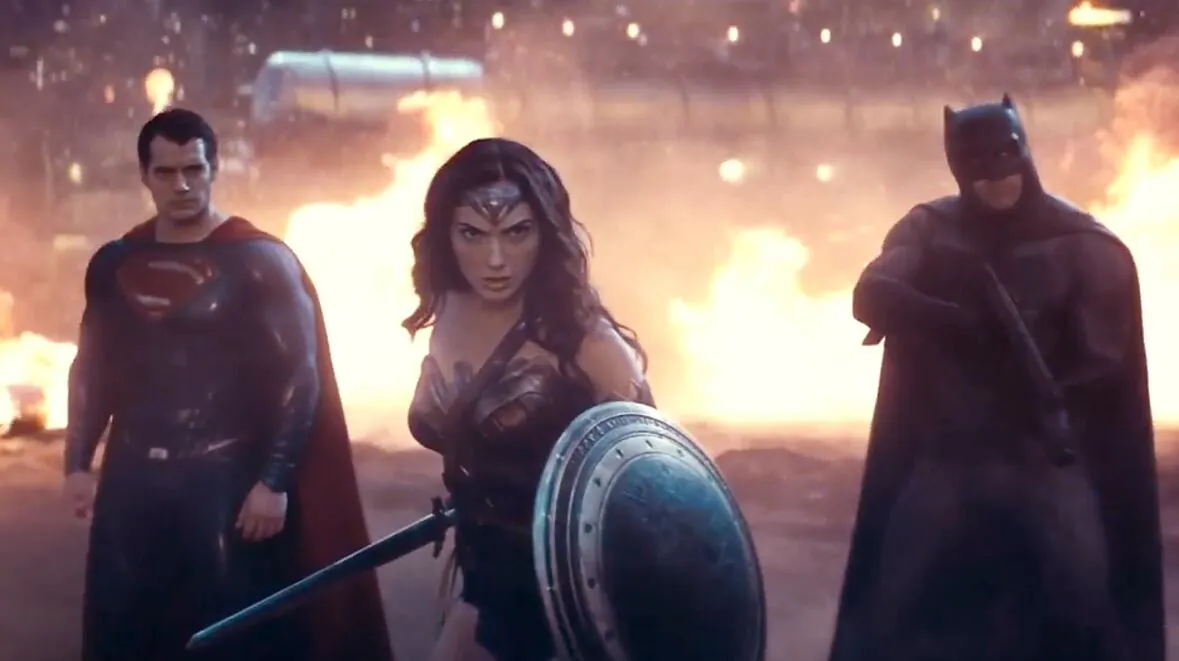 © 2016 Warner Bros. Entertainment Inc. All rights reserved.
The Zack Snyder-era DC universe ended abruptly. Snyder’s vision was abandoned as James Gunn and Peter Safran rebuilt—or destroyed, depending on whose side you’re on—DC Studios around a new continuity. The versions of Superman, Batman, and Wonder Woman played by Henry Cavill, Ben Affleck, and Gal Gadot effectively ended with it. Cavill and Gadot’s cases were particularly brutal: they publicly announced their return as Superman and Wonder Woman, only to announce later that they would, after all, not be returning.
A certain section of Snyderverse fandom has consequently spent years dreaming of restoration. Or at least closure. It is NOT going to happen.
But if it ever did, there is only one story I would want them to use: Kingdom Come.
Not another attempt to restart the Snyderverse. Not an exercise in pretending that ten years have not passed. Use the years.
Henry Cavill is no longer the thirty-one-year-old Superman of Man of Steel. Ben Affleck is no longer an age-appropriate Bruce Wayne. Gal Gadot is older than she was when she crossed No Man’s Land in Wonder Woman—and it shows.
Good. That is the point. Let them be older.
Let Superman have gray in his hair. Let Bruce Wayne’s body have finally collected the bill for everything Batman has done to it. Let Diana carry millennia rather than being digitally preserved at some imaginary ideal age.
Give the actors who played them one last film. A faithful adaptation of Kingdom Come would allow those actors to return precisely because they have aged rather than in spite of it.
And more importantly, Kingdom Come is already a story about endings. It is not merely another possible future for the DC Universe. Emotionally, it feels like the ending of the DC Universe: the final reckoning of its superheroes, the moment when the gods grow old and confront the consequences of everything they created. There are younger heroes afterward. The world continues. But something has ended.
Thirty years after Clark Kent returned from his farm, Kingdom Come remains one of the very few superhero stories brave enough to ask what happens when the mythology itself becomes old. That is why the story has never really gone away.
And perhaps that is also why those Alex Ross paintings look better now than they did in 1996. The heroes have aged.
So have we.
Marvel summarized. If Kingdom Come feels like the conclusion of the DC Universe, its Marvel counterpart/companion piece, Marvels, feels like the history of Marvel compressed into one long memory . . .
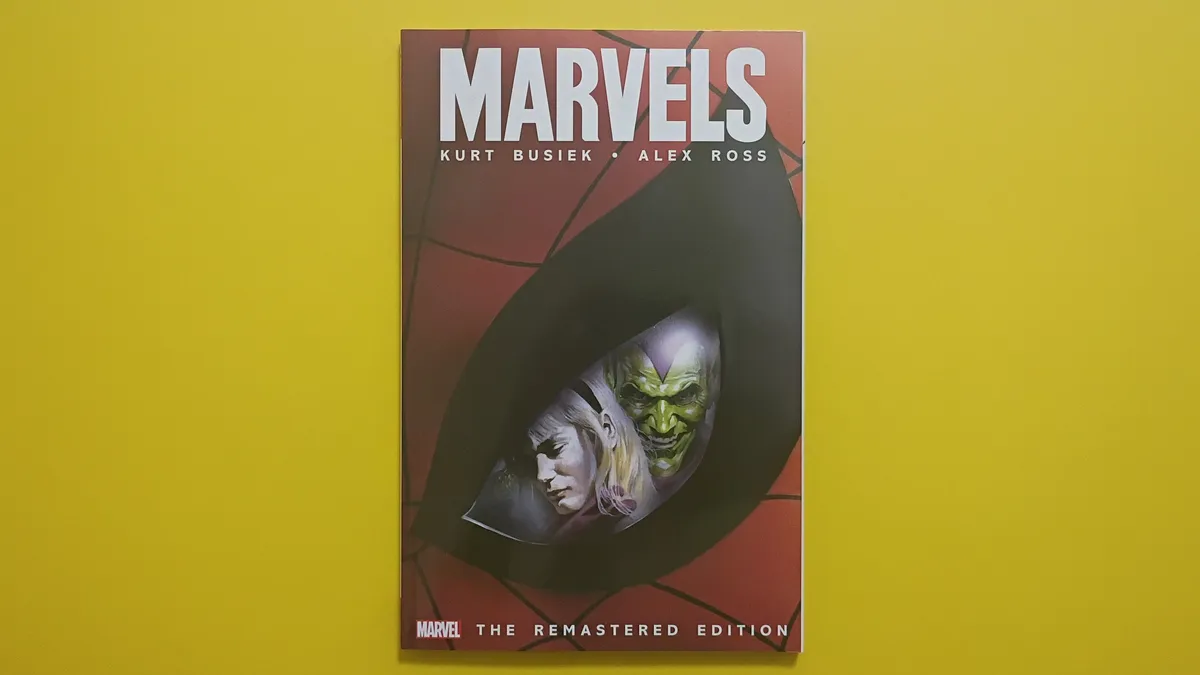
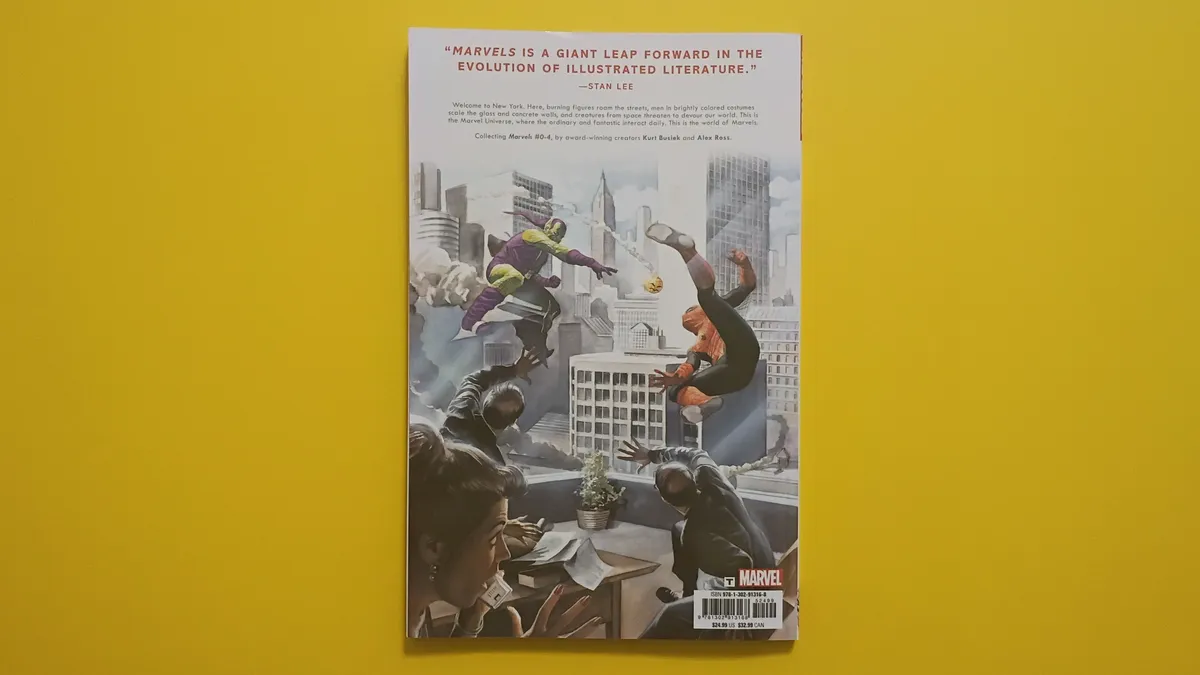
In it, Kurt Busiek and Alex Ross tell the story not through the superheroes themselves, but through ordinary photographer Phil Sheldon, who watches the Marvel age unfold from street level. The Human Torch appears. Namor comes out of the sea. The Fantastic Four arrive. The X-Men frighten people. Galactus hangs over New York like judgment. Gwen Stacy dies. Heroes are celebrated, feared, blamed, adored, and then blamed again. Sheldon grows older while the impossible gradually becomes ordinary.
Seen now, it reads almost like a condensed version of what the MCU later attempted on film: the arrival of superheroes, the public learning to live with them, the escalation from colorful local wonders to cosmic catastrophe, and the strange normalization of gods, aliens, monsters, mutants, armored men, and people swinging between skyscrapers.
But the reason to own Marvels is Ross again. He takes the old Marvel designs seriously without making them solemn. His paintings make the costumes look physically real while preserving their absurdity, which is a very difficult trick . . .
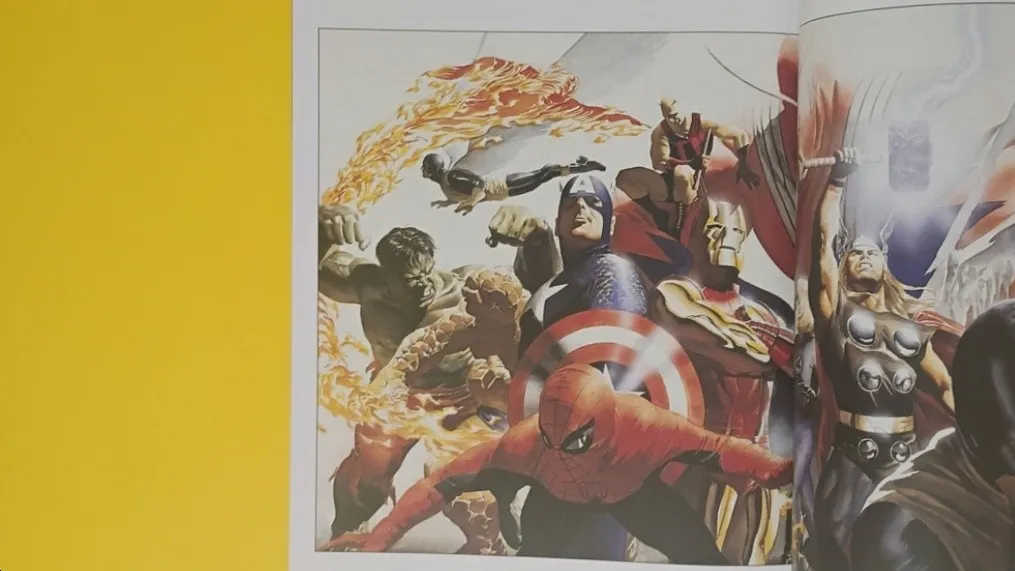
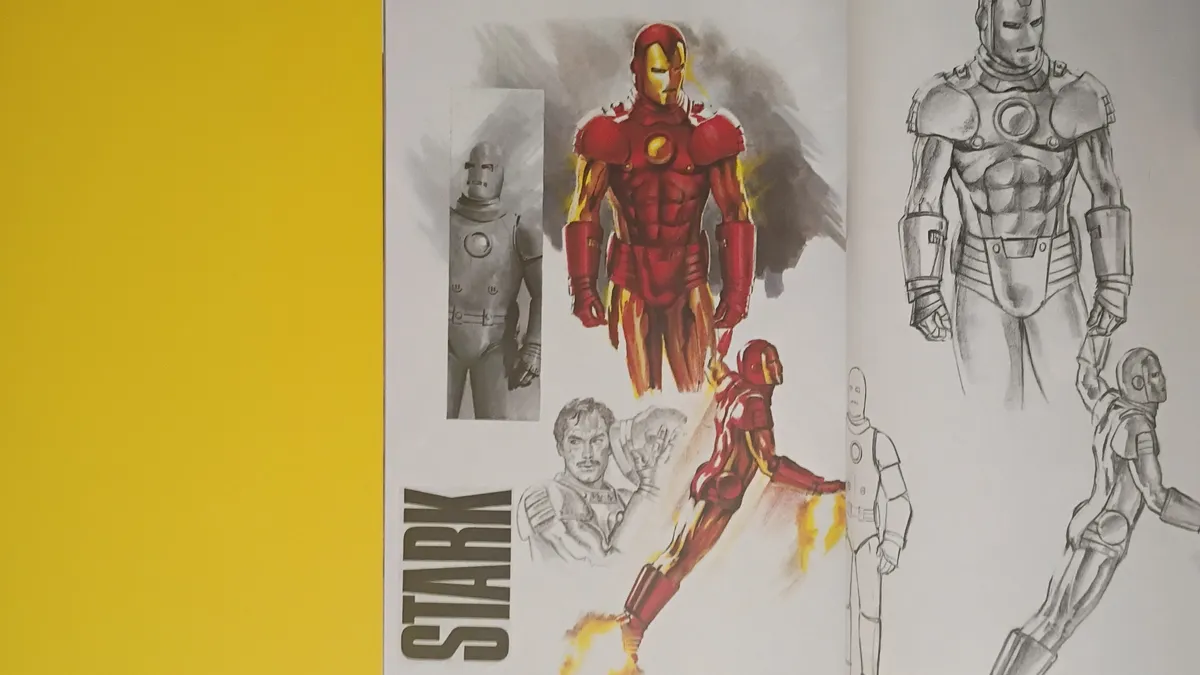
Spider-Man may be wearing a bright red-and-blue skin-tight costume, but Ross gives him an athlete’s body rather than a cartoon anatomy. He looks lean, long-limbed, flexible and ridiculously good in that suit. There is nothing bulky about him. Ross understands that Spider-Man should look like someone built to climb walls, cling to them, and hang suspended from them . . .
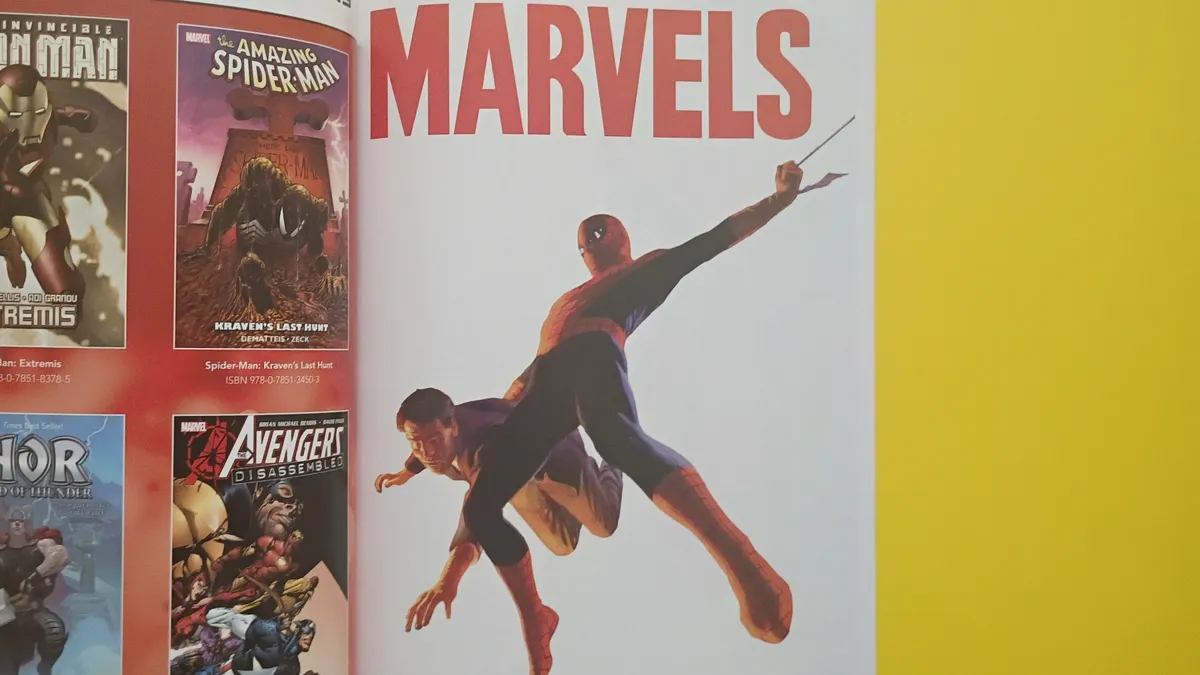
Ross paints the Sub-Mariner like some latter-day Glaucus of Greek myth who has accidentally wandered into a superhero comic: severe face, swimmer’s body, impossible posture, enormous confidence. He looks arrogant because Namor is arrogant. He has the physical presence of someone who genuinely believes the surface world is beneath him . . .
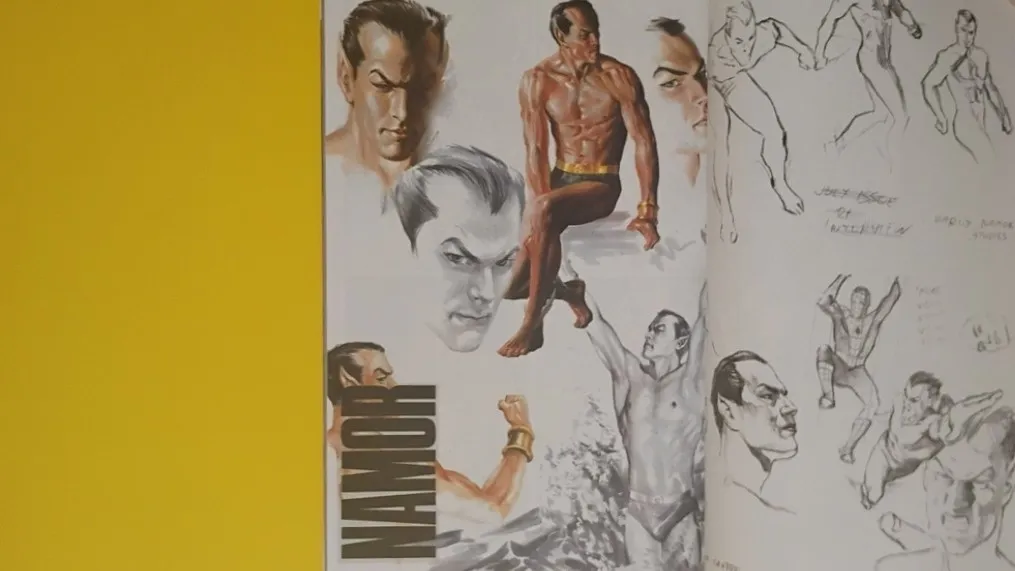
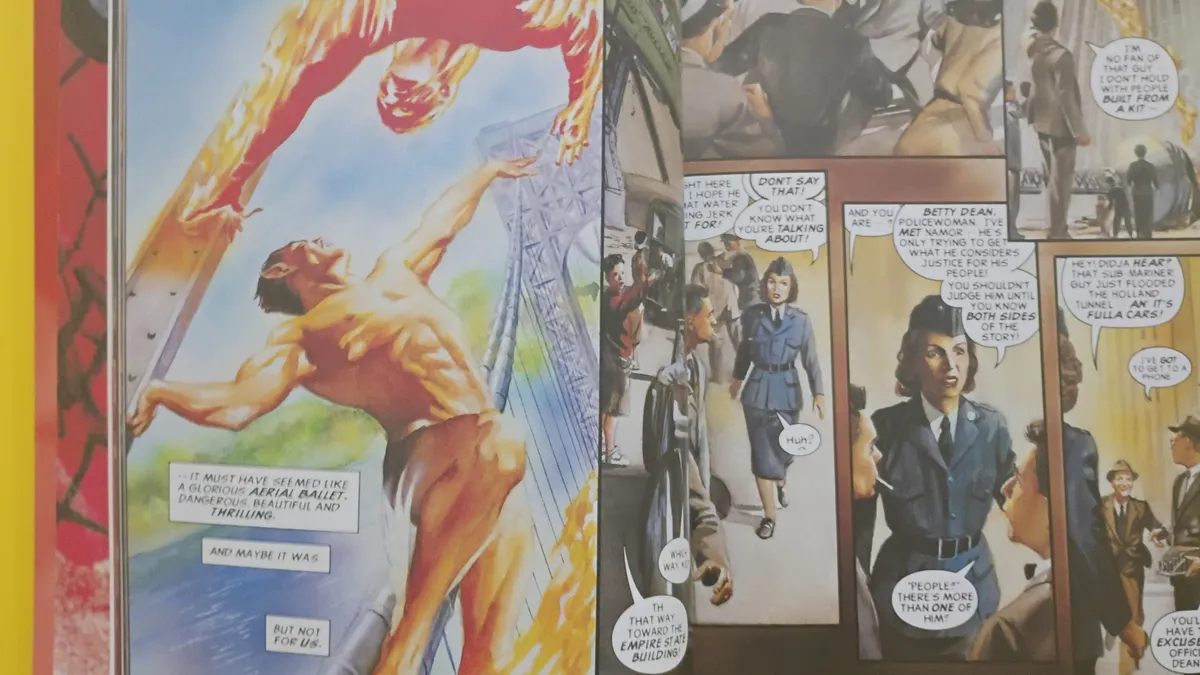
Black Panther may be the coolest of them all. Ross does almost nothing elaborate with the costume because he does not need to. The black suit, the musculature, the stillness, the feline silhouette—T’Challa looks dangerous simply being there, elegant rather than flashy . . .
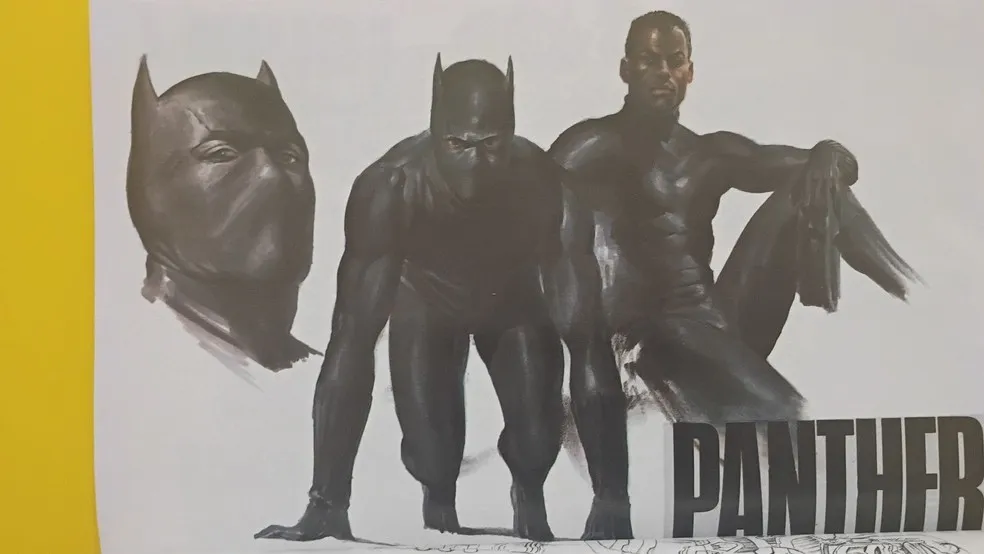
And then there are the characters who become funnier the more realistically Ross paints them.
The Thing is hilarious because Ross refuses to soften the basic absurdity of a gigantic orange rock-man trying to function in normal human society. Ben Grimm becomes both monumental and faintly ridiculous, which is exactly right. He looks like a walking landslide who still somehow needs a trench coat . . .
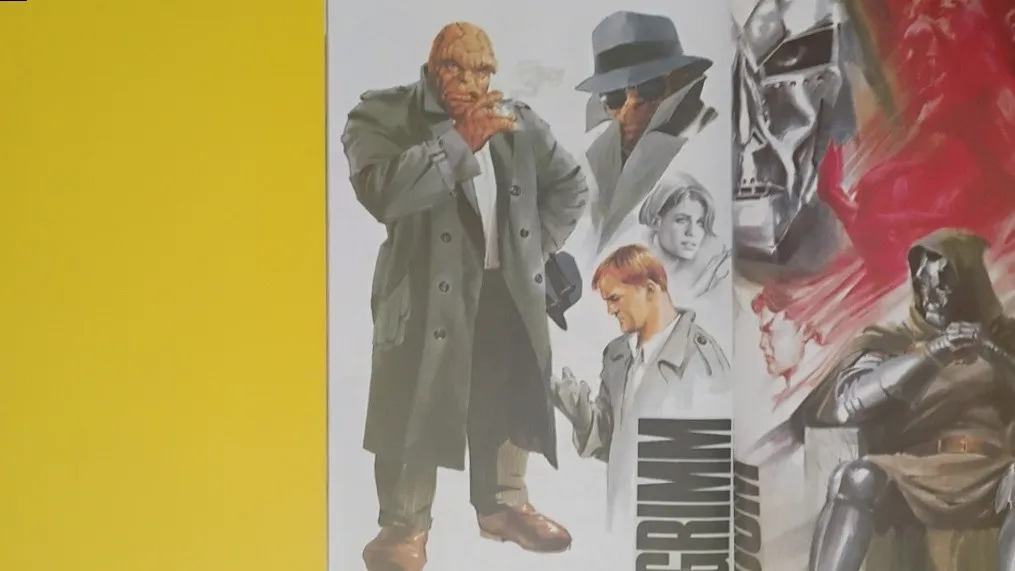
Doctor Doom may be even better. Ross gives him all the theatrical seriousness Doom believes he deserves—the metal mask, the hood, the armor, the royal posture—and because everything is painted with such grave realism, the result becomes magnificently excessive. Doom does not merely enter a room—Doom arrives!
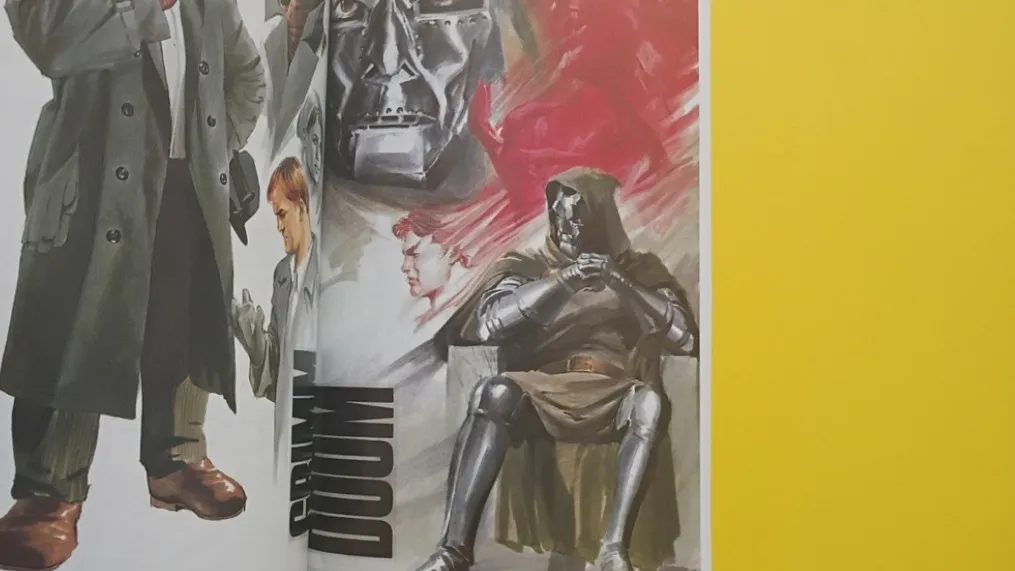
That is what Ross understood about Marvel: the ridiculousness and the grandeur are not opposites. They are the same thing. Marvels works because Ross paints these characters as though they are real, while never apologizing for how completely unreal they are.
Through the narrator’s eyes, that contradiction becomes the point of Marvels. These impossible beings are beautiful, terrifying, and absurd—and once they enter the world, no one can imagine it without them.