An apology too late
At the recent MTV Video Music Awards, some singer paid tribute to the late Dolly Parton with a performance of “I Will Always Love You.” I found myself protesting, rather indignantly, that “I Will Always Love You” is NOT Dolly Parton’s song. It belongs to Whitney Houston!
Yes, I know perfectly well that Dolly wrote it and recorded it first. But there comes a point when an interpretation becomes so definitive that a song ceases, in the popular imagination, to belong to its creator. “Hurt” may have been written and recorded by Nine Inch Nails, but nobody cares—as far as everybody knows, it is Johnny Cash’s song, and no one else’s. And Whitney did precisely that with “I Will Always Love You.”
What surprised me was not the violence of my reaction, but the identity of the woman I was defending. There was a time when I would have been delighted to see Whitney Houston denied credit for practically anything.
I hated her.
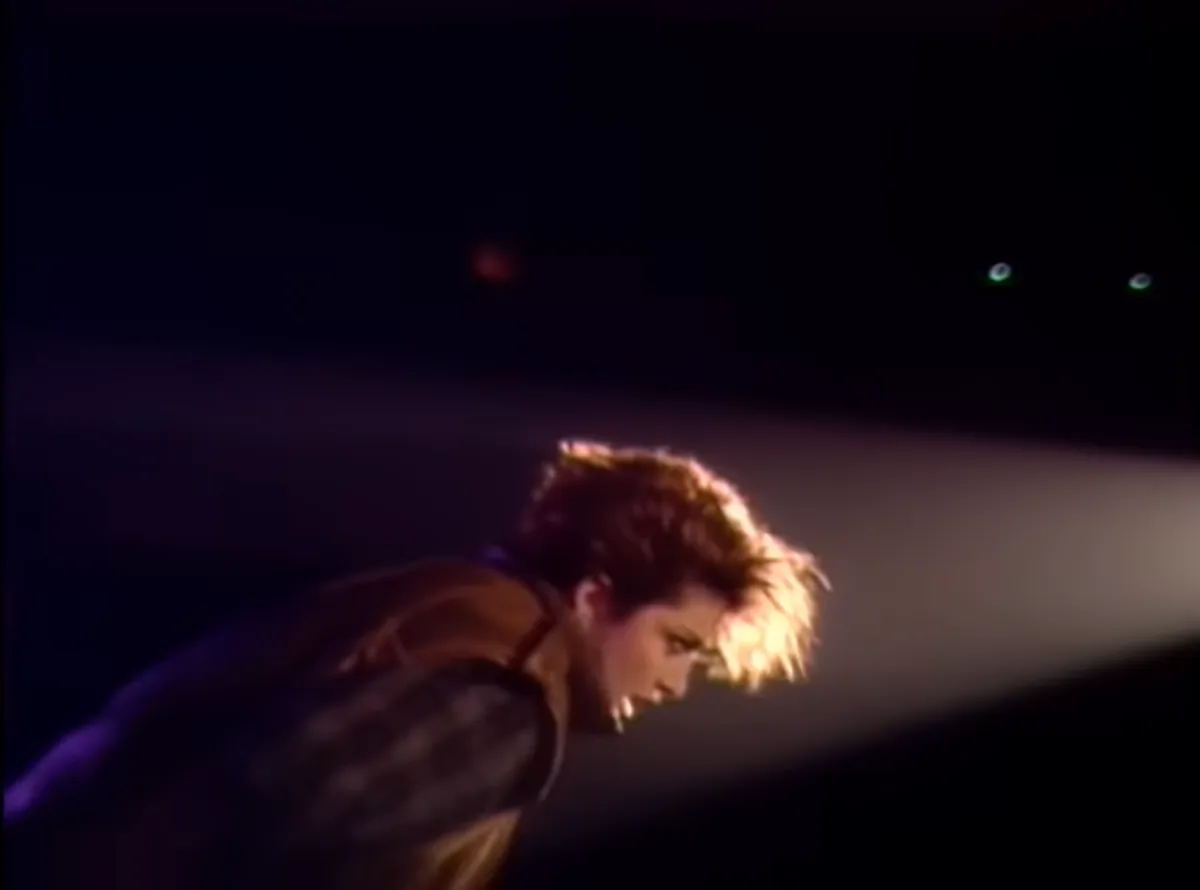
The seed of hatred. I have been a Madonna fan since 1982, before most of the world even knew who she was . . .
 © 1982 Warner Bros. Records. All rights reserved.
This was before “Like a Virgin,” before the wedding dresses, the crucifixes, the controversies, and the transformation of a relatively unknown girl from Michigan into the biggest female pop star on earth. I bought her cassette tapes and followed her career and provocative antics.
I regarded every success as something of a personal achievement. When she reached number one on the Billboard Hot 100, I celebrated as though I were receiving a share of the royalties. There is a psychological term for this: “basking in reflected glory”—BIRGing.1
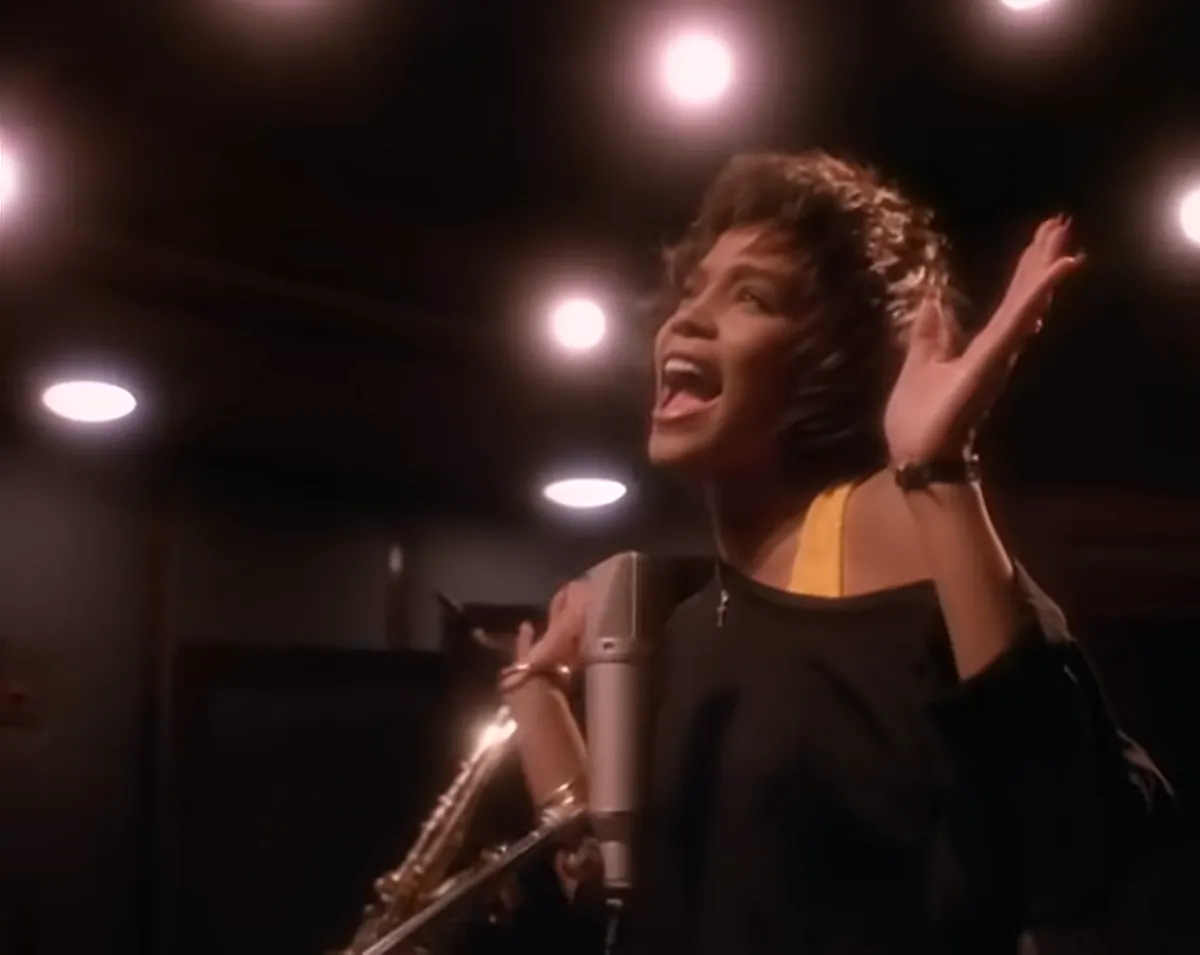
Then, in 1985, Whitney Houston arrived . . .
 © 1985 Arista Records. All rights reserved.
She was elegant, impeccably groomed, and blessed with a voice that was almost indecently perfect. She sang beautifully, which was precisely the problem. Madonna had the attitude, the instinct for reinvention, and the extraordinary talent for attracting attention.2 Whitney had something Madonna could never hope to compete with: one of the greatest voices in popular music. Worse, she knew how to use it.
And so I hated Whitney.
Of course, Whitney Houston didn’t even know that I existed. But she threatened Madonna, and therefore, by an entirely unreasonable process of identification, she threatened me. Whether the supposed rivalry between the two singers was genuine, exaggerated, or manufactured by the entertainment media was irrelevant. In my mind, it was real. Whitney was the enemy, and I regarded her every accomplishment as an act of aggression against Madonna’s rightful supremacy.
And thus begins the war. And Whitney kept accomplishing things.
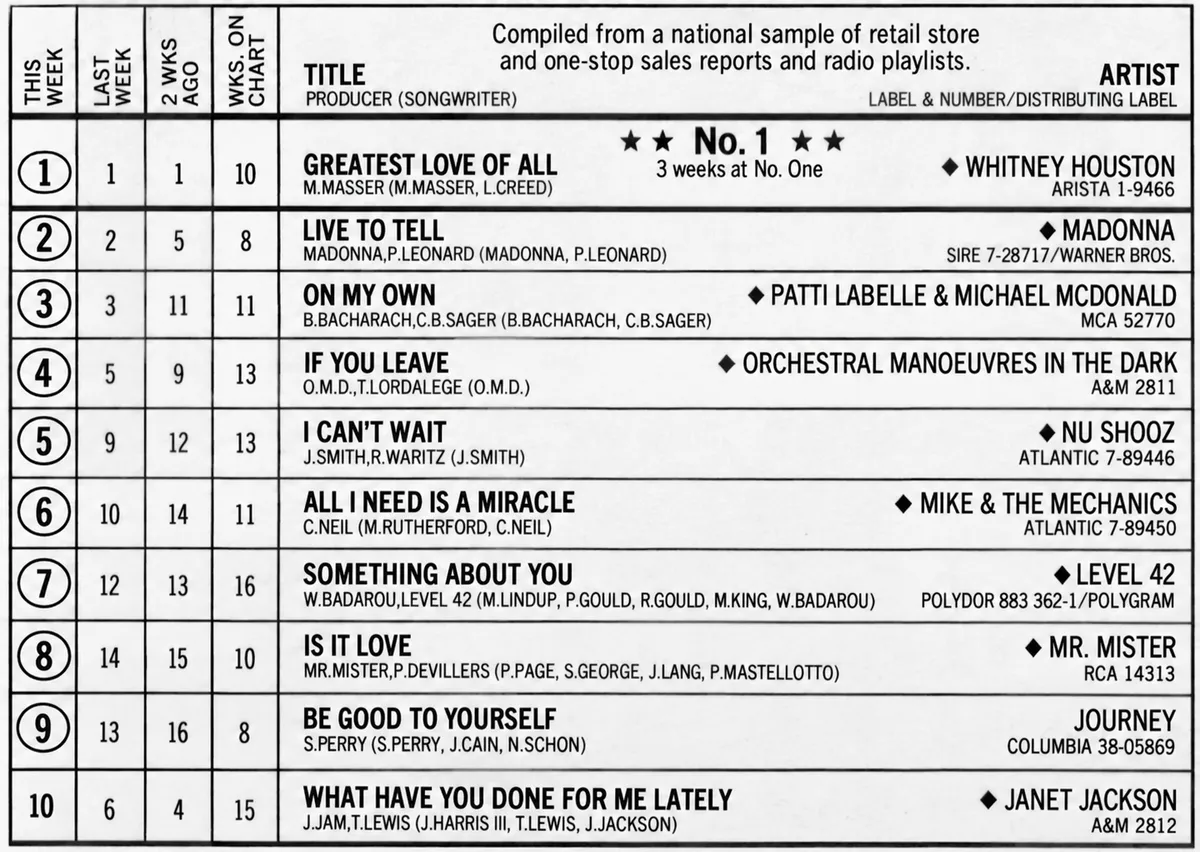
Between 1985 and 1988, she scored seven consecutive number-one singles on the Billboard Hot 100, beginning with “Saving All My Love for You” and continuing through “How Will I Know,” “Greatest Love of All” . . .
 “Hot 100 Singles,” Billboard (May 31, 1986): 62.
. . . “I Wanna Dance with Somebody,” “Didn’t We Almost Have It All,” “So Emotional,” and “Where Do Broken Hearts Go.”
Seven consecutive chart-toppers, an achievement unprecedented for any recording artist.3 By comparison, Madonna had accumulated six number ones, from “Like a Virgin” in 1984 through “Who’s That Girl” in 1987. Whitney was ahead, and I found that intolerable.
I followed the Billboard charts with the attention that other people reserved for stock prices or election results. Every new Whitney single represented another potential humiliation. Every Madonna release carried the responsibility of restoring the natural order of things. When “Like a Prayer” reached number one in April 1989, bringing Madonna’s total to seven, I experienced something approaching vindication. The score was tied. Justice, temporarily interrupted, had been restored. (Incidentally, that was also the month I entered the seminary. The coincidence of “Like a Prayer” and my own religious vocation was not lost on me.)
Then came 1990. Madonna’s “Vogue” became her eighth number one, placing her ahead of Whitney. Naturally, Whitney had the audacity to answer with “I’m Your Baby Tonight,” which reached the top in December and restored the tie. Madonna’s “Justify My Love” would eventually break it in January 1991.
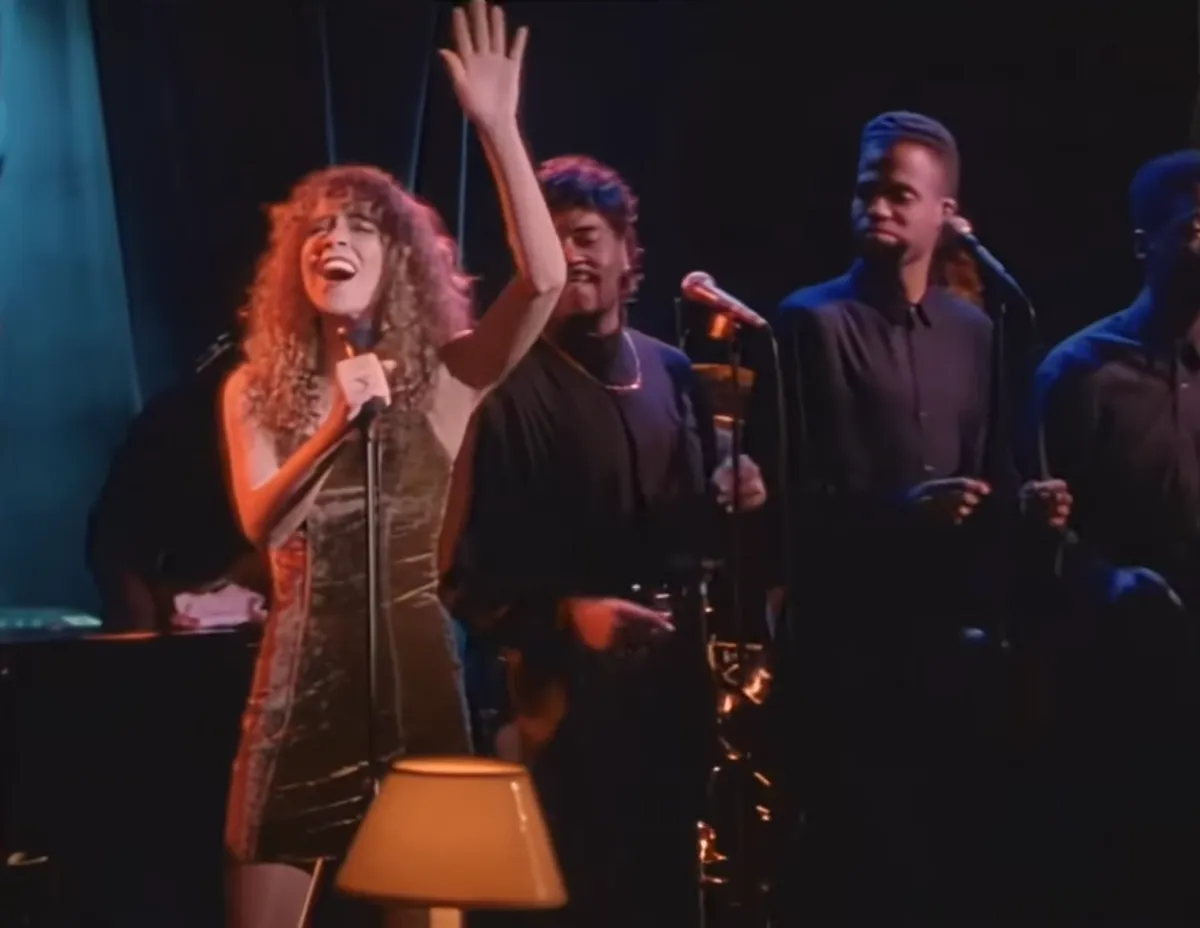
But by then, Mariah Carey had arrived to make both Madonna and Whitney almost irrelevant. She possessed an extraordinary voice, an astonishing vocal range, and the ability to hit notes that ordinary human beings were probably never intended to produce . . .
 © 1991 Columbia Records, a division of Sony Music Entertainment. All rights reserved.
More importantly, within a year of her debut in 1990, she had scored four consecutive number-one singles on the Billboard Hot 100.4 Suddenly, Whitney had much more to worry about than Madonna, and I had discovered an entirely new reason to celebrate. Whitney suddenly had a formidable competitor, not merely in record sales but in the one department where she had previously seemed untouchable: the voice.
For a Madonna partisan who had endured years of being reminded that Whitney was the superior vocalist, this was delicious. Madonna remained my queen, but Mariah became a useful ally in a war she did not know she was fighting.
I have never been a casual fan of anyone, and I have certainly never been a casual hater. My dislike of Whitney was not born of ignorance. Quite the opposite. I knew her records, her singles, her chart positions, her performances, and eventually her films. I listened to her albums, watched her music videos, and kept track of her career with a diligence that would have embarrassed many of her actual admirers. I could identify her songs almost immediately, knew the differences between her performances, and understood perfectly well what made her such a formidable artist.
You had to know the enemy.
This created an inconvenient contradiction that I preferred not to examine. I could dislike Whitney all I wanted, but I could not pretend that she was untalented. I knew she was magnificent. I heard the extraordinary control, the phrasing, the power, and the ease with which she moved from tenderness to vocal thunder.5 There were moments when I found myself enjoying her music before remembering that I was supposed to hate her. Naturally, I regarded such lapses as temporary weaknesses of character.
In 1992, Whitney staged an enormous resurgence with The Bodyguard. The film was a commercial triumph, and its soundtrack became a phenomenon. “I Will Always Love You” spent fourteen weeks at number one on the Billboard Hot 100, and the soundtrack sold in quantities that made ordinary blockbuster albums look almost modest. Whitney had not merely returned; she had produced one of the defining popular music moments of the decade.
I was not pleased.
Ceasefire. Nevertheless, the musical landscape was changing. Mariah continued to accumulate number-one hits with astonishing speed, and Whitney was no longer the only female vocalist whose achievements seemed beyond comparison. Madonna, meanwhile, was moving along an entirely different path. Her career had its controversies and commercial disappointments, but she was also doing something far more than vocal gymnastics. She was becoming an increasingly sophisticated artist.
By the second half of the ’90s, Madonna had starred in Evita, and demonstrated that she could handle demanding material associated with musical theater. Then came Ray of Light in 1998, an album of remarkable artistic maturity, with electronic experimentation, introspection, and a depth that even some of her longtime critics had previously refused to acknowledge. Madonna, once dismissed as a manufactured pop sensation, was being taken seriously as a musician.
I enjoyed that immensely.
In 1998, Whitney and Mariah finally sang together on “When You Believe” for The Prince of Egypt soundtrack, and I listened without the resentment that had once accompanied virtually every Whitney Houston recording.
By then, Whitney’s private difficulties were becoming increasingly visible, although the full extent of what lay ahead was not yet apparent. Mariah, meanwhile, had long since abandoned the wholesome girl-next-door image of her early career. Whitney’s once-effortless vocal command was beginning to show signs of strain, while Mariah seemed to have lost the ability to carry a tune altogether . . .
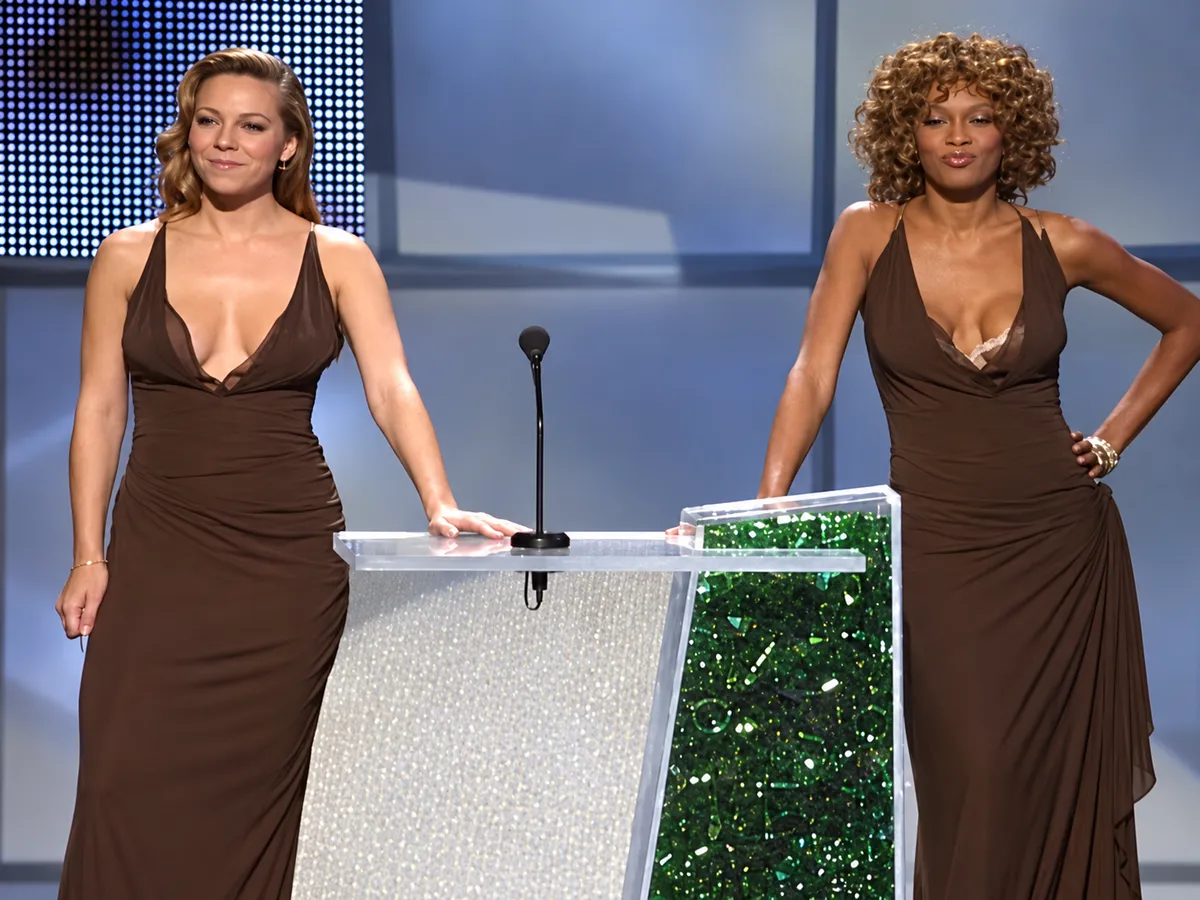 © 1998 MTV Networks. All rights reserved.
Madonna, of all people, now appeared comparatively sane, sober, disciplined, artistically credible, and remarkably secure in her career . . .
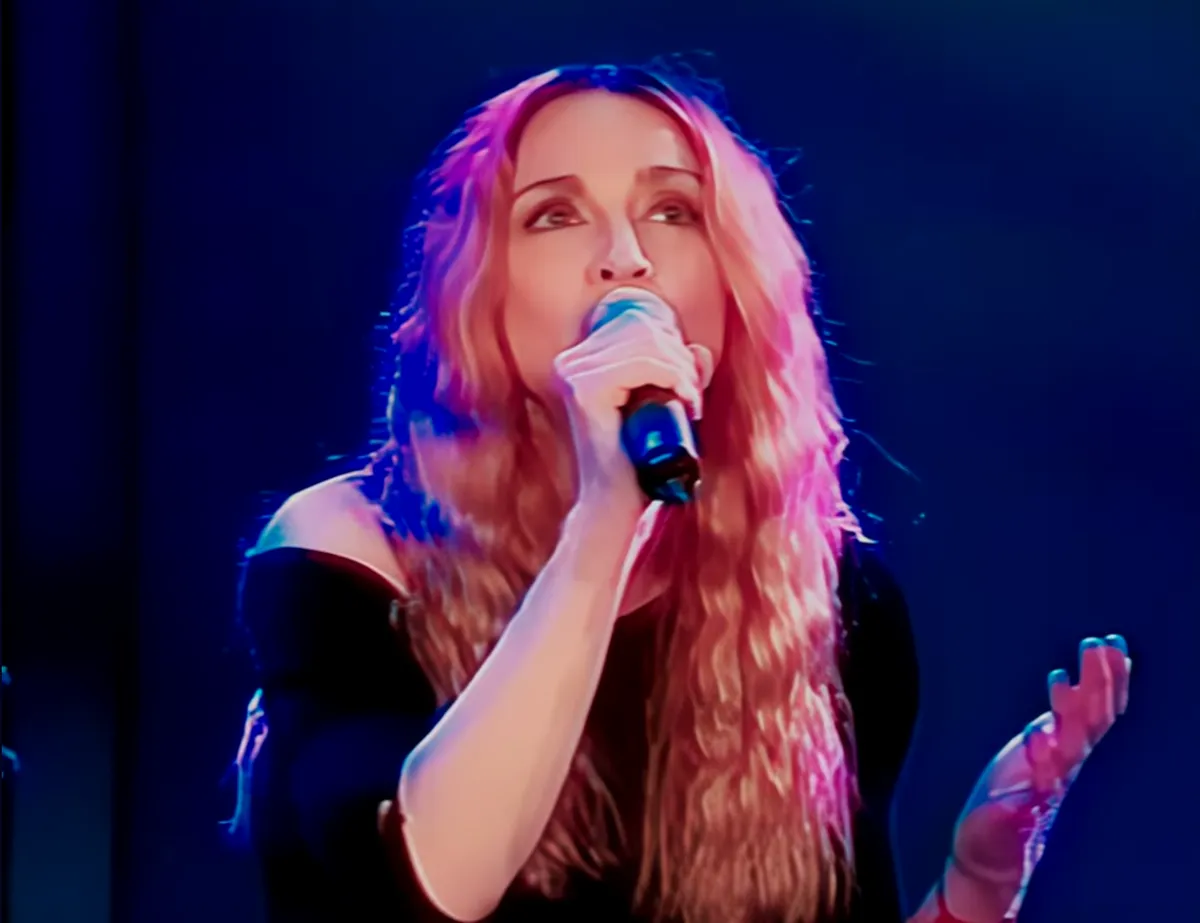 © 1998 Harpo Productions, Inc. All rights reserved.
When “Music” topped the Billboard Hot 100 in 2000, Madonna had accumulated twelve number-one singles, surpassing Whitney’s eleven. The figures that had once tormented me finally favored my idol, and the rivalry that had consumed so much of my attention seemed to have reached its inevitable conclusion.
I no longer felt threatened. I believed I had won.
That was how I saw it then. I had spent fifteen years turning Whitney’s career into a personal competition, resenting her victories, celebrating her setbacks, and taking pleasure whenever somebody else threatened her supremacy. I had listened to her songs hundreds of times, watched her performances, memorized her achievements, and followed her life with an attention that bordered on obsession.
And after all those years, I still would not allow myself to admit that I loved Whitney Houston.
* * *
Fast-forward to 2026. Whitney Houston has been gone for fourteen years. Madonna and Mariah Carey are still around, but neither means much to me anymore. Both have become caricatures of their former selves.
Madonna, especially, has been a disappointment. American Life in 2003 was really the end of her artistic credibility and commercial bankability. The woman who once dictated popular culture increasingly appeared desperate to remain relevant to it. Then the desperation became predictable, then embarrassing, and eventually just cringe-inducing. Watching someone I once worshipped struggle so conspicuously against the passage of time has not been particularly enjoyable.
Those Billboard records I once followed religiously, those number-one singles I counted and recounted, those imaginary victories and defeats—all of them have become meaningless to me now. I no longer care who had the better voice, who sold more records, or who occupied the top of the charts for the longest time. The competition that consumed so much of my youth has simply ceased to interest me.
There is, however, one thing I never anticipated.
I miss Whitney.
Recently, I bought all her albums. By all, I mean everything through My Love Is Your Love in 1998, the last studio album before her personal difficulties began to overshadow her extraordinary talent. This collection also does not include the vinyl LP of the Waiting to Exhale soundtrack, whose release I missed ten years ago and which has since become prohibitively expensive . . .
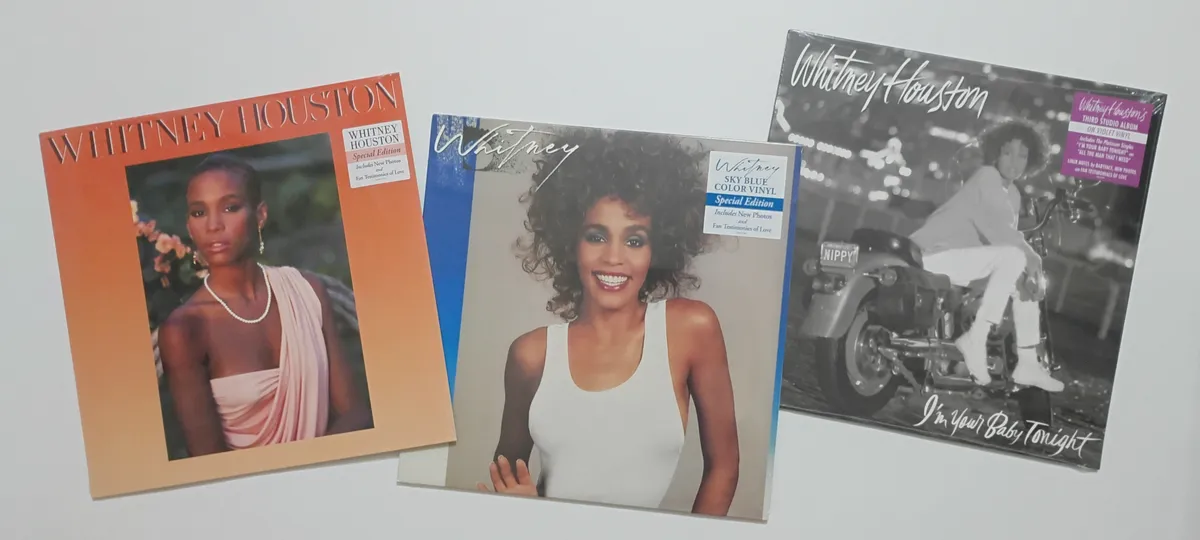
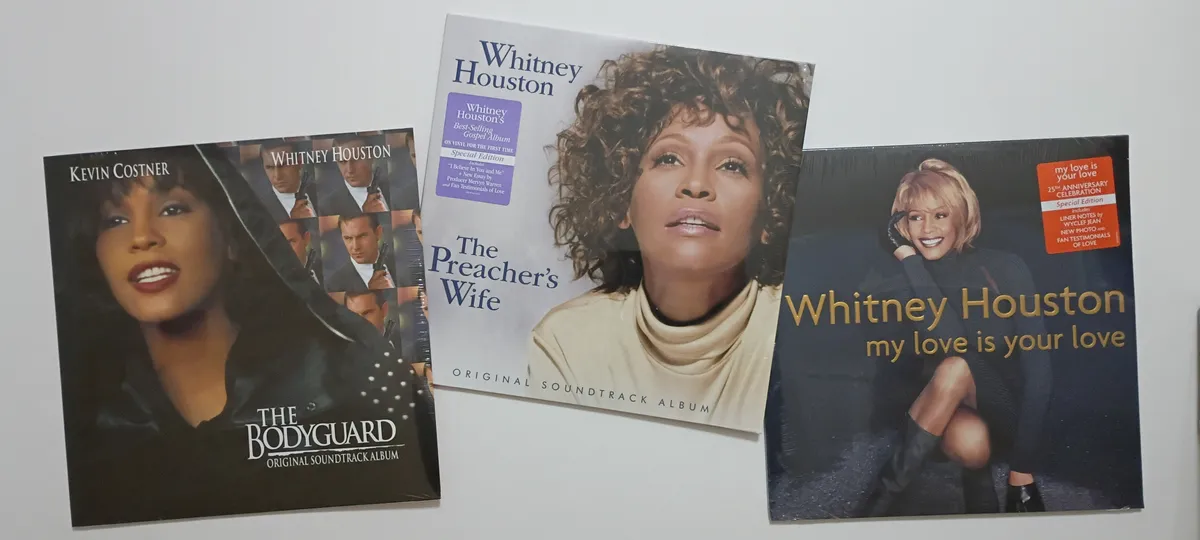
She continued to record afterward, of course, but those later albums are unworthy of the extraordinary artist she had once been. I had no desire to revisit them. I wanted the Whitney I remembered from the years when she was supposedly my enemy: the magnificent young woman who could take even the simplest melody and sing it as though nobody else had ever sung it—or ever would again.
I have been listening to those first albums again. I hear them differently now. There is no longer anyone to defeat, no chart position to resent, no reason to hope that the next single will fail. I can finally listen to Whitney without having to defend Madonna. I can enjoy the voice without that absurd little calculation of what her success might mean for someone else’s career, without qualification, and without embarrassment.
And sometimes, listening to her, I remember how pleased I used to be whenever she stumbled. I remember the satisfaction I took in every setback, every unflattering report, every suggestion that her best years were behind her. I remember how eagerly I waited for someone else to surpass her. These are not pleasant memories, particularly when the voice coming from my speakers belongs to a woman who is no longer with us—a person whose life I had reduced to a series of numbers on a chart.
There are things I wish I could tell her. That I knew all along how extraordinary she was. That I loved her music even when I pretended to despise it. And that I am ashamed of the small, foolish triumphs I celebrated at her expense. I wish I could tell her all these things, not because she ever knew I existed or needed my approval, but because I can no longer bear the thought of having withheld it.
But Whitney is gone, and I cannot take back a single thing I once thought or said about her. I can only sit here, listening to the voice of the woman I once so desperately wanted to see defeated.
I’m so sorry, Whitney. I miss you.
1. Robert B. Cialdini, Richard J. Borden, Avril Thorne, Marcus Randall Walker, Stephen Freeman, and Lloyd Reynolds Sloan, “Basking in Reflected Glory: Three (Football) Field Studies,” Journal of Personality and Social Psychology 34, no. 3 (1976): 366.
2. Robert M. Grant, “Madonna,” in Cases to Accompany Contemporary Strategy Analysis, 7th ed. (Chichester: John Wiley & Sons, 2010), 3.
3. “Whitney Breaks Record for Consecutive No. 1 Tunes,” Jet 74, no. 5 (May 2, 1988): 54.
4. Sope Soetan and Jesse Serwer, “Ten Thousand Hours,” Wax Poetics 3, no. 2, 95.
5. Philip Tagg, Everyday Tonality II: Towards a Tonal Theory of What Most People Hear, 2nd ed. (New York and Huddersfield: Mass Media Music Scholars’ Press, 2014), 202.